




Enamelled Silver Butterfly
An enamelled silver butterfly is a delicate piece of wearable art, bringing vibrant colour and intricate metalwork straight to the lapel.
Enamelled Silver Butterfly
When you search for an enamelled silver butterfly, you encounter small decorative brooches, pins, and pendants fashioned in the likeness of insects. These ornaments span several decades, reaching back to the early twentieth century and moving forward through the modernist eras.
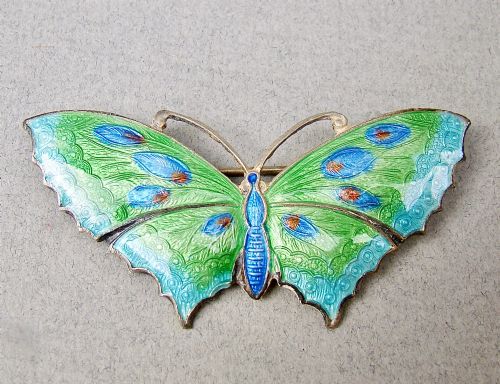
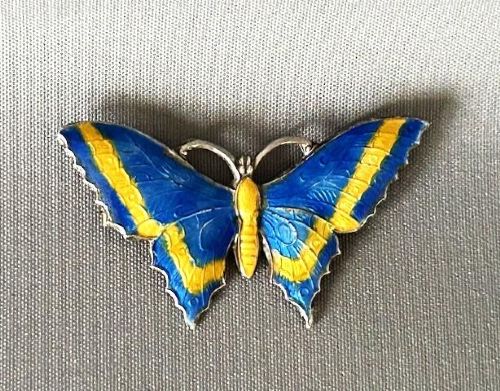
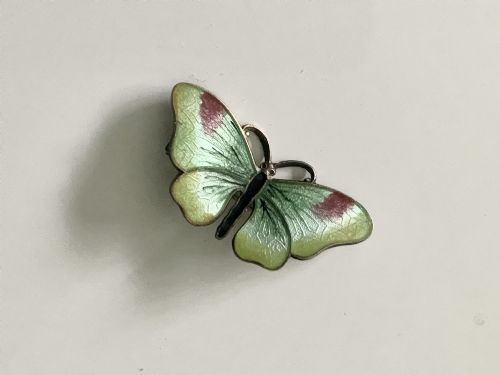
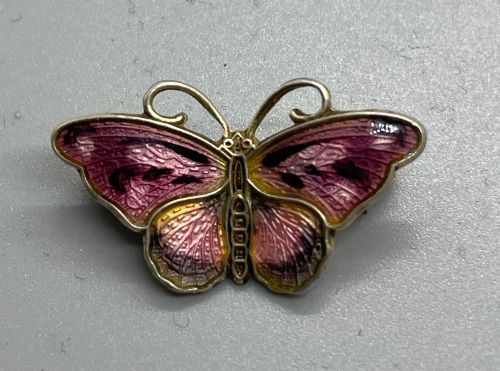
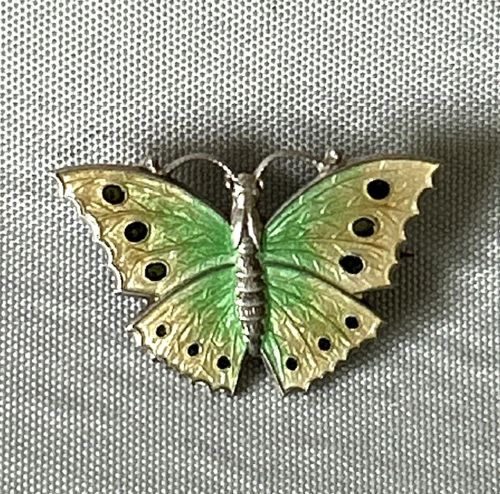
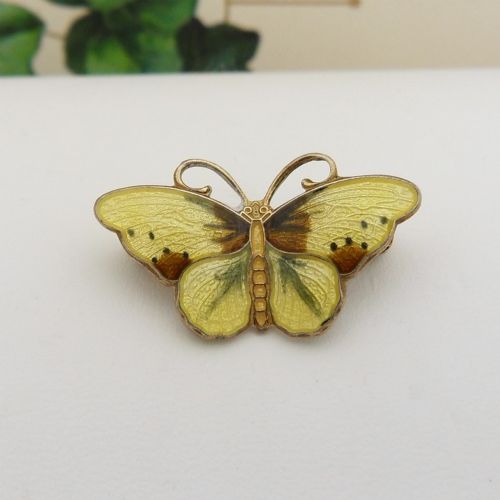
The version you are most likely to meet on this page is a brooch dating from the 1920s or 1930s, often utilising colourful enamel over sterling silver or silver gilt. Forms range from petite winged insects to larger, more elaborate continental and Scandinavian designs.
How they were made
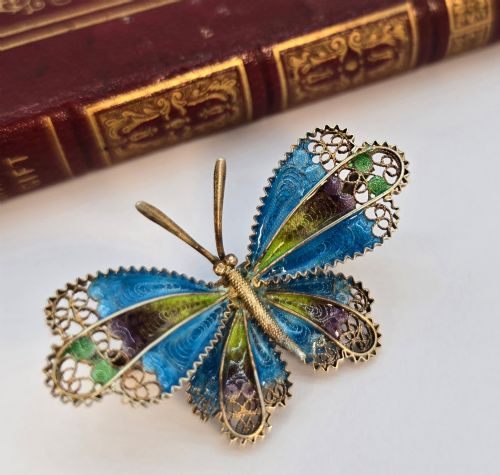
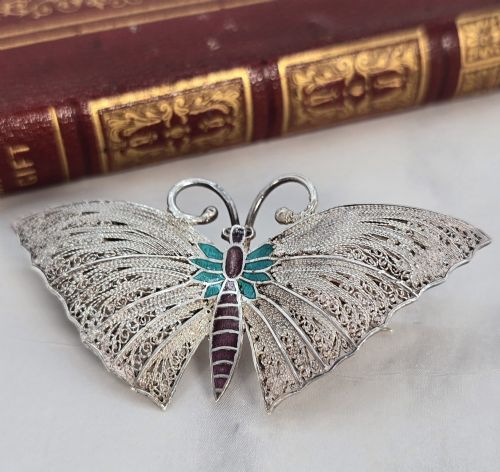
Makers shaped sterling silver and silver gilt into delicate wire frameworks, sometimes employing fine filigree to outline the delicate anatomy of the wings. These metal cells received layers of vitreous enamel or translucent guilloche enamel, which was then fired to create a glossy, coloured surface.
Alternative techniques include plique-à-jour enamel, which creates a stained-glass effect without a backing, alongside occasional inclusions of butterfly wing under glass. Gold vermeil finishes also appear, lending a warm golden tone to the silver base.
Enamelled Silver Butterfly Retail Price Guide 2026
Typical asking prices for enamelled silver butterfly among the pieces listed under this phrase on Sellingantiques today, from the lower quarter to the upper quarter. They describe what is for sale here now, not the wider market.
Listings feature pieces spanning several distinct periods, including Art Nouveau, Art Deco, and mid-century Scandinavian design.
What varies in quality
Quality rests in the precision of the metalwork and the clarity of the enamel applied to the wings. Finer examples display meticulous guilloche engine-turning beneath translucent layers, or expert plique-à-jour work that allows light to pass through the coloured glass.
The distinction between standard commercial output and superior design lies in the naturalism of the insect's form and the complexity of the filigree work. Pieces bearing known maker marks or originating from dedicated Scandinavian and continental workshops typically exhibit a higher standard of execution.
Hroar Prydz·Martin Mayer
The Enamelled Silver Butterfly Glossary
- Guilloche enamel
- A decorative technique where transparent enamel is laid over machine-turned metal engraving. This creates repeating geometric patterns that shine through the coloured glass.
- Silver gilt
- Sterling silver that has been coated with a thin layer of gold. This treatment provides a rich golden appearance while retaining the underlying silver structure.
- Plique-a-jour
- An enamelling technique resembling miniature stained glass, where the enamel is fired into open wire cells without a backing. It allows light to filter directly through the coloured sections.
- Filigree
- Ornamental work consisting of fine wire twisted and soldered into intricate patterns. It forms the delicate veins and body structures of many insect brooches.
Enamelled Silver Butterfly: Frequently Asked Questions
What is an enamelled silver butterfly?
An enamelled silver butterfly is a small decorative brooch or pendant fashioned to resemble an insect using silver and coloured glass.
These pieces combine metalworking techniques with vitreous enamels to capture the vibrant patterns of butterfly wings.
How do I date these brooches?
Dating relies on stylistic markers such as Art Deco geometric patterns, Art Nouveau organic curves, or mid-century Scandinavian minimalist lines.
Maker marks and silver hallmarks stamped on the reverse also help pinpoint the decade of manufacture.
How were they worn originally?
These pieces were primarily designed as dress clips or lapel brooches pinned to coats, hats, and collars. Pendent versions hung from chains around the neck.
Their small scale made them versatile accessories for daily wear throughout the twentieth century.
What styles are available?
Styles range from early twentieth-century Art Nouveau and Art Deco designs to mid-century Scandinavian and Chinese export pieces.
Each period brought distinct approaches to enamelling, colour palettes, and wing shapes.