





Enamelled Pill Box
An enamelled pill box is a small, portable container holding medicines or cosmetics, prized for miniature paintings and metalwork.
Enamelled Pill Box
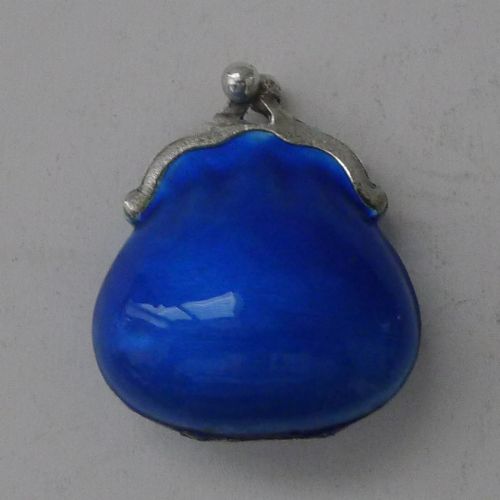
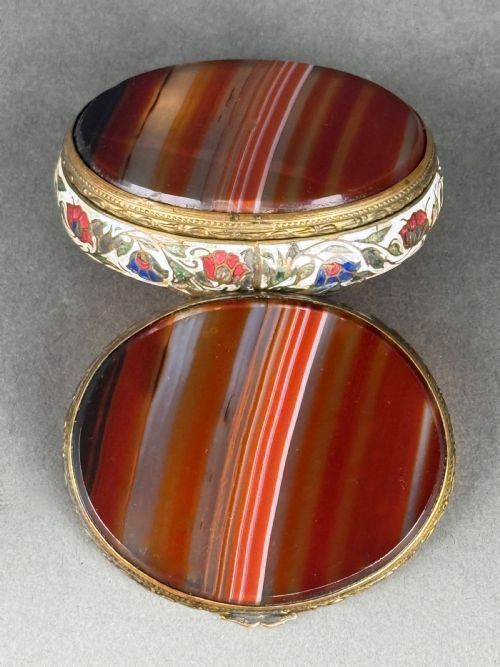
When you search for an enamelled pill box, you encounter small lidded containers produced across the eighteenth and nineteenth centuries, alongside twentieth-century examples. These pieces served practical uses for cosmetics, patches, and medicines, or functioned purely as decorative objects.
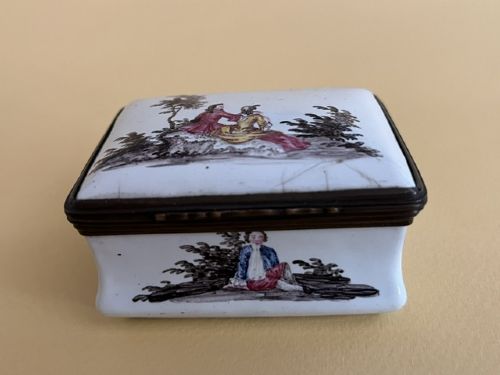
The most common versions met on this page originate from eighteenth-century English centres such as Bilston and South Staffordshire, often featuring painted copper bodies. Later nineteenth- and twentieth-century examples frequently combine silver or other metals with guilloche, champleve, or cloisonne enamel techniques from France, Russia, Austria, and Britain.
Forms extend beyond standard pill boxes to include patch boxes, snuff boxes, trinket boxes, and powder compacts. Each type reflects the shifting social habits of its period, from Georgian pocket containers to Edwardian vanity items.
How they were made
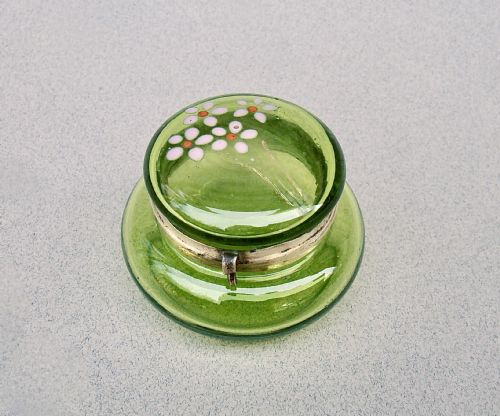
Maker workshops built these boxes using copper, brass, sterling silver, gold, or glass as a foundation. Enamel was applied as powdered glass and fired in a kiln to fuse a hard, glossy coating to the metal base.
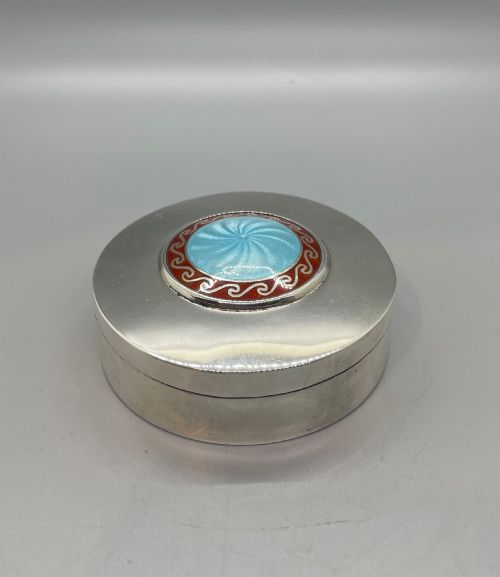
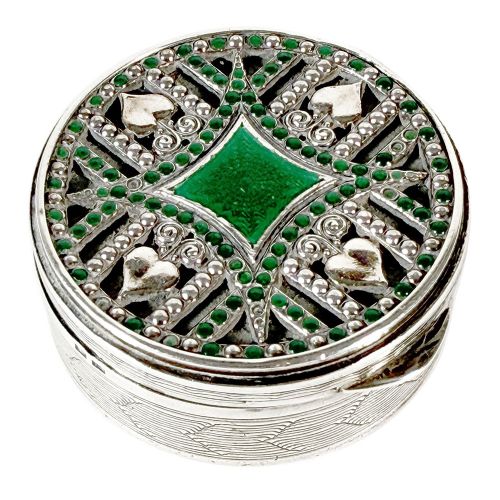
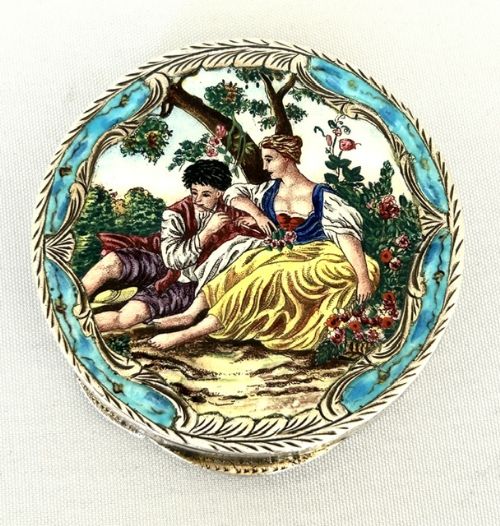
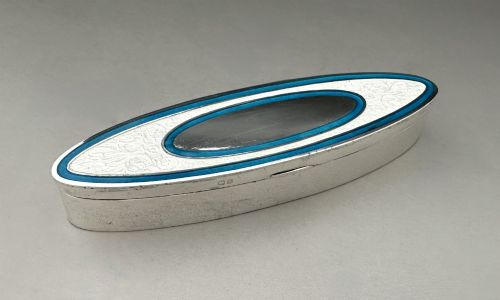
Techniques varied from hand-painted pastoral scenes and inscribed mottoes on eighteenth-century English copper to intricate engine-turned guilloche patterns beneath translucent enamel on silver. Specialists also employed cloisonne and champleve methods, using metal wires or carved troughs to separate distinct coloured enamel compartments.
Enamelled Pill Box Retail Price Guide 2026
Typical asking prices for enamelled pill box among the pieces listed under this phrase on Sellingantiques today, from the lower quarter to the upper quarter. They describe what is for sale here now, not the wider market.
Materials recorded on this page include copper, sterling silver, gold, brass, glass, and porcelain combined with vitreous enamel.
What varies in quality
Quality separates objects by the crispness of the painted detail, the precision of the metal mounts, and the preservation of the enamel surface. Finer eighteenth-century pieces display delicate miniatures and clear inscriptions without extensive restoration.
In later silver and guilloche examples, depth of engine-turning and evenness of the translucent enamel layer determine the standard of execution. Pieces retaining original gilding and undamaged hinges demonstrate superior original craftsmanship.
George Adam Scheid·Khlebnikov
The Enamelled Pill Box Glossary
- Guilloche
- An ornamental pattern produced by a mechanical lathe that engraves precise geometric waves into a metal surface beneath translucent enamel. This technique was widely utilised on Edwardian and later silver boxes.
- Champleve
- An enamelling technique where troughs or cells are hollowed out of a metal plate and filled with enamel powder before firing. The surrounding metal walls remain visible to outline the design.
- Cloisonne
- A method where thin metal wires are soldered onto a metal base to create compartments, which are then filled with coloured enamel pastes. It produces distinct, cell-bounded motifs.
- Patch box
- A small container originally used to hold small fabric beauty patches worn on the face during the Georgian era. These boxes frequently incorporated interior mirrors.
- Vinaigrette
- A small ornamental box featuring an internal pierced grille, designed to hold a sponge soaked in aromatic vinegar. They were carried as a defence against unpleasant odours.
Enamelled Pill Box: Frequently Asked Questions
What were enamelled pill boxes used for?
These small containers held medicinal pills, breath fresheners, or scented substances for personal use throughout the day. Wealthy owners carried them within pockets or handbags for quick access.
Over successive centuries, their purpose expanded to encompass cosmetics, small beauty patches, and snuff. Their portable nature made them standard accessories for fashionable individuals.
How do I date an antique enamel box?
Dating relies on hallmarks stamped on silver mounts, the style of the painted decoration, and the manufacturing technique. Eighteenth-century pieces often utilise copper bases with hand-painted pastoral scenes.
Later Victorian and Edwardian examples frequently feature engine-turned guilloche patterns on sterling silver with official assay office stamps. Comparing the hinge construction and metal alloy helps confirm the period.
Where were Bilston enamel boxes made?
Bilston enamel boxes were produced in the town of Bilston in Staffordshire, England, during the eighteenth century. This region became a major hub for copper and enamel trinket production.
Workshops in the area specialised in making small containers decorated with floral motifs, topographical views, and sentimental inscriptions. These items were widely traded across Britain.
How should I clean an antique enamel box?
Enamel surfaces require gentle cleaning with a soft, dry or slightly damp cloth to remove surface dust. Moisture should be kept away from exposed copper edges or antique metal hinges to prevent tarnishing.
Harsh chemical dips and abrasive metal polishes will damage the delicate glass surface and ruin painted details. Preserving the original patina involves minimal handling and careful storage.