

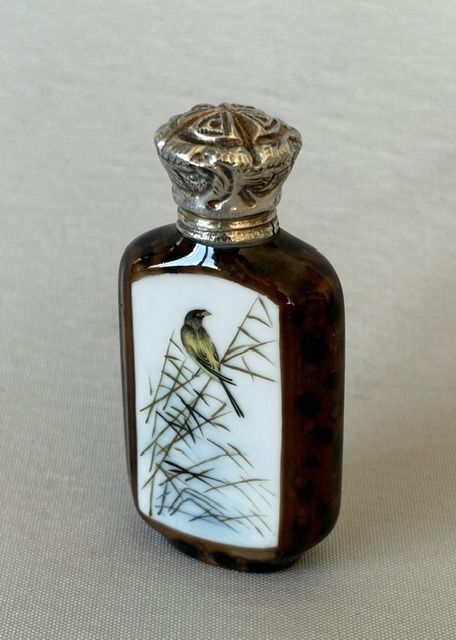
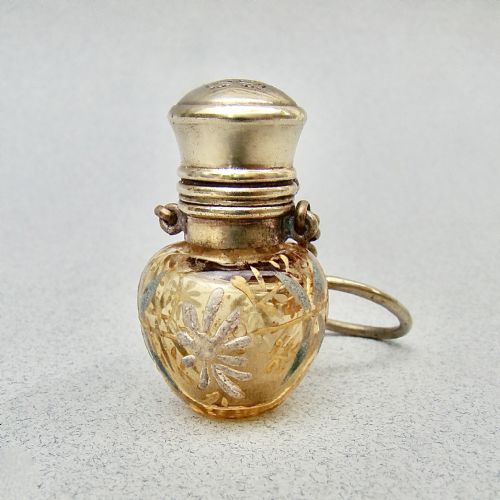


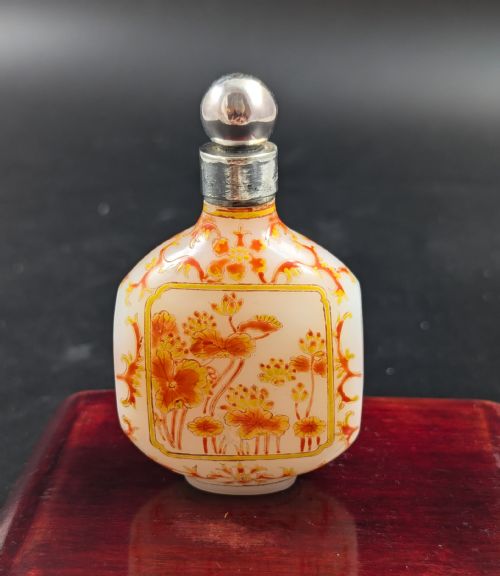


Enamelled Perfume Flask
An enamelled perfume flask is a portable vessel for scent that combines bright glass or porcelain with fused vitreous colour, prized for its decorative finish.
Enamelled Perfume Flask
When you search for an enamelled perfume flask, you encounter a variety of small scent and snuff containers spanning the Georgian period through the Art Deco era. The forms range from pocket-sized glass bottles to porcelain snuff bottles and chatelaine pendants.
The most common examples on this page are twentieth-century Art Deco designs featuring silver and guilloche enamel alongside nineteenth-century French glass and Chinese porcelain pieces. These items served both a practical toiletry function and acted as miniature canvases for decorative art.
Makers and manufacturers from England, France, and Bohemia produced these flasks, utilising materials such as sterling silver, cut glass, and satin glass. Each period brings distinct stylistic traits, from Georgian hand-painted scenes to geometric twentieth-century lines.
Materials and Construction
The construction of these flasks relies on the pairing of glass, porcelain, or metal bodies with fused vitreous enamel decoration. Artisans applied powdered glass to metal surfaces, such as sterling silver or ormolu, before firing them in a kiln to create smooth, durable colour.
Cut glass and satin glass bodies often received silver mounts and hinged caps to secure the contents. In porcelain examples, fine ceramic forms were hand-painted with detailed scenes and marks before glazing and firing.
Enamelled Perfume Flask Retail Price Guide 2026
Typical asking prices for enamelled perfume flask among the pieces listed under this phrase on Sellingantiques today, from the lower quarter to the upper quarter. They describe what is for sale here now, not the wider market.
Materials recorded across the inventory include sterling silver, porcelain, satin glass, and gilded metal.
Markers of Quality
The quality of an enamelled perfume flask rests on the precision of the metalwork and the clarity of the enamel surface. Finer pieces display intricate engine-turned guilloche patterns beneath translucent enamel layers, whereas simpler items feature plain painted surfaces.
Maker marks and hallmarked sterling silver mounts elevate the standing of a flask, connecting it to known workshops and verified production dates. The crispness of hand-painted details and the weight of the cut glass or porcelain body also determine the distinction of individual items.
Karl Palda·Henry Perkins·René Lalique
The Enamelled Perfume Flask Glossary
- Guilloche
- A decorative engraving technique where a mechanical instrument etches a precise, intricate geometric pattern into a metal surface. This technique provides a textured background that shines through translucent enamel.
- Chatelaine
- A decorative belt hook worn with a series of suspended chains used to carry small household items like scent bottles, keys, or scissors. These accessories were popular in the nineteenth century.
- Ormolu
- A gilt bronze or brass furnishing technique involving the application of a finely ground gold-mercury amalgam to metal. It appears frequently on nineteenth-century French mounts.
- Satin glass
- A type of art glass featuring a velvety, matte finish produced by acid-etching or hydrofluoric acid vapour treatment. It offers a soft texture compared to clear polished crystal.
- Famille rose
- A Chinese ceramic palette characterised by opaque pink enamels introduced in the eighteenth century. Pieces bearing this style often depict figures or botanical scenes.
Enamelled Perfume Flask: Frequently Asked Questions
How do I date an enamelled perfume flask?
Dating relies on examining the hallmarks on silver mounts, the stylistic traits of the enamel work, and the manufacturing techniques used on the glass or porcelain body.
Twentieth-century pieces often display geometric Art Deco lines, while nineteenth-century items tend to feature ornate chatelaine fittings or specific maker marks.
What is the difference between a scent bottle and a snuff bottle?
Scent bottles generally house liquid perfumes and include stoppers or screw caps with internal glass daubers. Snuff bottles are small Asian vessels designed to hold powdered tobacco.
Snuff bottles often feature delicate painted scenes and specialised horn or bone spoons attached to the stopper.
How were these flasks used historically?
Owners carried these small vessels in pockets, handbags, or suspended from chatelaine hooks for personal refreshment throughout the day. They held fragrant oils or smelling salts.
In elite social circles, they also functioned as status symbols and decorative accessories showcasing fine craftsmanship.
How should I display and care for an antique flask?
Keep these items out of direct sunlight to prevent the fading of delicate enamel colours and organic pigments. Display them in secure cabinets away from high-traffic areas.
Clean glass and silver components gently with dry or slightly damp soft cloths, avoiding harsh chemical dips that can damage the fragile enamel surfaces.