

Enamelled Necklace
An enamelled necklace brings together coloured glass and precious metals, offering a wearable piece of history from periods spanning the Georgian era to the mid-twentieth century.
Enamelled Necklace
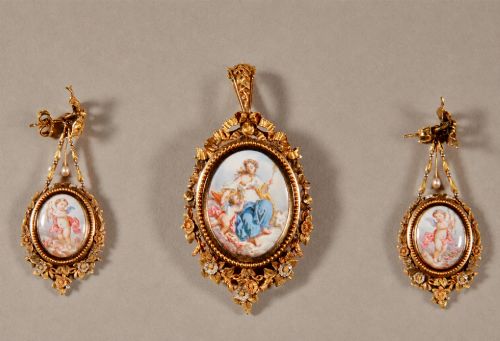
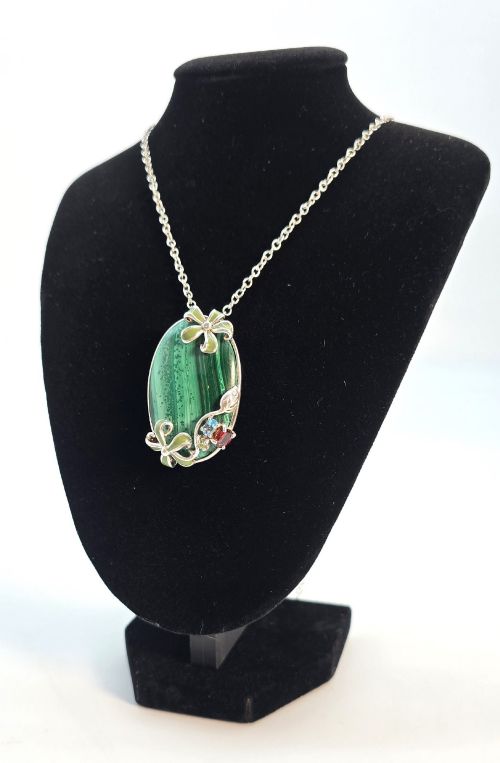
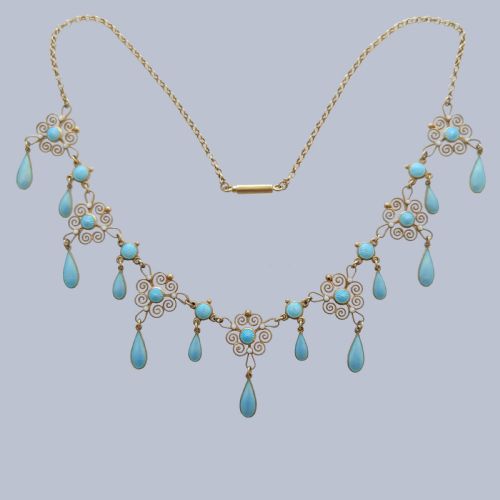
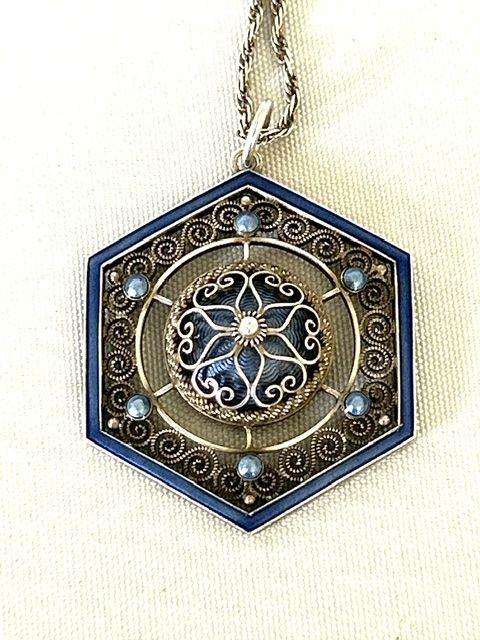
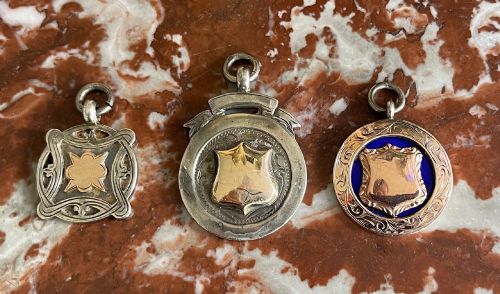
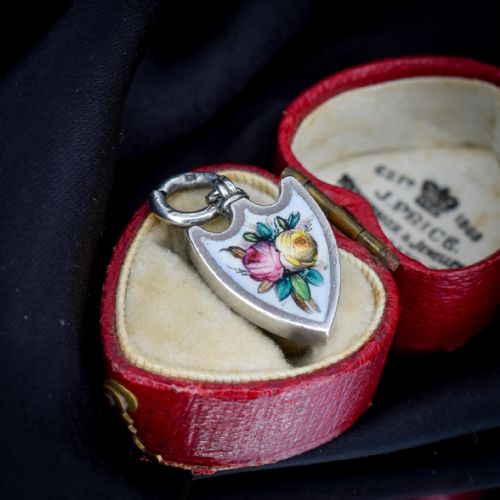
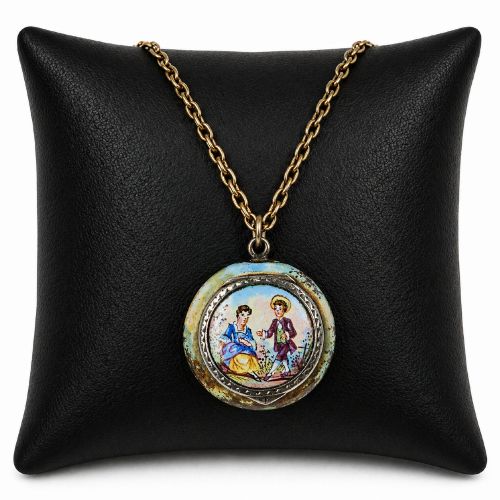
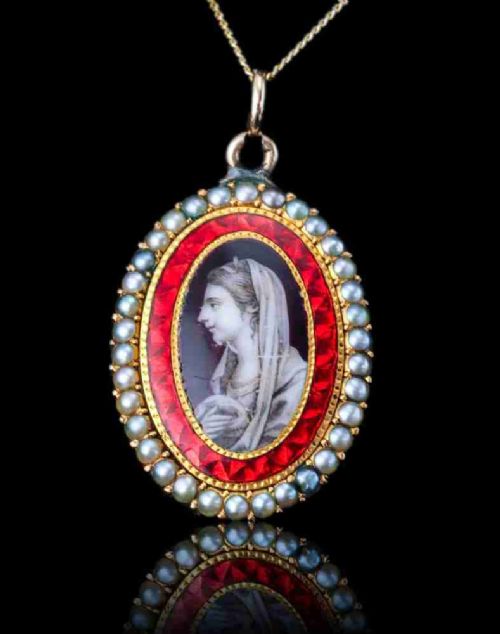
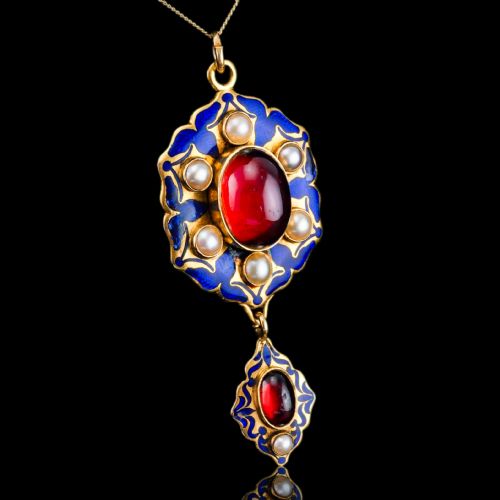
When searching for an enamelled necklace, buyers encounter a wide spectrum of designs ranging from floral motifs to religious pendants and geometric charms. These items include drop necklaces, festoon configurations, watch fobs, and torque collars.
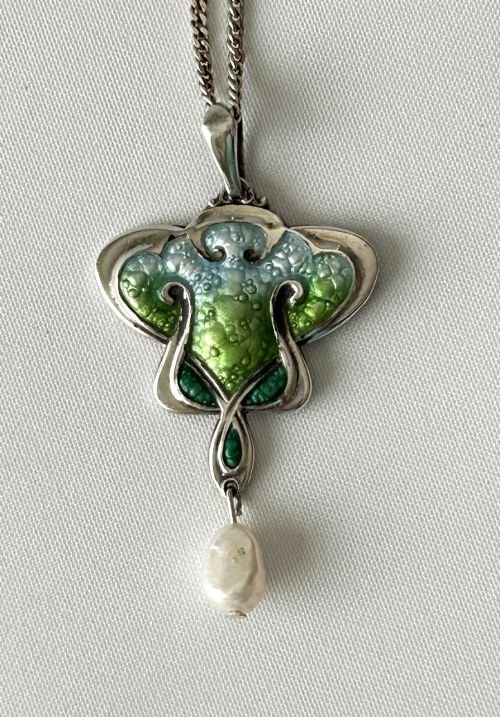
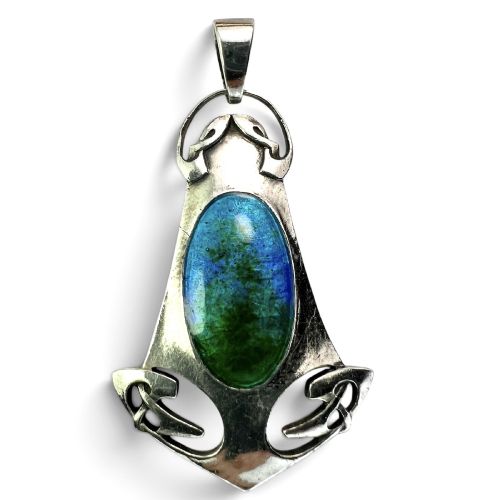
The objects stem from distinct periods such as the Victorian, Edwardian, and Georgian eras, alongside the Art Nouveau and Arts and Crafts movements. Pieces from the early twentieth century frequently display organic curves and natural subjects.
Makers from various European regions contributed to this category, including Scandinavian workshops and French designers. The selection encompasses both silver gilt and high-carat gold foundations set with pearls, diamonds, and coloured stones.
How they were made
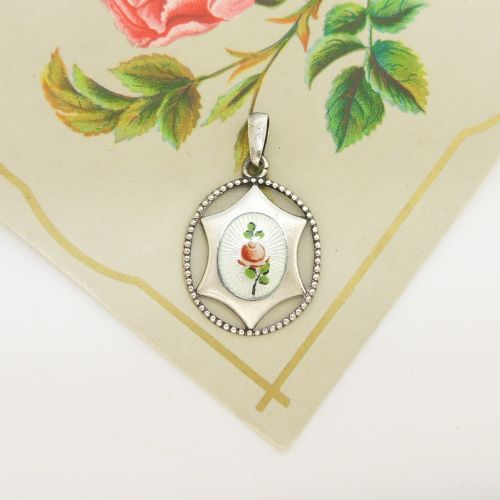
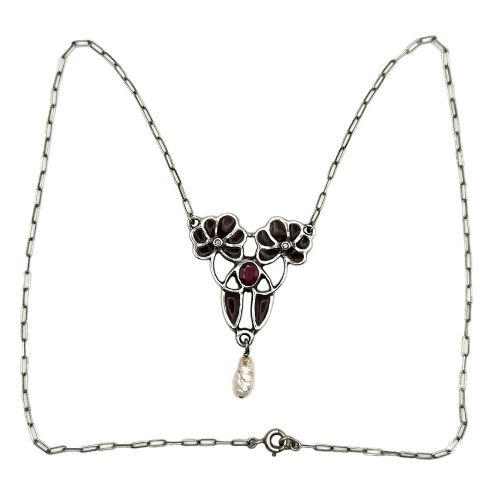
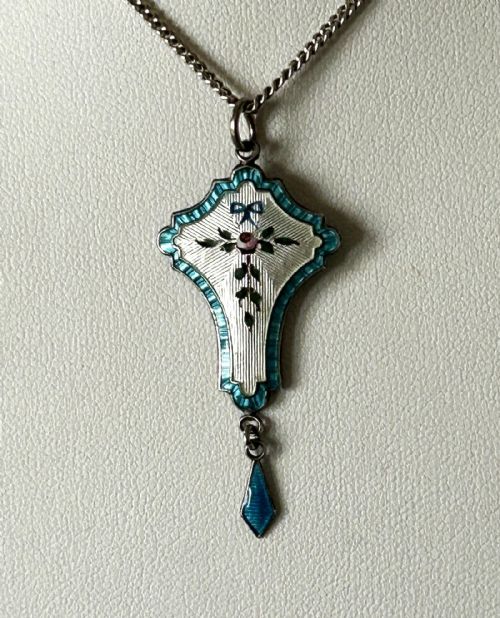
Goldsmiths fused powdered glass to metal surfaces through high-temperature firing, creating vitreous coatings in shades of blue, green, and white. Techniques such as guilloché engraved mechanical patterns beneath translucent enamel, while plique-à-jour suspended the coloured glass within open metal cells like stained glass.
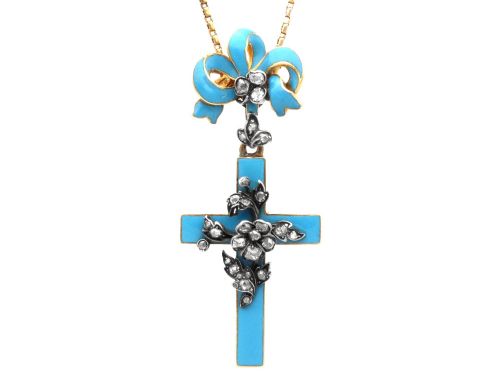
Metalsmiths worked in sterling silver, silver gilt, and yellow gold ranging from nine to eighteen carats, alongside platinum. Components often incorporated hand-set seed pearls, rose-cut diamonds, rubies, peridots, chalcedony, and garnets to complete the compositions.
Enamelled Necklace Retail Price Guide 2026
Typical asking prices for enamelled necklace among the pieces listed under this phrase on Sellingantiques today, from the lower quarter to the upper quarter. They describe what is for sale here now, not the wider market.
Listings feature items from the Georgian period through to the nineteen fifties, executed in silver, gold, and platinum.
What varies in quality
The standard of an enamelled necklace depends on the complexity of the glasswork and the precision of the metal fabrication. Translucent enamels that catch the light uniformly indicate superior technique compared to flat, opaque surfaces.
Artistic attribution also dictates standing, with documented designs by notable makers commanding greater attention. The integration of complementary gemstones, such as matched pearls or clean diamonds, elevates the overall execution.
Charles Horner·Archibald Knox·Liberty And Co·Murrle Bennett·Marius Hammer·David Andersen·Wilhelm Fuhner·Levinger And Bissinger·Otto Prutscher
The Enamelled Necklace Glossary
- Guilloché
- Enamel technique involving a geometric pattern engraved into metal beneath a transparent layer. This method creates shimmering light effects across the surface.
- Plique-à-jour
- Enamelling method without a backing metal, allowing light to shine through the transparent glass. It resembles miniature stained glass.
- Festoon
- Necklace style featuring draped chains, swags, or suspended drops across the collarbone. It often incorporates multiple connection points and articulated links.
- Torque
- Rigid circular neck ring worn open at the front or secured with a clasp. It frequently supports a central pendant.
- Watch fob
- Small ornamental medallion or charm attached to a pocket watch ribbon. Many were later converted into necklace pendants.
Enamelled Necklace: Frequently Asked Questions
How do I date an enamelled necklace?
Dating relies on stylistic markers, hallmarks, and metal types associated with specific eras such as Victorian or Art Nouveau. Structural details and fastening methods also help place the piece in its historical context.
Examining the reverse of the pendant and the chain style provides additional clues regarding the period of manufacture.
What is plique-à-jour enamel?
Plique-à-jour is an intricate technique where enamel is fired in open wire frames without a backing plate. This lets light pass directly through the coloured glass.
The resulting effect resembles delicate stained glass suspended within a precious metal structure.
How should I care for antique enamel jewellery?
Antique enamel requires gentle handling because glass coatings can chip or crack under impact. Cleaning should be done with a soft cloth and warm water, avoiding harsh chemicals or ultrasonic cleaners.
Storing the necklace separately protects the glass surface from scratching against other items.