


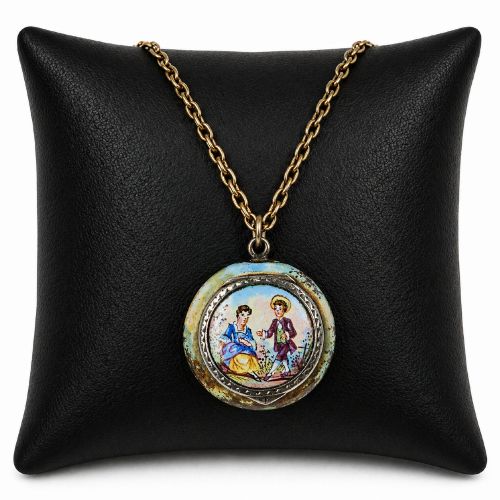


Enamelled Gold Necklace
An enamelled gold necklace brings together brilliant vitreous colour and precious metalwork, offering wearable history from Georgian, Victorian, and later periods.
Enamelled Gold Necklace
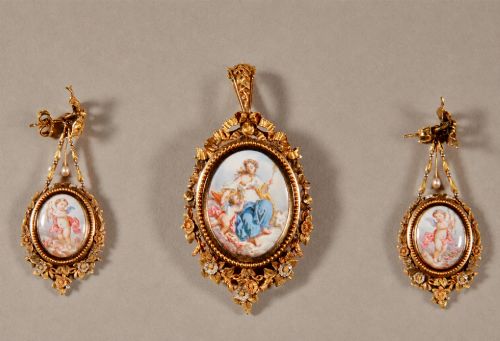
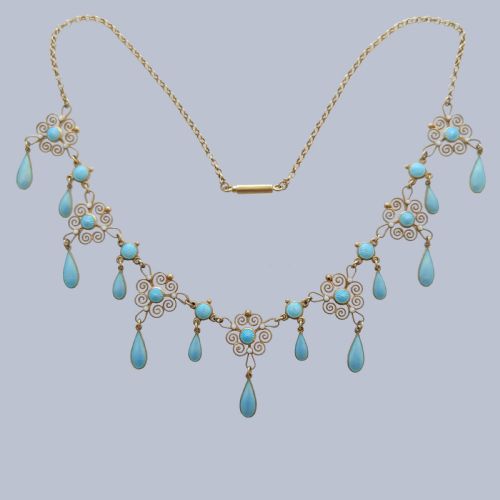
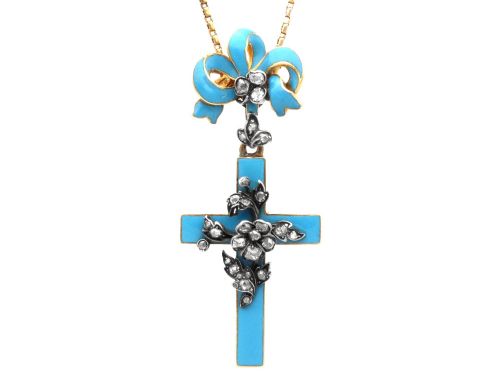
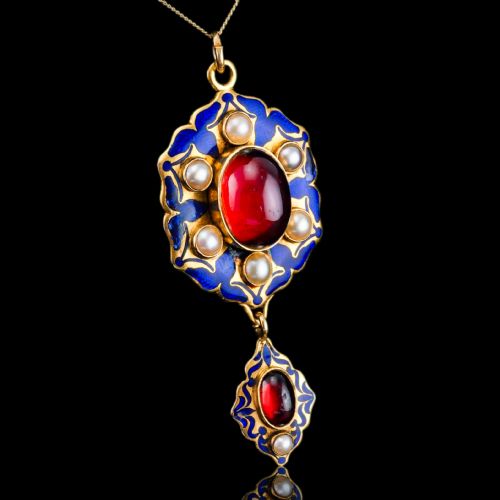
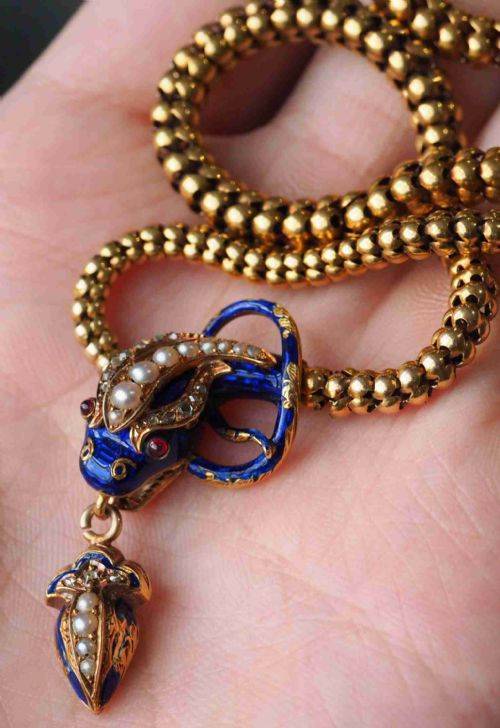
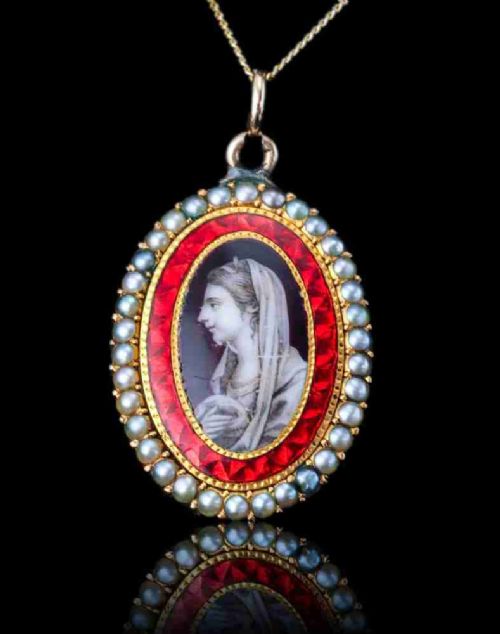
An enamelled gold necklace encompasses a diverse range of historic pendant necklaces, lockets, and festoon designs created across the Georgian, Victorian, Edwardian, and Art Deco eras. Buyers searching for an enamelled gold necklace frequently encounter pieces incorporating rich blue enamel, seed pearls, and rose cut diamonds set in yellow gold of various purities.
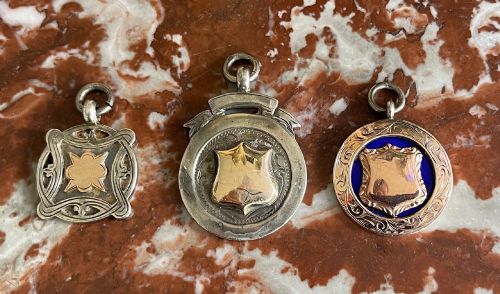
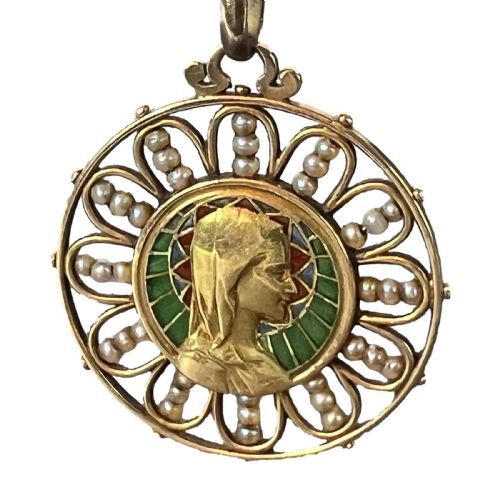
The selection ranges from early nineteenth century portraits and snake serpent motifs to intricate Art Nouveau plique a jour pieces and Viennese locket designs. Victorian iterations frequently feature symbolic hearts and mourning subjects, while later twentieth century examples showcase geometric charms and devotional medals.
Most items on this page lean heavily into nineteenth century revival styles, particularly Holbeinesque and Renaissance revivals executed in high carat yellow gold or silver gilt. These pieces combine sculptural metalwork with translucent or opaque vitreous enamel applications, creating striking contrasts of colour and texture.
Materials and Technique
Maker workshops utilised gold of varying purities, including 15ct, 18ct, and lower gold standards alongside silver gilt, fusing precious metals with powdered glass. Vitreous enamel was applied using champlevé, guilloché, or plique a jour techniques, where fired glass particles fused to the metal substrate under intense heat to form durable coloured surfaces.
Plique a jour enamel required delicate openwork frames of gold or silver gilt to hold translucent glass without a backing, producing a stained glass effect when illuminated. Artisans further embellished these works with handset diamonds, pearls, mother of pearl, garnets, and peridots secured within bezel or prong settings.
Enamelled Gold Necklace Retail Price Guide 2026
Typical asking prices for enamelled gold necklace among the pieces listed under this phrase on Sellingantiques today, from the lower quarter to the upper quarter. They describe what is for sale here now, not the wider market.
Assessing Quality
The distinction between standard commercial output and superior craftsmanship rests in the precision of the enamelling and the complexity of the goldwork. Master goldsmiths achieved perfectly smooth enamel surfaces free from excessive pitting or fire-cracking, paired with meticulously hand-chased mounts and secure stone settings.
Artistic ambition dictates the upper tier of these pieces, where sophisticated plique a jour transparency or detailed miniature portraiture elevates simple jewellery into miniature sculpture. Finer examples display balanced proportions, integrated design schemes between pendant and chain, and thoughtful utilisation of precious gems that complement rather than overwhelm the enamel work.
Marius Hammer·Levinger & Bissinger·Otto Prutscher
The Enamelled Gold Necklace Glossary
- Plique a jour
- An enamelling technique resembling miniature stained glass where enamel is fired in open cells without a backing metal. It allows light to pass directly through the coloured glass.
- Guilloché
- A decorative mechanical engraving technique that produces intricate, precise geometric patterns beneath a translucent layer of enamel. This method was widely favoured by master enamellers in the late nineteenth and early twentieth centuries.
- Holbeinesque
- A Victorian revival jewellery style inspired by sixteenth century designs attributed to Hans Holbein. These pieces typically feature heavy polychrome enamelling, table cut stones, and dangling pearl drops.
- Silver gilt
- Silver that has been coated with a thin layer of gold through chemical or electrochemical processes. It offers the appearance of solid gold while utilising a silver base metal.
- Festoon
- A necklace style featuring draped chains, swags, or suspended elements designed to sit gracefully across the collarbone. They frequently incorporate pearls and enamelled plaque connectors.
Enamelled Gold Necklace: Frequently Asked Questions
How do I date an antique enamelled necklace?
Dating relies heavily on stylistic markers, materials, and manufacturing techniques associated with specific periods like the Georgian or Victorian eras. Examining the clasp mechanisms, gemstone cuts, and framing styles provides reliable chronological clues.
Enamel colours and motifs also shift across decades, moving from sombre mourning black and rich cobalt blues in the nineteenth century to vibrant translucent greens and floral patterns in later Art Nouveau works.
What is plique a jour enamel?
Plique a jour translates from French as letting in daylight, describing an enamelling method that lacks a solid backing metal. Molten glass is suspended within open wirework frames to create a translucent window effect.
This intricate technique requires immense skill from the artisan to prevent the glass from cracking during the firing and cooling processes.
How should I care for historic enamel jewellery?
Historic enamelled pieces require gentle handling because vitreous glass can chip or fracture if subjected to sharp impacts or extreme temperature changes. Cleaning should be restricted to a soft dry cloth, avoiding harsh chemical dips or ultrasonic cleaners that might damage fragile pearls and foils.
Storing each necklace separately in a lined box prevents abrasion from other items in your collection.
Are these necklaces suitable for daily wear?
While many Victorian and Edwardian gold pieces were robustly constructed, historic jewellery warrants mindful wear due to the delicate nature of enamel and seed pearl settings. Removing necklaces before bathing, sleeping, or engaging in physical activity preserves the structural integrity of the metal and stones.
Treating these items with care ensures the survival of fragile glasswork for future generations.