
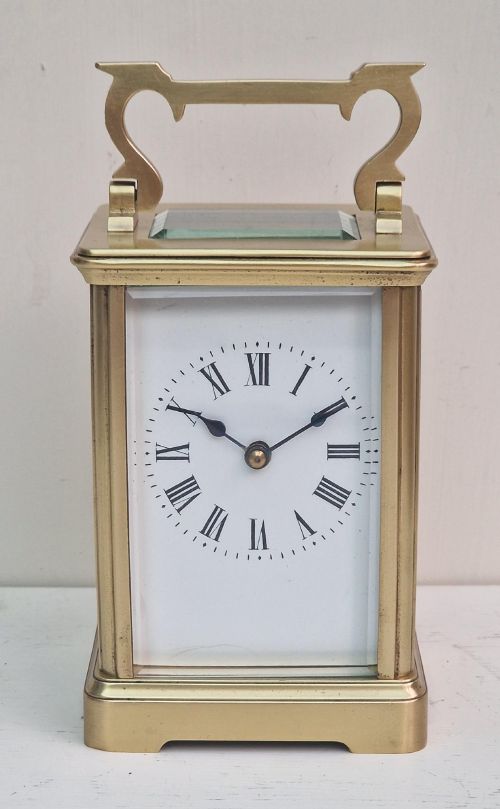
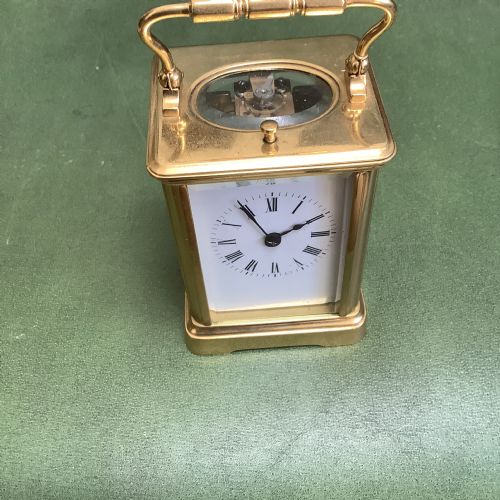
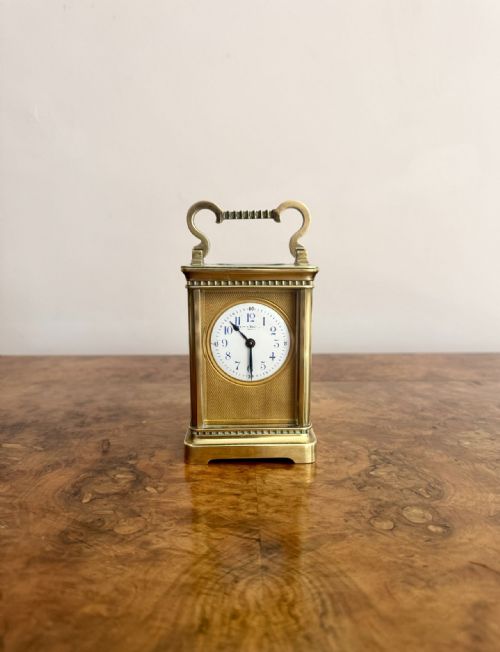
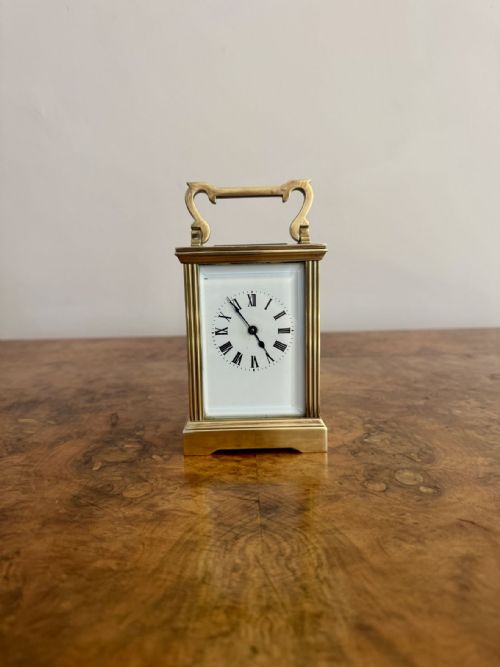
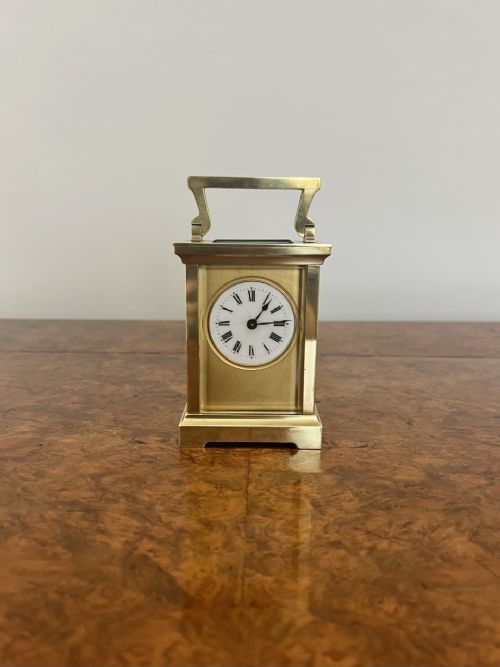


Enameled Dial Carriage Clock
An enameled dial carriage clock brings portable nineteenth-century timekeeping to a mantel or desk, combining precision brass mechanics with decorative artistry.
Enameled Dial Carriage Clock
An enameled dial carriage clock is a portable mechanical timekeeper designed for travel and domestic use during the nineteenth and early twentieth centuries. Most examples seen here originate from French workshops and retail outlets operating between eighteen sixty and nineteen ten, spanning the Victorian and Edwardian periods.
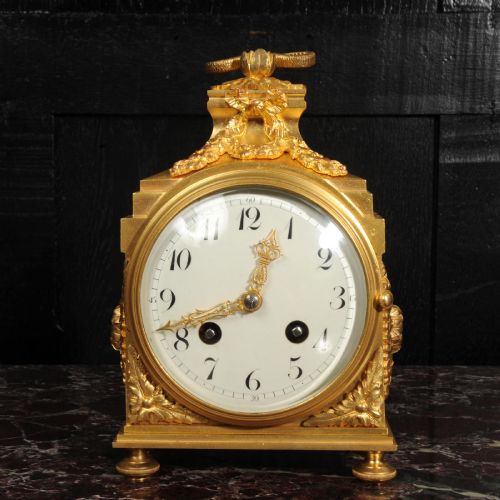
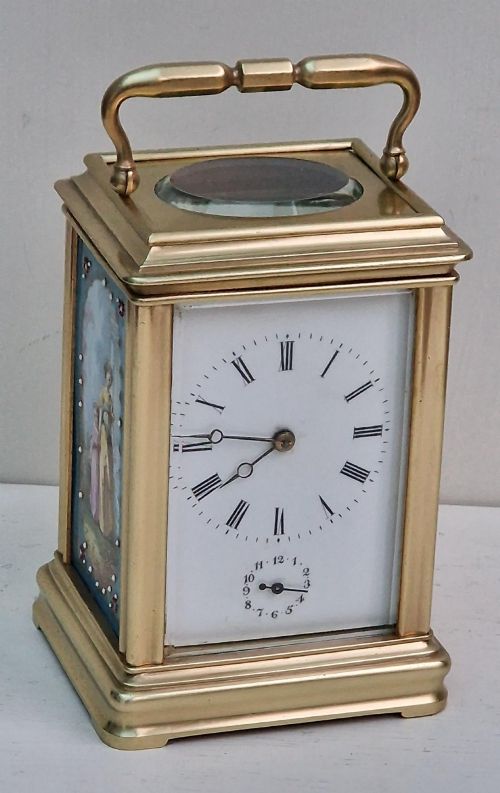
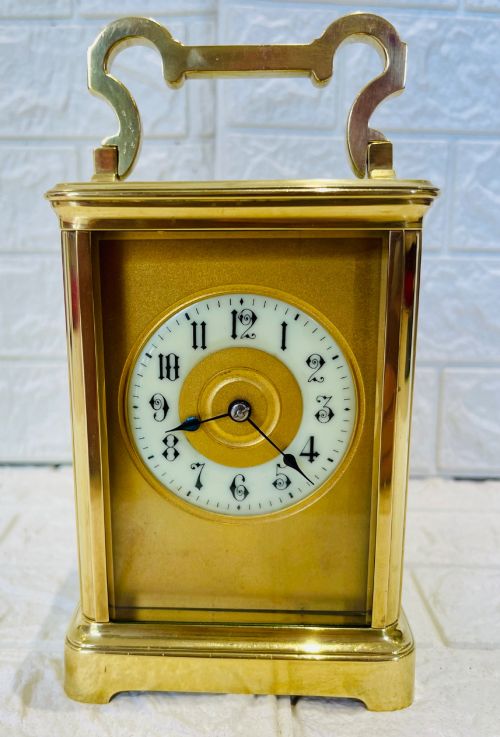
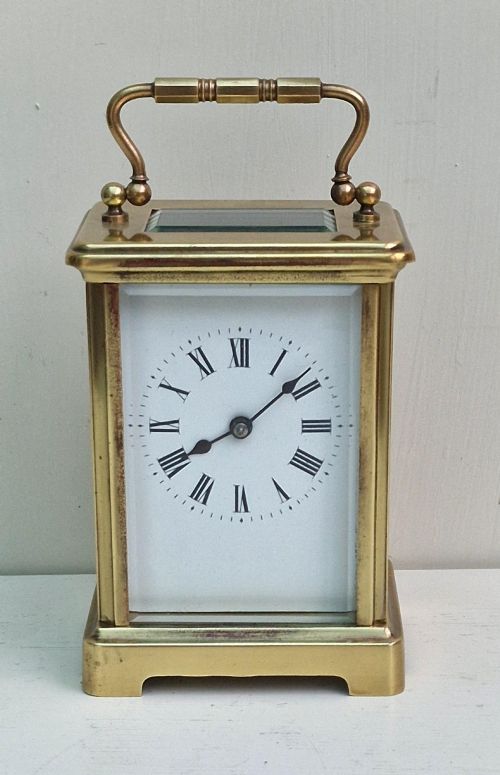
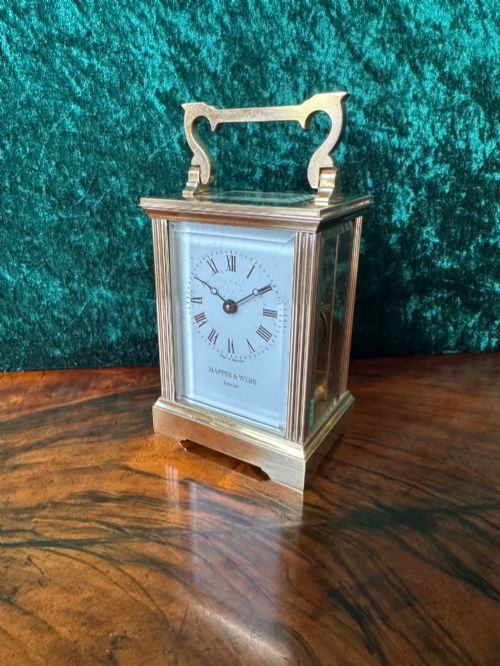
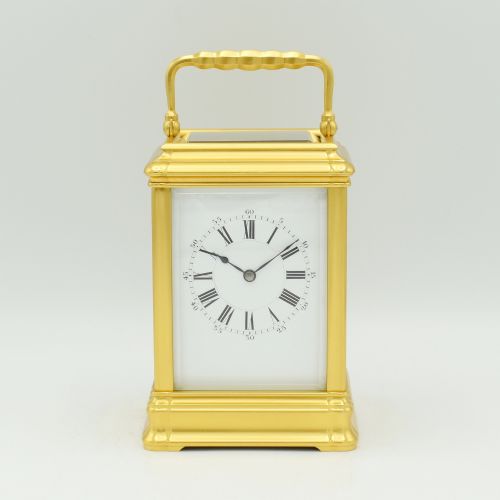
The standard form comprises a heavy brass or gilt bronze case glazed on four sides to expose the movement, topped by a swing handle for transport. Faces feature white enamel numerals, frequently paired with painted subsidiary dials or porcelain panels housed within gorge or doucine frames.
Materials and construction
Workshops constructed these mechanisms using brass, gilt bronze, and ormolu for the structural cases, housing eight-day spring-driven movements behind bevelled glass panes. Dials utilised white enamel fired onto metal plates, often decorated with delicate hand-painted numerals and minute markers.
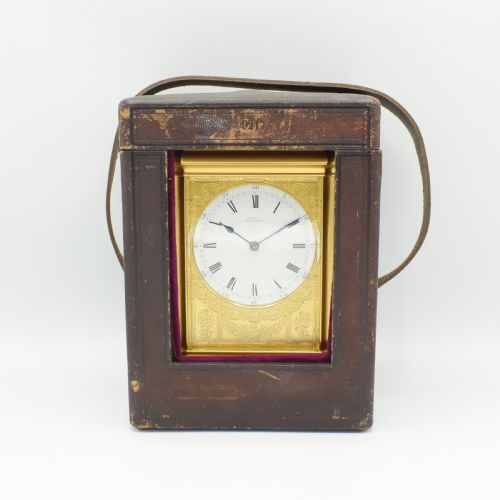
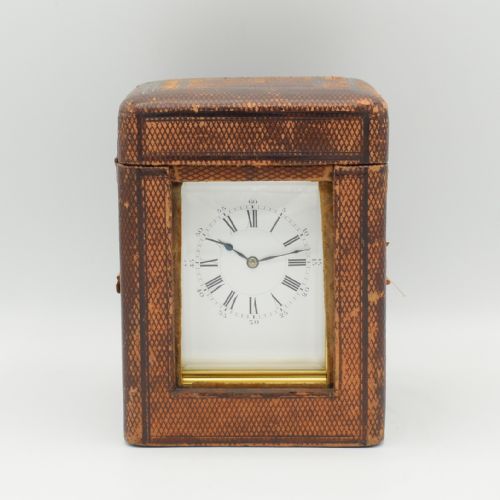
Travel protection was provided by fitted leather cases lined with velvet or silk, securing the clock during transit. Gilt brass and polished brass predominated as the primary metals, while handles and bezels received careful cast and chased detailing.
Listings feature carriage clocks spanning the Victorian and Edwardian eras, utilising brass, gilt bronze, glass, and enamel.
What separates the finest examples
Quality rests upon the complexity of the movement and the crispness of the case casting. Simple timepieces sit below repeating mechanisms that strike hours and quarters on demand, while alarm functions and sweep seconds add further mechanical merit.
Engraved ornamentation on the brass framework and fine hand-painting on the enamel dial elevate certain pieces above plain commercial production. Maker attribution to notable Parisian workshops also distinguishes superior examples.
Henri Jacot·Drocourt Paris·C. Detouche Paris·Margaine Of France·T. Martin And Co
The Enameled Dial Carriage Clock Glossary
- Repeating mechanism
- A complication that strikes the hours and quarters when a plunger on top of the case is pressed. This allowed the owner to tell the time in the dark.
- Doucine case
- A distinctive case shape featuring concave curves on the top and bottom mouldings. It gives the clock a refined architectural profile.
- Platform escapement
- The small horizontal assembly mounted at the top of the movement containing the balance wheel and hairspring. It replaced the pendulum to allow portable timekeeping.
Enameled Dial Carriage Clock: Frequently Asked Questions
How do I wind a carriage clock?
Insert the matching key into the winding square on the back plate and turn it gently clockwise until firm resistance stops the motion. Avoid over-winding to protect the mainspring.
Most movements require winding every eight days to maintain continuous operation. Ensure the key matches the square precisely to prevent rounding the metal over time.
Why does my clock run fast or slow?
The regulating lever situated on the platform escapement allows small adjustments to the speed. Moving the pointer towards the designated slow or fast mark corrects the timekeeping.
Changes in temperature and the settling of the mechanism can affect performance over weeks. Allow the clock to run for a full cycle after any adjustment before making further changes.
What is the difference between a timepiece and a striking clock?
A timepiece simply records the hours and minutes without producing any sound. It requires only a single winding train within the movement.
A striking clock includes an additional gear train and hammer to sound the hours or pass the quarters on a bell or gong. These models require separate winding arbours for the time and strike functions.