




Enamel Top Glass Jar
An enamel top glass jar brings together polished precious metal, colourful fused glass work, and practical dressing table storage from past centuries.
Enamel Top Glass Jar
An enamel top glass jar sits on dressing tables and vanity surfaces as a small storage vessel for powders, trinkets, or scents. When searching for an enamel top glass jar, collectors encounter vanity jars, dressing table jars, and lidded boxes alongside perfume bottles.
The pieces appearing on this page span several eras including the eighteenth century, Edwardian period, and Art Deco years. Most examples utilise cut or clear glass paired with fitted metal lids decorated in coloured enamel.
Vessels take various forms from tall perfume bottles to shallow lidded bowls and heavy trinket pots. German folk art examples also appear alongside British sterling silver mounted pieces from Birmingham and London.
Materials and Construction
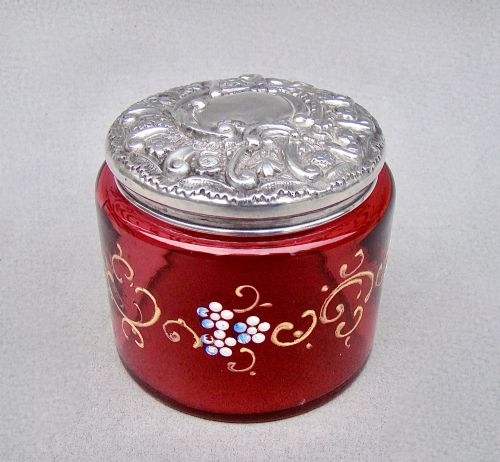
Makers combined blown or cut glass bodies with fitted sterling silver mounts and lids. Glass vessels range from plain clear glass and etched designs to deep cranberry glass and heavy cut crystal.
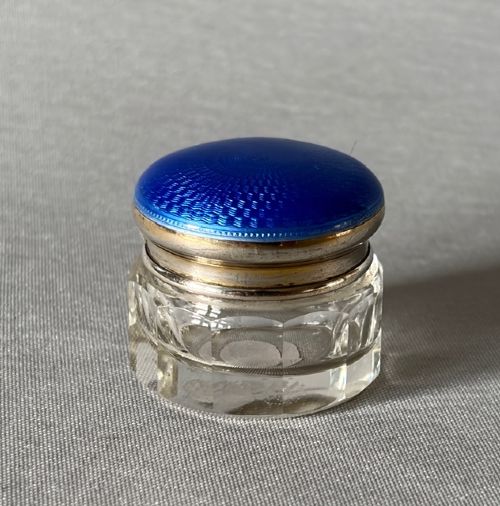
Enamel work often takes the form of guilloché, where intricate geometric patterns are machined into the silver beneath translucent coloured enamel layers. Pewter and standard silver also appear as mounting materials for the lids.
Enamel Top Glass Jar Retail Price Guide 2026
Typical asking prices for enamel top glass jar among the pieces listed under this phrase on Sellingantiques today, from the lower quarter to the upper quarter. They describe what is for sale here now, not the wider market.
Some vanity jars spent a century hiding face powder before ending up on display holding paperclips.
Factors of Quality
Quality rests in the crispness of the glass cutting and the precision of the metal fitting. Superior pieces maintain undamaged enamel surfaces free from chips, cracks, or heavy scratching.
The weight of the sterling silver mount and the complexity of the guilloché engraving beneath the enamel separate standard utilitarian vessels from finer dressing table items.
Henry Clifford Davis·Goldsmith's and Silversmith's Co.
The Enamel Top Glass Jar Glossary
- Guilloche Enamel
- A decorative technique where metal is engraved with a repetitive mechanical pattern and covered with translucent enamel. This method creates a shimmering depth beneath the coloured surface.
- Cranberry Glass
- A rich red glass coloured by the addition of gold chloride during manufacture. It frequently appears in Victorian and early twentieth-century dressing table wares.
- Vanity Jar
- A small container designed to hold cosmetics, pins, or powder on a dressing table. These pieces usually feature a removable lid rather than a threaded cap.
- Sterling Silver
- An alloy of silver containing ninety-two point five percent pure silver and seven point five percent other metals, typically copper. British pieces carry hallmark stamps indicating the assay office and year.
Enamel Top Glass Jar: Frequently Asked Questions
What were these jars used for originally?
These vessels held powders, creams, pins, and personal trinkets on dressing tables and vanity surfaces.
They kept small daily essentials organised and protected while adding colour to the room.
How do I date an enamel top glass jar?
British pieces often carry silver hallmarks on the mounts that indicate the assay office and year of manufacture.
Stylistic cues like Art Deco geometry or Edwardian forms also help place the piece in its proper decade.
Are the glass bodies and metal tops original to each other?
Most matching lids and glass bases share the same period hallmarks and fitting dimensions.
Checking that the silver mount sits flush against the glass rim confirms the integrity of the piece.
How should I clean and care for guilloche enamel?
Use a soft, dry cloth to remove dust from the glass and metal surfaces without abrasive cleaners.
Avoid submerging pieces with old cement or hollow metal mounts in water.