



Enamel Shelf Clock
An enamel shelf clock brings rich colour and precise mechanical movement to a mantelpiece, drawing the eye with its decorated dial and polished case.
Enamel Shelf Clock
An enamel shelf clock is a decorative timepiece designed for domestic interiors, spanning mantel clocks, carriage clocks, and bracket clocks from the nineteenth century to the early twentieth century. These objects combine timekeeping utility with the ornamental tastes of Victorian and Edwardian households, drawing from French and British workshops.
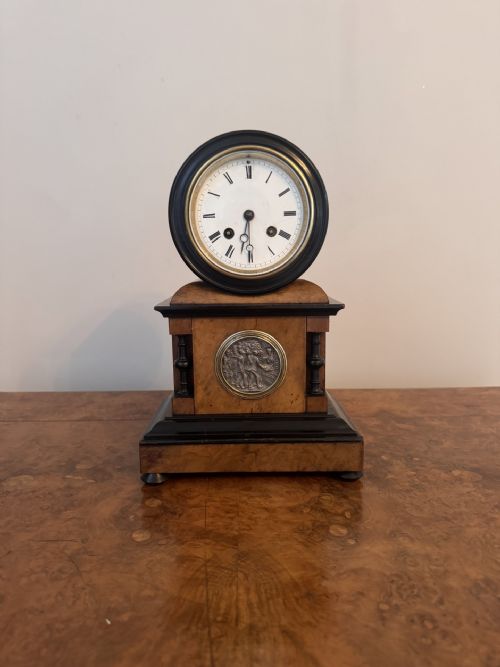
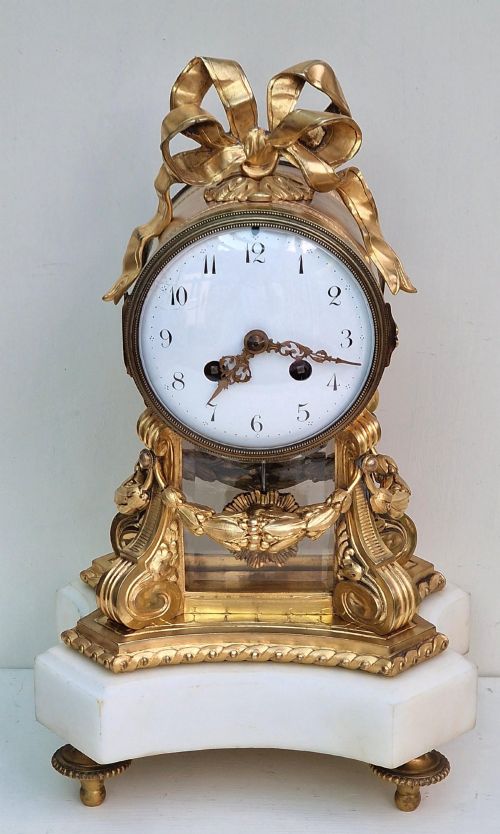
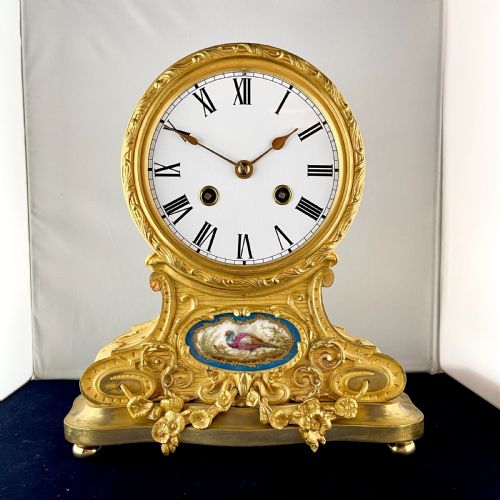
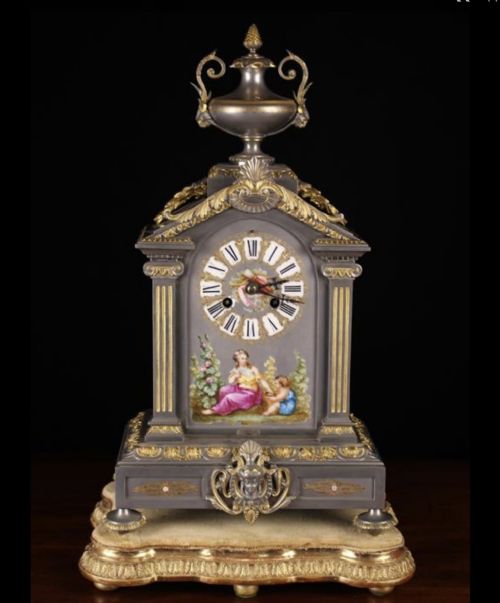
The version most commonly encountered on this page is the French mantel clock or carriage clock, often housed in gilt bronze, marble, or brass cases. Such pieces frequently incorporate enamel dials with Roman or Arabic numerals, reflecting styles from French Rococo Revival to Arts and Crafts designs.
Originating from periods including the Victorian era and the years around nineteen hundred, these clocks range from simple domestic timepieces to ornate architectural objects. They sit comfortably on shelves or mantelpieces, serving both as functional instruments and as focal points for interior decoration.
How they were made
Cases combine metals such as brass, gilt bronze, and ormolu with natural materials like white, pink, and rouge marble, ebonised wood, and glass panels. Metalwork is cast and chased, whilst glass is utilised in four-glass clock constructions to reveal the internal movement.
Enamel is applied to dials and decorative plaques through high-temperature firing, fusing powdered glass to a metal substrate to create a durable, smooth surface. Techniques such as champlevé involve cutting troughs into metal to hold the enamel pigments before firing.
Movements are constructed from brass and steel wheels and gears, often providing eight-day striking capabilities or repeating functions. Cabinetmakers and metalworkers collaborated with horologists to house these mechanical movements within decorative shells of tortoiseshell veneer, mahogany, and pewter.
Enamel Shelf Clock Retail Price Guide 2026
Typical asking prices for enamel shelf clock among the pieces listed under this phrase on Sellingantiques today, from the lower quarter to the upper quarter. They describe what is for sale here now, not the wider market.
Some nineteenth-century French clockmakers tucked tiny musical boxes inside their marble cases so the household could enjoy a tune alongside the ticking.
What varies in quality
The distinction between standard production and top-tier work lies in the depth of chasing on gilt bronze and ormolu mounts, and the crispness of the enamel dial painting. Higher quality examples exhibit finely hand-painted dial details and heavy, substantial metal casting rather than lighter pressed brass.
Materials dictate the upper tier of the range, where genuine marble blocks, rich mahogany, or bespoke pewter work by known designers replace simpler ebonised woods. The integration of complex movements, such as striking and repeating mechanisms, separates standard timepieces from superior horological examples.
David Veasey for Liberty and Co·Archibald Knox for Liberty and Co
The Enamel Shelf Clock Glossary
- Champleve
- An enamelling technique where troughs are dug into a metal surface and filled with enamel powder before firing. This method creates patterned decorative cells across clock faces and cases.
- Ormolu
- A technique of applying finely ground high-carat gold to a bronze object using a mercury amalgam. It provides a rich golden finish to nineteenth-century clock mounts.
- Drumhead
- A clock case design featuring a circular dial housing shaped like a drum atop a supporting base. This form is frequently seen in nineteenth-century mantel clocks.
- Carriage clock
- A small, portable spring-driven clock originally designed for travelling officers and gentry. They typically feature brass frames with bevelled glass panels.
- Four glass clock
- A mantel clock featuring glass panels on all four sides, allowing an unobstructed view of the internal mechanical movement and pendulum. They are characteristic of late nineteenth and early twentieth-century French manufacture.
Enamel Shelf Clock: Frequently Asked Questions
What is an enamel shelf clock?
An enamel shelf clock is a domestic timepiece featuring a fused glass enamel dial or decorative plaque, housed within a case of brass, marble, or wood.
These clocks were produced during the nineteenth and early twentieth centuries, combining mechanical timekeeping with the decorative aesthetics of the Victorian and Edwardian eras.
How do I wind an antique clock?
Antiques with mechanical movements are wound using a specific key fitted to the winding arbors on the dial face. Care must be taken not to overwind the mainspring.
Most domestic shelf clocks require winding once every eight days, depending on whether they are simple timepieces or feature striking trains.
Where should I place a mantel clock?
These clocks are designed to sit upon flat, stable surfaces such as mantelpieces, shelves, or console tables where they can be easily viewed and heard.
Ensure the surface is level so the pendulum swings evenly, which keeps the mechanical movement running accurately without stopping.
How do I identify French carriage clocks?
French carriage clocks are typically housed in rectangular brass frames with bevelled glass viewing windows and a swinging handle on top. Many contain platform escapements visible through the upper glass panel.
They emerged strongly in the nineteenth century as portable timepieces, often accompanied by leather travelling cases.