



Empire Tripod Table
An empire tripod table brings neoclassical balance and striking bronze mounts to a room.
Empire Tripod Table
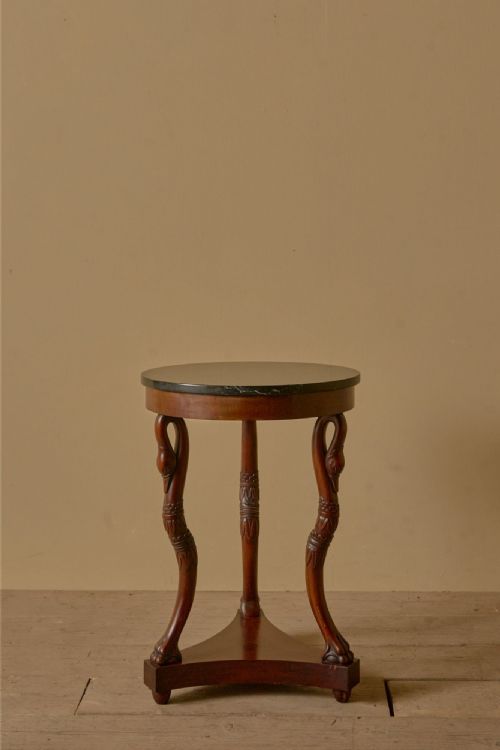
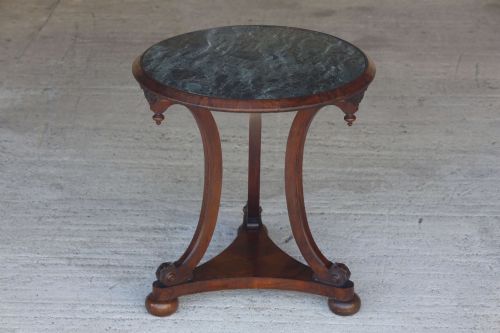
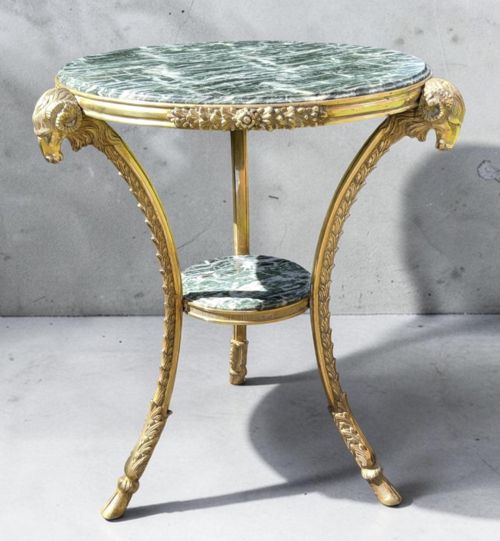
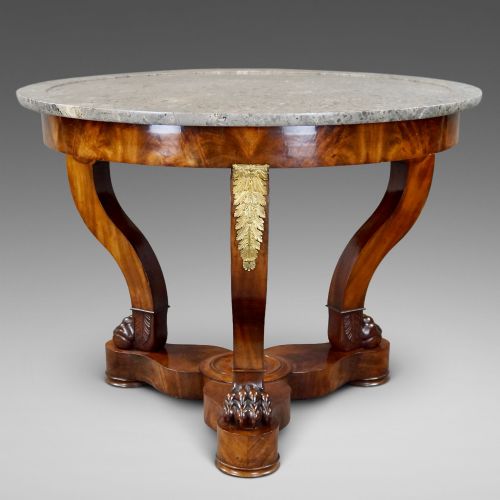
An empire tripod table stands on a central column supported by three legs, drawing on neoclassical design vocabulary. These pieces serve as centre tables, gueridons, side tables, and occasional tables within domestic interiors.
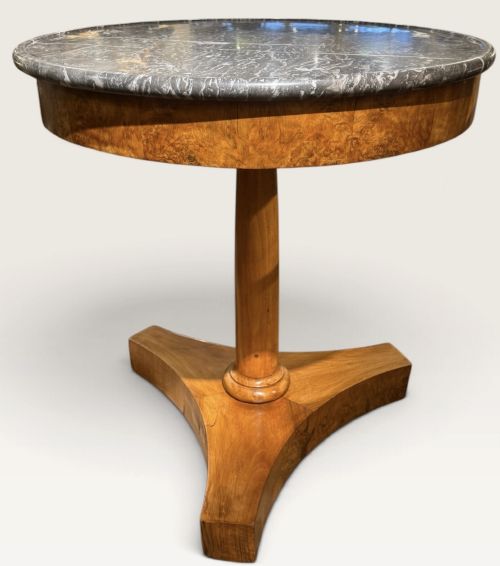
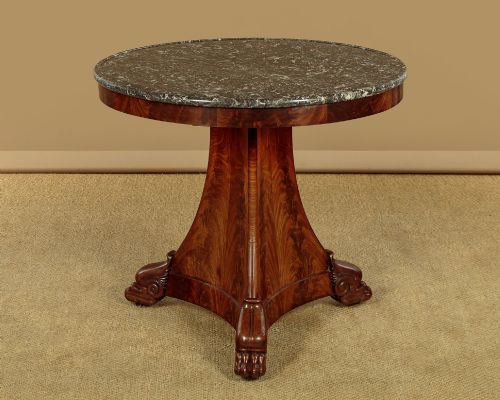
The most common form met here is the French gueridon, typically featuring a circular marble top resting on a mahogany structure. Walnut, birch, and giltwood also appear across the selection.
Originating during the early nineteenth century and continuing through revival periods, these tables display distinct regional variations from English, French, and Swedish workshops.
Materials and Construction
Cabinetmakers utilised dense timbers like mahogany and burr walnut for the main bodies, often constructing circular tops designed to hold heavy marble inserts. Birch and painted surfaces provide alternative finishes across different periods.
Cast brass, ormolu, and gilt bronze provide the characteristic mounts, such as rams heads, swans, and laurel motifs. These metallic elements are secured to the wooden columns and bases to accent the architectural lines.
Empire Tripod Table Retail Price Guide 2026
Typical asking prices for empire tripod table among the pieces listed under this phrase on Sellingantiques today, from the lower quarter to the upper quarter. They describe what is for sale here now, not the wider market.
Listings feature mahogany, burr walnut, and birch timbers paired with marble tops and cast brass or ormolu mounts.
Assessing Quality
The precision of the cast metal mounts dictates much of the visual success, with finely chased ormolu showing sharper detail than simpler cast brass. The weight and integration of the marble top into the timber frame further distinguish finer examples.
Timber selection and veneer matching on the column and base reveal the maker's hand. Higher quality pieces maintain crisp carving on wooden swan or ram details rather than relying on soft, rounded moulding.
The Empire Tripod Table Glossary
- Gueridon
- A small circular table on a central pillar, frequently topped with marble. This form developed in seventeenth-century France and remained popular through the nineteenth century.
- Ormolu
- Gilt bronze ornamentation applied to furniture and lighting. The technique involves creating an amalgam of gold and mercury applied to copper or brass.
- Restauration
- A French stylistic period spanning the early nineteenth century, bridging the Empire style and later nineteenth-century revivals. Furniture from this era often retains neoclassical restraint.
- Neoclassical
- A style reviving classical Greek and Roman motifs, dominating furniture design during the early nineteenth century. Columns, laurel wreaths, and animal supports are typical expressions of this aesthetic.
Empire Tripod Table: Frequently Asked Questions
What is an empire tripod table?
An empire tripod table is a small stand supported by a central column and three feet, drawing on early nineteenth-century neoclassical design.
These pieces typically feature circular tops made of marble or timber, often decorated with bronze or brass mounts.
How were gueridons used originally?
Gueridons functioned primarily as movable stands for lighting, holding candlesticks or candelabra in grand rooms.
Over time, they adapted into general occasional tables for holding small objects, drinks, or decorative items within domestic spaces.
How do I care for a marble top?
Marble tops require simple cleaning with a damp cloth and mild, neutral soap to avoid scratching or staining the polished stone.
Acidic liquids such as wine or citrus juice should be wiped away immediately to prevent etching the surface polish.
How do I distinguish revival pieces?
Revival pieces from later periods often show mechanical saw marks or differing construction methods inside the pillar and base joints.
Comparing the patination of the timber and the crispness of the brass or ormolu casting helps separate nineteenth-century originals from later interpretations.