

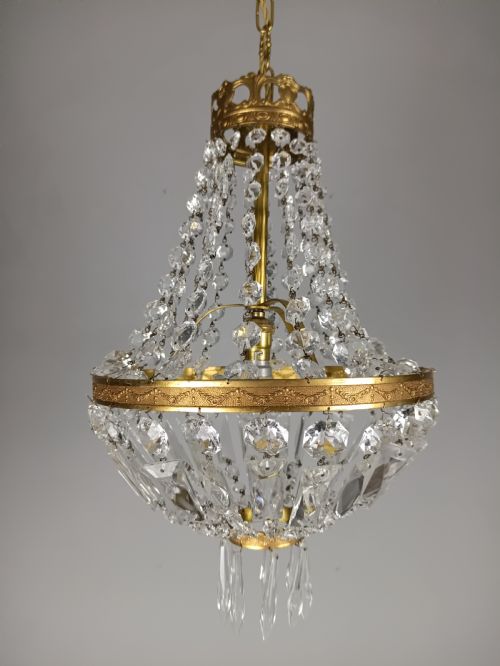


Empire Crystal Fixture
An empire crystal fixture brings a sharp cascade of cut glass and metalwork to a room, channelling classical French design.
Empire Crystal Fixture
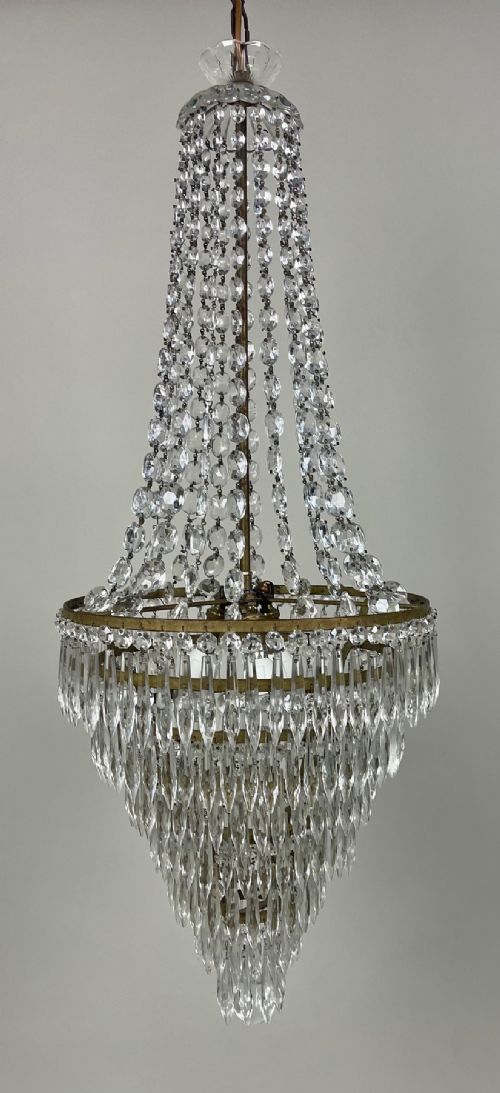
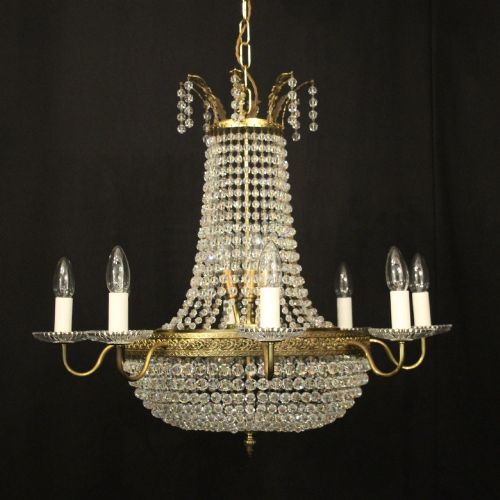
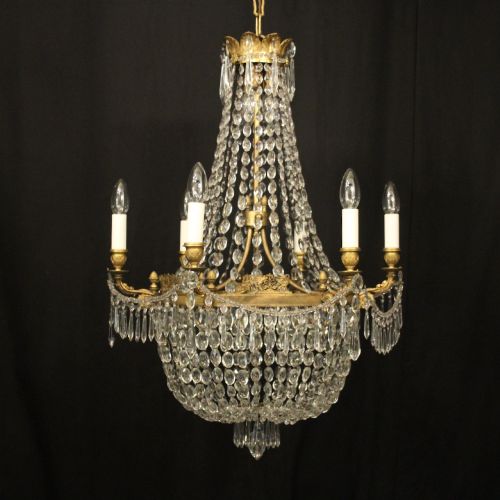
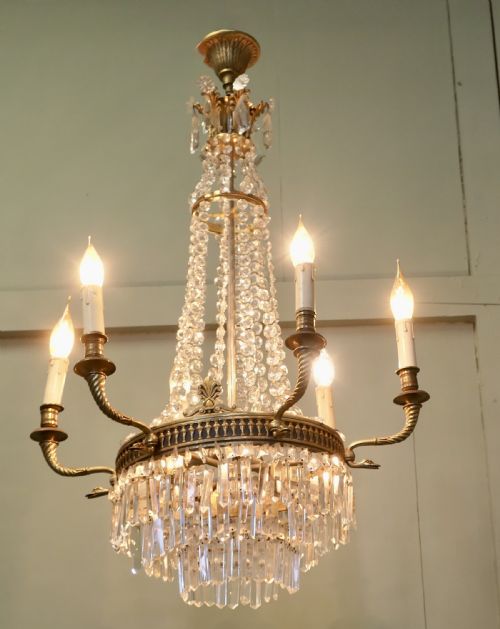
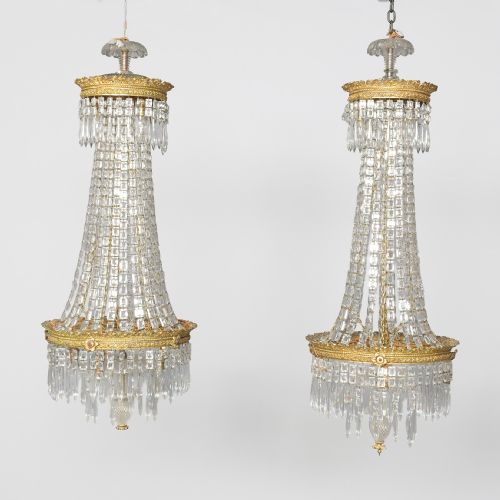
When you search for an empire crystal fixture, you are looking at overhead illumination rooted in classical design, featuring tiers of glass drops suspended from a central frame. The examples you meet on this page span from the nineteenth century through the early decades of the twentieth century, with a strong presence of French manufacture.
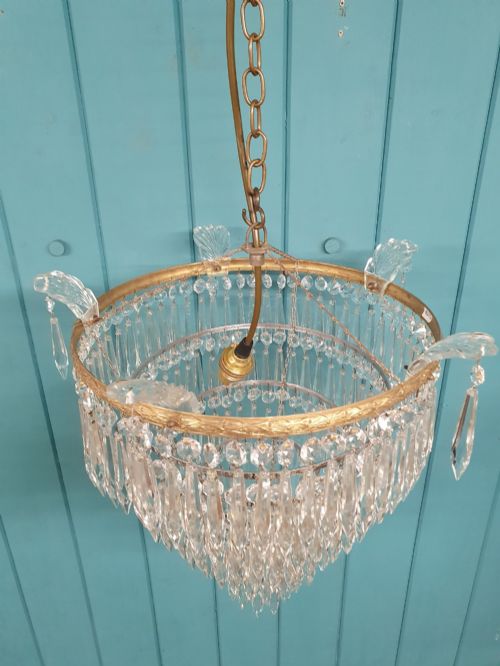
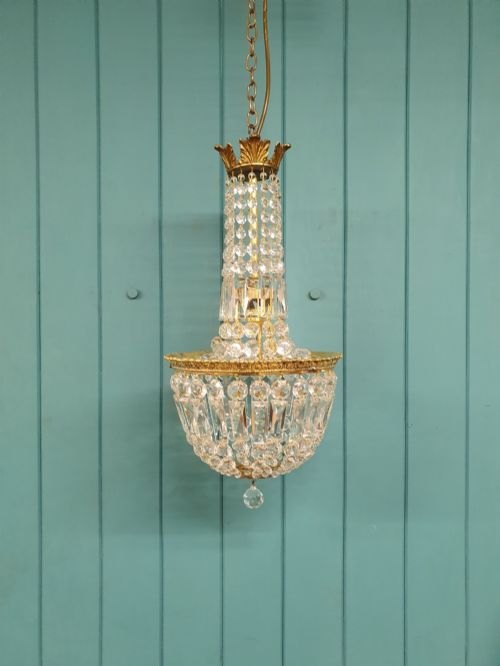
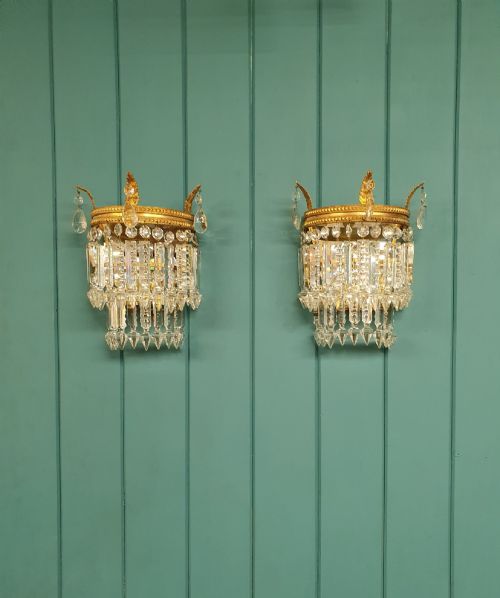
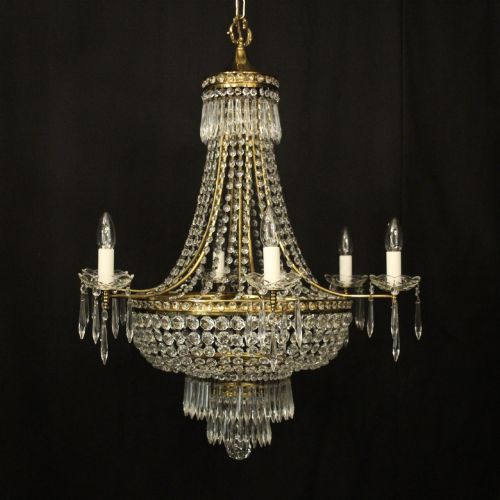
Forms range from grand multi-light tent and waterfall chandeliers down to single-light basket fixtures and matching wall lights. You will encounter styles running from French Empire and Regency through to Art Deco reinterpretations, alongside Russian Empire and Edwardian pieces.
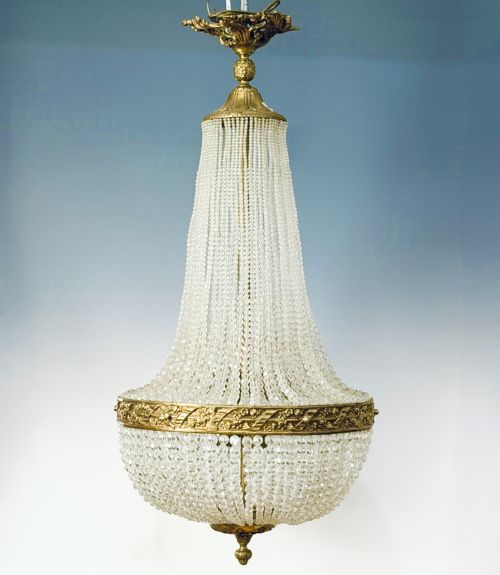
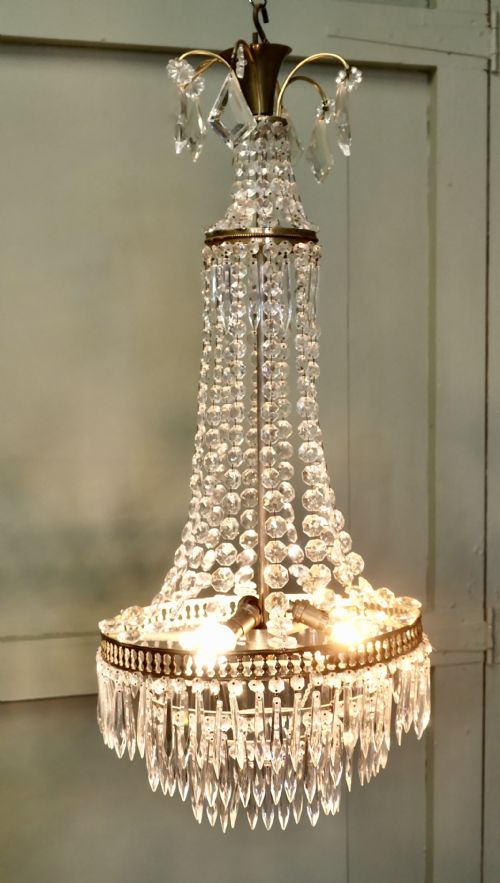
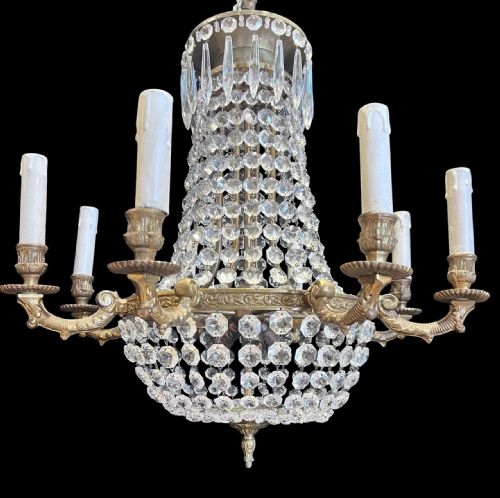
The silhouette typically relies on an upper crown or tent formation that funnels light down through strings of prisms into a lower bowl, basket, or waterfall array. Brass, gilt bronze, and silver-plated metal provide the structural backbone for these hanging assemblies.
How they were made
The framework of an empire crystal fixture relies on cast brass, gilt bronze, or silver-plated metal shaped into rings, crowns, and branch arms. Metal elements frequently exhibit chased or leaf decoration along the upper mounts and bobeches.
Suspended from these metal skeletons are various forms of glass, including cut crystal, moulded crystal glass, and standard cut glass prisms. Individual drops are wired or pinned together to form the cascading swags, tents, and bags characteristic of the type.
Empire Crystal Fixture Retail Price Guide 2026
Typical asking prices for empire crystal fixture among the pieces listed under this phrase on Sellingantiques today, from the lower quarter to the upper quarter. They describe what is for sale here now, not the wider market.
Compact eight-inch prison bag chandeliers prove that grand classical cascading style can scale down to fit the most modest hallways.
What varies in quality
The distinction between tiers of quality rests upon the crispness of the metal casting and the depth of the gilding or plating. Finer pieces demonstrate substantial gilt bronze or heavy brass frames with sharp leaf detailing rather than simplified stamped components.
Crystal quality dictates the brilliance of the piece, with high-end examples utilising heavy cut glass and precise prism facets that refract light cleanly. The complexity of the assembly, such as intricate tent-and-waterfall configurations with numerous light branches, elevates the structural ambition of the fixture.
Wedgwood
The Empire Crystal Fixture Glossary
- Tent and waterfall
- A lighting configuration where an upper conical section of strung crystals feeds down into a cascading outer fringe of glass drops. This design defines much of the French Empire aesthetic found in period chandeliers.
- Bag chandelier
- A fixture style featuring a flat or rounded upper crown from which dense vertical strands of crystals drop downward into a tapered bag shape. These are often encountered in more compact dimensions.
- Gilt bronze
- Copper alloy treated with a layer of gold, commonly used in nineteenth-century French frames to provide a warm, enduring metallic lustre. It resists tarnishing better than untreated brass.
- Bobeche
- The drip pan seated beneath the candle nozzle or light fitting to catch wax or simply finish the arm junction. In these fixtures, they are frequently trimmed with pendant crystal prisms.
- Prism
- A cut piece of glass designed to refract light into spectral colours. They appear in various shapes throughout the swags and borders of these hanging lights.
Empire Crystal Fixture: Frequently Asked Questions
How do I hang a heavy crystal chandelier safely?
Suspension requires fixing directly into ceiling joists or using a structural support iron capable of holding the combined weight of metal and glass. Professional installation is essential given the substantial mass of gilt bronze and crystal components.
Electrical wiring must also be upgraded to modern standards to handle the multi-light configurations safely while preserving the vintage aesthetic of the fixture.
What rooms suit an empire crystal fixture?
These fixtures demand adequate ceiling height and space to allow the cascading crystal drops and metal arms to read clearly without obstruction. Dining rooms, entry halls, and high-ceilinged reception rooms provide the ideal volume for light to pass through the prisms.
Pairing them with matching wall lights helps unify the illumination scheme across larger architectural spaces.
How do I clean an antique crystal fixture?
Routine maintenance involves dusting the glass elements carefully in place using a soft mitt or specialised spray cleaner designed for chandeliers. Removing individual prisms for deep washing requires patience and secure reattachment to their original wire pins.
Harsh chemical solvents must be avoided on gilt bronze and silver-plated surfaces to protect the historical finish of the metal.
How can I tell an Edwardian piece from a nineteenth-century one?
Nineteenth-century examples frequently employ heavier cast gilt bronze frames with dense, elaborate tent-and-waterfall configurations reflecting French Neoclassical or Empire revivals. Edwardian pieces often streamline these forms, sometimes introducing lighter brass structures or more compact basket formats.
Examining the wiring channels, metal patination, and cut of the glass prisms helps clarify the manufacturing era.