








Emerald Green Glasses
These emerald green glasses bring striking colour and historical weight to a room, offering rich hues shaped by Georgian, Victorian, and Art Deco makers.
Emerald Green Glasses
The most common drinking vessels on this page are wine and hock glasses, frequently found in matched sets or pairs dating from the mid-nineteenth century onwards. These pieces showcase deep rich tones, often paired with clear crystal overlays or delicate enamel painting.
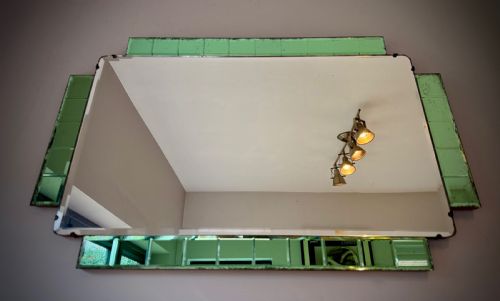
Beyond vessels, the selection encompasses decorative items such as table lustres, dresser boxes, mirrors, and jewellery mounted in sterling silver or rose gold. Each category reflects the prevailing aesthetic of its era, from ornate Victorian enamel work to geometric Art Deco lines.
How they were made
Makers achieved the distinctive colour using metallic oxides in the molten batch, producing deep jewel tones that were subsequently shaped by blowing or pressing. Many examples utilise cased glass techniques, layering a saturated green exterior over clear crystal before cutting away portions to reveal the contrasting layer beneath.
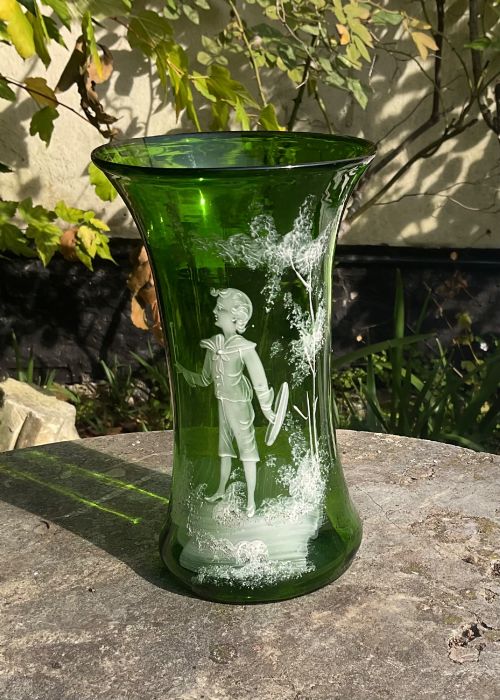
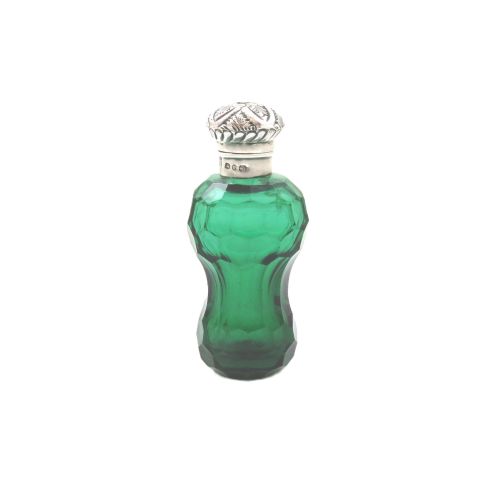
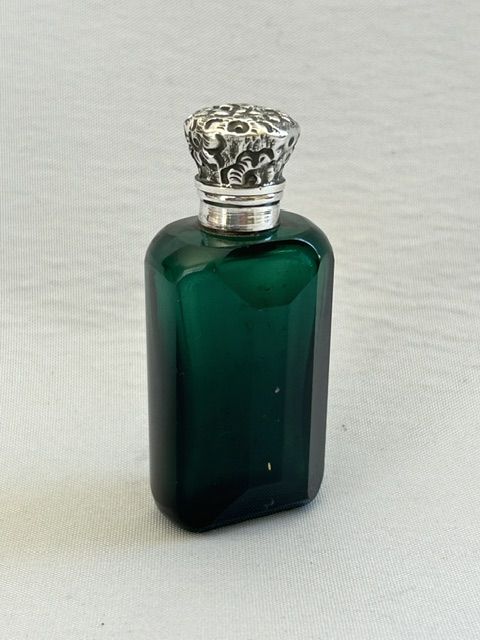
Decoration frequently involved hand-painting with enamel and gold leaf, particularly on Victorian ewers and vases depicting figures. Metal mounting in sterling silver and 15ct gold provided secure collars, hinged caps, and rims for scent bottles and decanters.
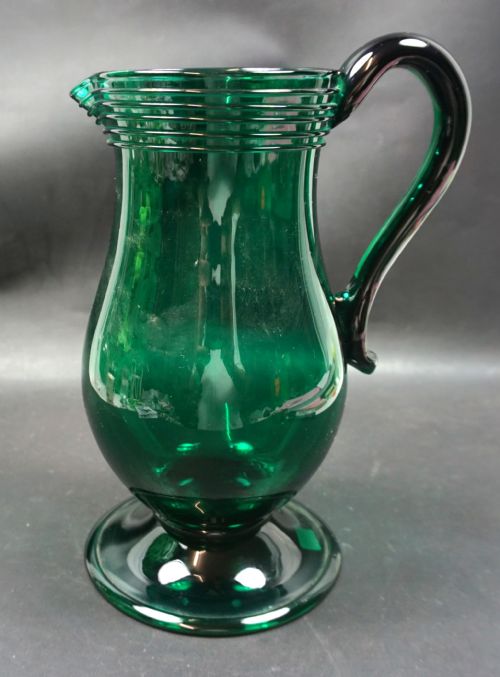
Cut glass pieces relied on wheel-cutting to carve geometric facets or botanical motifs into the surface, creating play of light through the thick walls. Molten glass trails were also applied hot to rims and handles to add tactile texture and structural reinforcement.
Emerald Green Glasses Retail Price Guide 2026
Typical asking prices for emerald green glasses among the pieces listed under this phrase on Sellingantiques today, from the lower quarter to the upper quarter. They describe what is for sale here now, not the wider market.
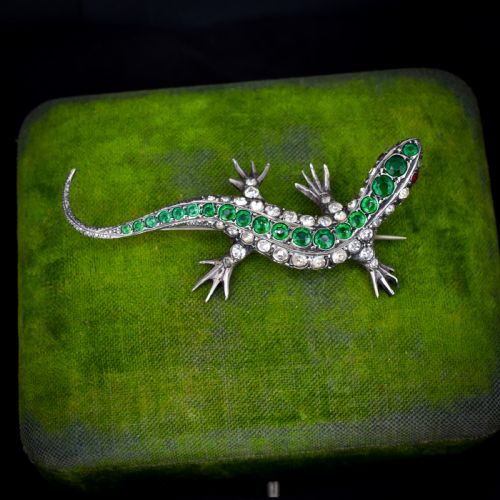
A tiny green paste lizard climbs across one Victorian silver brooch, keeping permanent watch over its wearer's lapel.
What varies in quality
Quality rests on the crispness of the glass cutting and the depth of the colour saturation within the metal. Superior vessels display sharp facet edges and an even distribution of hue without cloudy inclusions or swirling striations in the material.
The integration of metal components dictates the standard of the piece, particularly where sterling silver mounts or gold leaf gilding meet the glass body. Finer items exhibit precise fitting, hallmarked metalwork, and delicate, hand-applied enamel details that remain crisp and unrubbed.
Attribution to known designers or prominent factories elevates the standing of a piece, especially when factory marks or distinct pattern signatures are present. Artisanal execution in the engraving and the symmetry of blown forms separate standard production items from exceptional workshop output.
Baccarat·Val St Lambert·Karl Palda·René Lalique·Stuart
The Emerald Green Glasses Glossary
- Cased glass
- A vessel formed of two or more distinct layers of glass, usually a coloured exterior fused to a clear crystal interior. The outer layer is often cut away to expose the contrasting layer underneath.
- Table lustre
- A decorative two-piece mantel ornament featuring a bowl with a scalloped rim and a matching base, hung with cut glass prisms. They gained popularity during the Victorian period for catching candlelight.
- Hock glass
- A tall-stemmed wine glass traditionally used for German white wines, featuring an elongated bowl and a vibrant coloured glass body. Victorian and Edwardian examples often showcase elaborate wheel-cutting.
- Paste
- Hand-cut lead glass used to imitate gemstones in antique jewellery. It is typically set in silver or gold and dates from the Georgian and Victorian eras.
- Bristol green
- A dark, intense shade of green glass traditionally associated with English production around the eighteenth and nineteenth centuries. It was widely utilised for wine bottles, finger bowls, and decanters.
Emerald Green Glasses: Frequently Asked Questions
How do I clean antique green glassware?
Wash these items by hand in lukewarm water using a mild, non-abrasive detergent. Avoid submerging pieces with silver mounts or gilded enamel decoration for extended periods.
Dry them immediately with a soft, lint-free cloth to prevent water spots and protect fragile applied handles or rims from accidental impact.
Are these glasses safe for drinking wine?
Most antique wine glasses and hock glasses are entirely suitable for occasional use with wine or water. Older formulations containing lead crystal benefit from not storing liquids for prolonged periods.
Hand washing remains mandatory, as thermal shock from modern dishwashers can crack fragile nineteenth-century glass or damage historical enamel work.
How can I tell a Victorian piece from a Georgian one?
Georgian glassware often exhibits heavier pontil marks on the base and thicker, hand-blown walls with simpler forms like dram glasses. Victorian pieces tend to display more varied colour layering, applied silver collars, and complex enamel painting.
Examining the metal mounts for sterling silver hallmarks can also provide a reliable date of manufacture for items fitted with lids or collars.