



Emerald Green Earrings
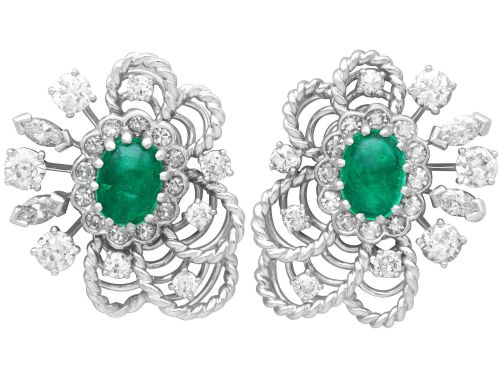
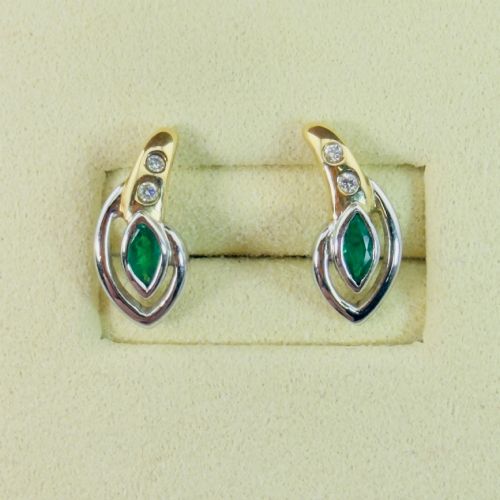
Emerald green earrings bring vibrant colour to the lobe, combining rich green stones with gold, silver, and sparkling diamonds.
Emerald Green Earrings
When you search for emerald green earrings, you encounter an array of historic designs spanning the eighteenth century through to the mid-twentieth century. These pieces range from simple stud configurations to elaborate drop earrings and complete jewellery suites.
The selections on this page draw from distinct periods including the Georgian era, the 1930s, the 1940s, and the 1950s. You are most likely to meet cluster studs and drop earrings featuring genuine emeralds or paste stones set in various golds and platinum.
Makers across different decades utilised traditional forms such as the classic halo and mid-century modern clusters. Each style reflects the prevailing aesthetic of its period, from ornate rose gold work to clean platinum lines.
How they were made
The construction of these items relies on precious metals including 14ct gold, 18ct yellow and white gold, 15ct rose gold, silver, and platinum. Artisans mounted natural emeralds alongside diamonds to create high-contrast arrangements.
Techniques varied from intricate cluster settings to secure stud mountings, frequently incorporating marquis cut stones or drop components. Historic pieces also employed paste stones as vibrant green alternatives to mined gems.
Emerald Green Earrings Retail Price Guide 2026
Typical asking prices for emerald green earrings among the pieces listed under this phrase on Sellingantiques today, from the lower quarter to the upper quarter. They describe what is for sale here now, not the wider market.
Some nineteenth-century revivals let you wear eighteenth-century style without the powdered wig.
What varies in quality
Distinctions in quality arise from the depth of the green coloration in the stones and the clarity of the accompanying diamonds. The choice of heavier metal mountings, such as platinum or solid 18ct gold, also separates finer examples from lighter iterations.
The precision of the stone cutting and the complexity of the surrounding metalwork dictate the overall refinement of the piece. Cluster configurations with substantial diamond weights demonstrate greater craftsmanship than simpler designs.
The Emerald Green Earrings Glossary
- Emerald
- A green variety of beryl valued for its rich hue. It serves as the primary focal stone in many historic drop and stud earrings.
- Cluster
- A setting style where a central stone is surrounded by a ring of smaller gems, typically diamonds. This arrangement maximises overall sparkle.
- Paste
- Hand-cut glass used historically to imitate gemstones. Green paste provides vibrant colour in eighteenth-century and vintage pieces.
- Platinum
- A dense, durable white metal utilised in fine jewellery manufacture during the twentieth century. It securely holds intricate diamond and emerald settings.
- Drop earrings
- An earring design that hangs below the earlobe rather than sitting directly against it. These often incorporate articulated joints for movement.
Emerald Green Earrings: Frequently Asked Questions
What periods do these earrings come from?
The pieces span multiple centuries, originating from the Georgian era, the 1930s, the 1940s, and the 1950s.
Later designs extending past the mid-twentieth century also appear within the collection.
Are all the green stones genuine emeralds?
While many items feature natural mined emeralds and Colombian stones, some vintage examples utilise green paste.
Paste provides a historically accurate alternative that maintains the vivid green aesthetic of the period.
What metals are typically used?
Makers employed a wide selection of precious metals including platinum, silver, and various purities of gold.
Options range from 14ct and 18ct yellow gold to 18ct white gold and 15ct rose gold.
Do these earrings come as part of sets?
Certain listings include matching jewellery suites or sets that pair earrings with rings or pendant necklaces.
These coordinated pieces share the same gemstone and metal characteristics.