



Emerald Glass Bottles
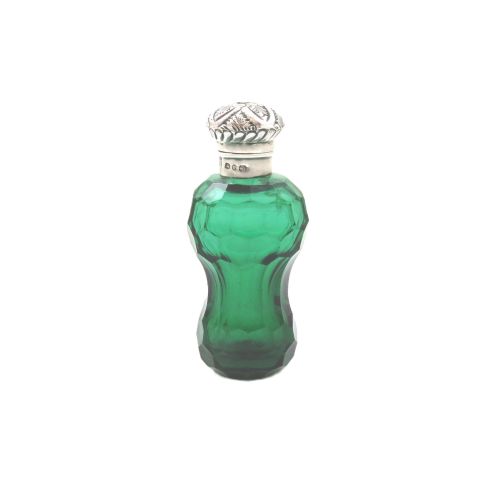
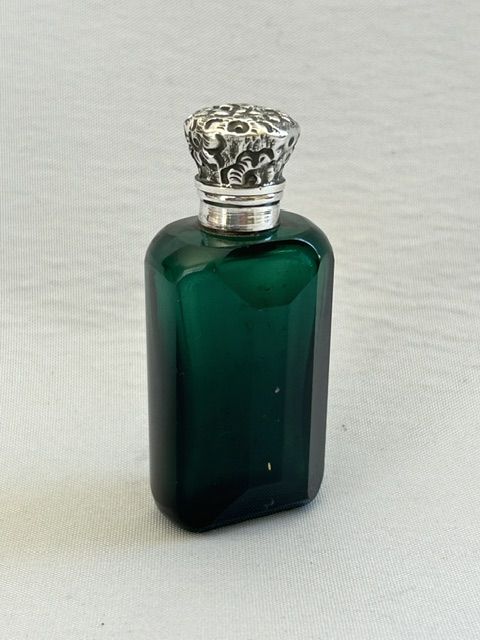
These emerald glass bottles bring a rich wash of green to a room, ranging from small scent vials to heavy decanters.
Emerald Glass Bottles
The pieces listed on this page showcase varied forms, from silver-mounted perfume vials to large wine bottles and apothecary containers. Victorian examples often feature hand-painted enamel details or silver mounts, while later twentieth century pieces reflect geometric Art Deco lines.
How they were made
Makers shaped these emerald glass bottles using traditional glassblowing techniques, sometimes incorporating cut glass facets to catch the light. The deep green colour was achieved by introducing metallic oxides into the molten glass batch during production.
Many Victorian items integrate precious metals, pairing the green glass bodies with sterling silver collars, stoppers, or hinged caps. Artisans also applied gold leaf, enamel painting, and sulphide cameos inside solid glass blocks known as dumps.
Emerald Glass Bottles Retail Price Guide 2026
Typical asking prices for emerald glass bottles among the pieces listed under this phrase on Sellingantiques today, from the lower quarter to the upper quarter. They describe what is for sale here now, not the wider market.
One solid glass dump contains a small ceramic thistle sulphide trapped forever inside the green sphere like a tiny secret.
What varies in quality
Quality in emerald glass bottles is defined by the crispness of the glass moulding, the depth of the green tone, and the finesse of any applied metalwork or painted decoration. Pieces with intact sterling silver mounts and well-preserved enamel work sit firmly at the upper end of the scale.
The integration between the glass body and secondary materials reveals the maker's hand, where tight silver collars and clear cut facets distinguish finer examples from standard utilitarian wares.
Karl Palda
The Emerald Glass Bottles Glossary
- Sterling silver
- A silver alloy containing ninety-two point five percent pure silver by mass, frequently used for the collars and tops of nineteenth century perfume bottles.
- Mary Gregory
- A style of white enamel painting depicting silhouetted Victorian children, often applied to green glass ewers and dressing table sets.
- Bristol green
- A traditional dark green glass colour traditionally associated with Bristol glasshouses and widely utilised for nineteenth century wine and scent bottles.
- Sulphide
- A small ceramic cameo embedded within clear or coloured glass, frequently seen in solid glass dumps and paperweights from the Victorian era.
- Decanter
- A stoppered vessel designed for holding and serving wine or spirits, appearing in green glass variations alongside matching drinking sets.
Emerald Glass Bottles: Frequently Asked Questions
What were emerald glass bottles used for?
These vessels served various practical and decorative roles in the home, functioning as scent containers on dressing tables, decanters for wine, or storage jars in apothecary shops.
Smaller vials held perfume or smelling salts, while larger pieces formed part of matching dressing table sets or served as decorative glassware in Victorian rooms.
How do I date an emerald glass bottle?
Dating relies on examining the manufacturing style, the form of the object, and any accompanying hallmarks on silver mounts. Victorian examples often feature floral engraving or enamel work, whereas Art Deco pieces display geometric cuts from the nineteen-thirties.
Silver mounts frequently carry assay office stamps and date letters that pinpoint the exact year of production for the metal elements.
How should I display emerald glass bottles?
Placing these bottles near a natural light source allows the deep green glass and cut facets to catch and refract the illumination. Grouping them on a dressing table or within a glass-fronted cabinet highlights their colour and variety of forms.