



Elm Storage Credenza
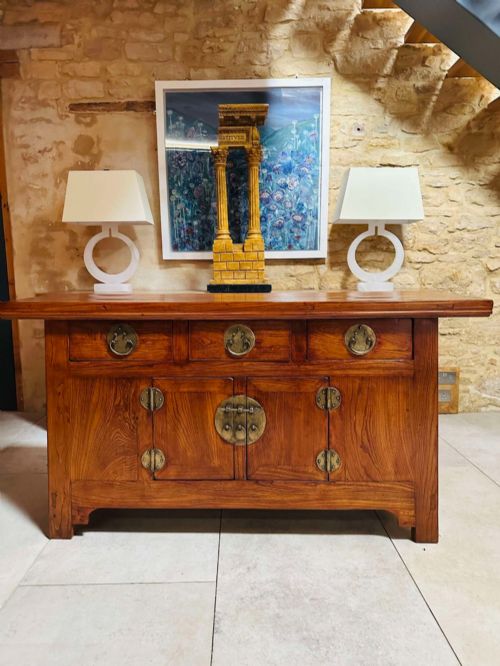
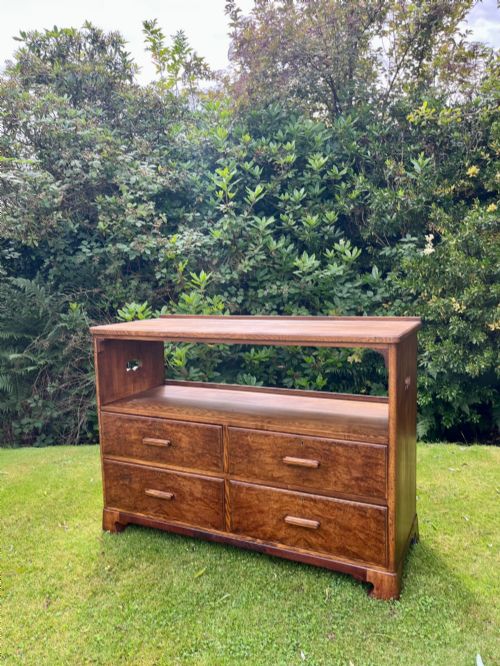
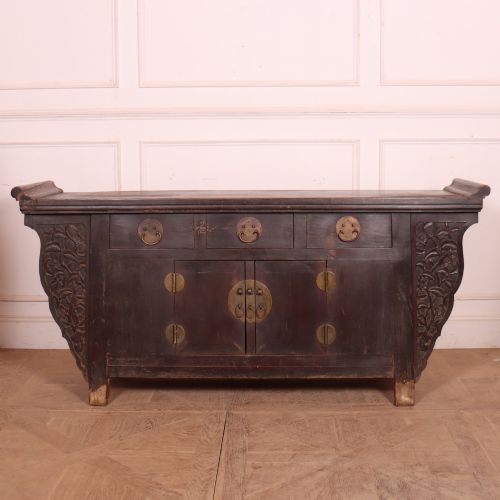
These elm storage credenza pieces bring distinct timber grain and substantial cabinetry into a room, offering both practical storage and strong decorative presence.
Elm Storage Credenza
When you search for an elm storage credenza, you are looking at substantial case furniture designed for domestic storage, most frequently appearing here as sideboards, side cabinets, and dressers. These pieces originate from diverse traditions, spanning Georgian and Dutch neoclassical European workshops alongside traditional Chinese provincial forms.
The most common versions encountered on this page date from the nineteenth century, though eighteenth-century examples and early twentieth-century pieces also feature. Their forms range from low commodes and chests of drawers to tall cupboards and dresser bases, united primarily by their utility as storage units.
Materials and construction
The construction relies heavily on native hardwoods, with standard elm and highly figured burr elm providing the primary surfaces. Cabinetmakers frequently paired these timbers with oak or general hardwoods for internal structure, while brass fittings and occasionally grey marble tops complete the composition.
Joinery techniques reflect regional traditions, from European marquetry and cabinet framing to the characteristic joinery of Chinese provincial workshops. Surface finishes preserve the natural grain patterns of the wood, highlighting the figuring in burr elm panels.
Elm Storage Credenza Retail Price Guide 2026
Typical asking prices for elm storage credenza among the pieces listed under this phrase on Sellingantiques today, from the lower quarter to the upper quarter. They describe what is for sale here now, not the wider market.
Listings span several centuries, incorporating eighteenth-century European commodes alongside nineteenth-century Chinese sideboards and early twentieth-century side cabinets.
Assessing quality in construction and material
Quality in these pieces is dictated first by the selection of the timber, where dense burr elm figuring elevates the visual impact far beyond standard straight-grained elm. The sophistication of the regional joinery and the integrity of the original hardware further separate utilitarian examples from finer cabinetmaking.
Proportion and decorative restraint also distinguish the range, as pieces with balanced dimensions and restrained carving display a higher degree of design success. The inclusion of secondary materials, such as inset marble tops or intricate marquetry work, points to more ambitious production.
Whytock and Reid
The Elm Storage Credenza Glossary
- Burr elm
- A growth deformity in the elm tree that produces highly swirled, knotted wood grain. Cabinetmakers prized this timber for decorative veneer and prominent surface panels.
- Marquetry
- The art of applying pieces of veneer to a structure to form decorative patterns. This technique appears on European casework to create geometric or floral designs.
- Commode
- A low piece of furniture with drawers or doors, functioning as a cabinet. Eighteenth-century European examples often feature marble tops.
- Dresser base
- The lower section of a traditional dresser, featuring cupboards or drawers. These sturdy pieces served as primary storage furniture in domestic interiors.
- Side cabinet
- A compact storage unit designed to sit against a wall. These cabinets provide enclosed shelving space while maintaining a smaller footprint than a full sideboard.
Elm Storage Credenza: Frequently Asked Questions
What defines an elm storage credenza?
An elm storage credenza is a heavy timber cabinet or sideboard built primarily from elm or burr elm wood. These pieces serve to store household items while functioning as decorative furniture.
They appear in various regional styles, including European neoclassical and traditional Chinese provincial designs from the eighteenth and nineteenth centuries.
How do I care for burr elm surfaces?
Burr elm requires stable indoor humidity and protection from direct sunlight to prevent the timber from drying out or splitting. Regular dusting with a soft, dry cloth maintains the finish.
Avoid placing these pieces near direct heat sources or applying modern silicone-based polishes that can damage the historical timber surface.
Where were these cabinets made?
The pieces originate from a broad geographical spread, encompassing British, Dutch, and French workshops alongside Chinese provincial regions like Shanxi. Each region utilised local construction methods suited to the dense hardwood.
European pieces often incorporate classical styling, whereas Chinese examples emphasise traditional frame construction and regional joinery.
How can I tell the period?
Dating relies on examining the construction methods, regional style markers, and the hardware integrated into the cabinet. Eighteenth-century pieces often display distinct neoclassical or provincial European traits.
Nineteenth-century examples frequently show Arts and Crafts influences or traditional Chinese provincial forms, reflecting the period of their manufacture.