

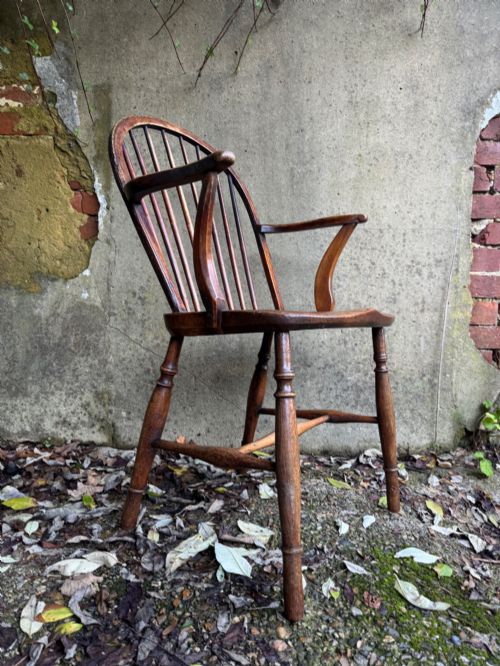
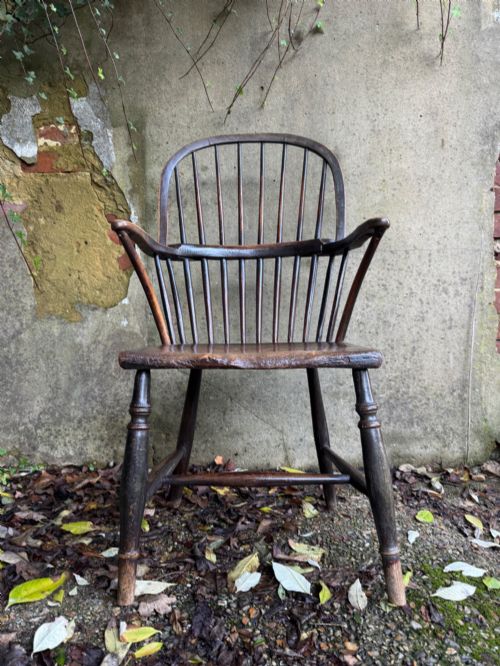
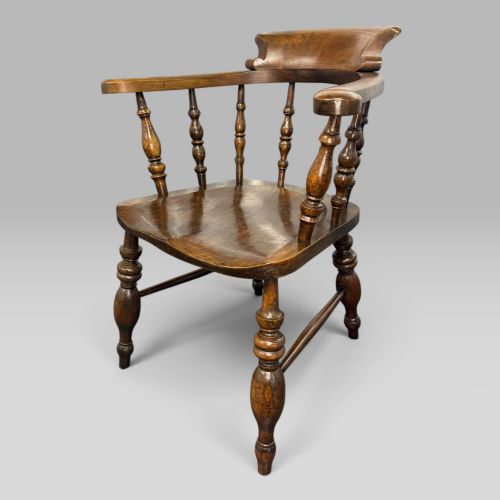
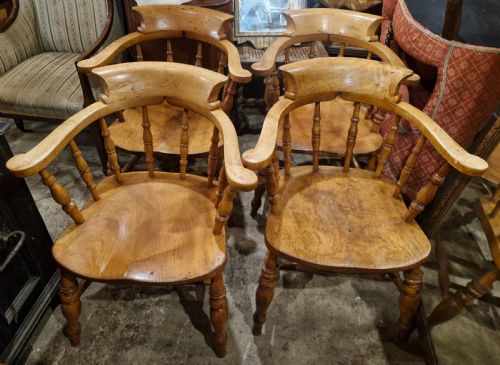
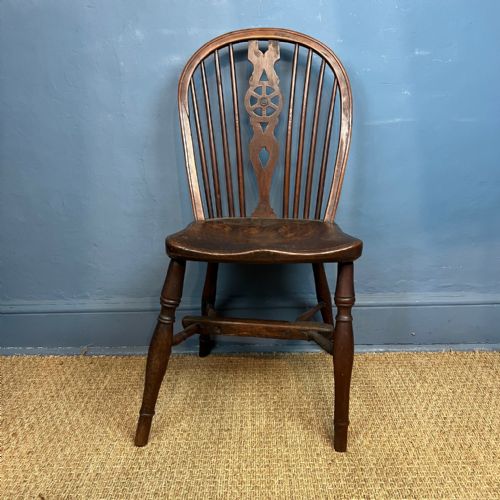
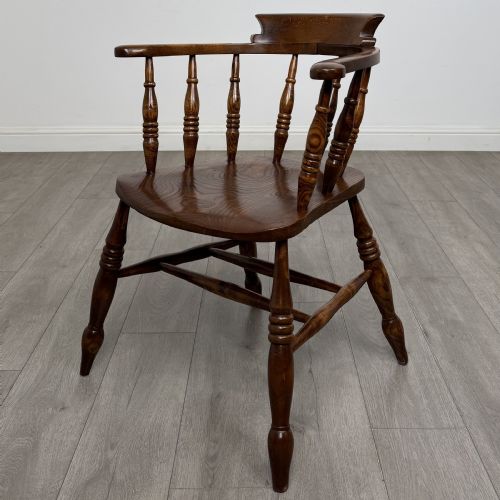


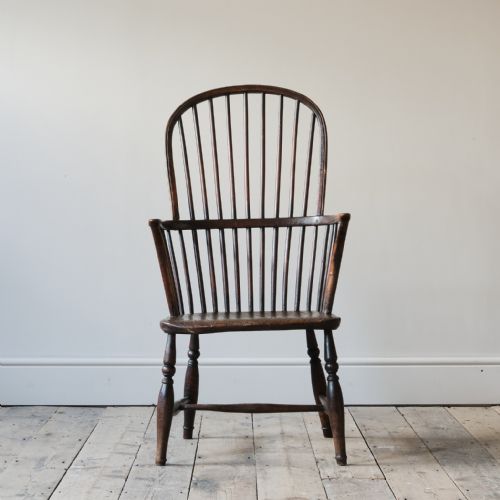


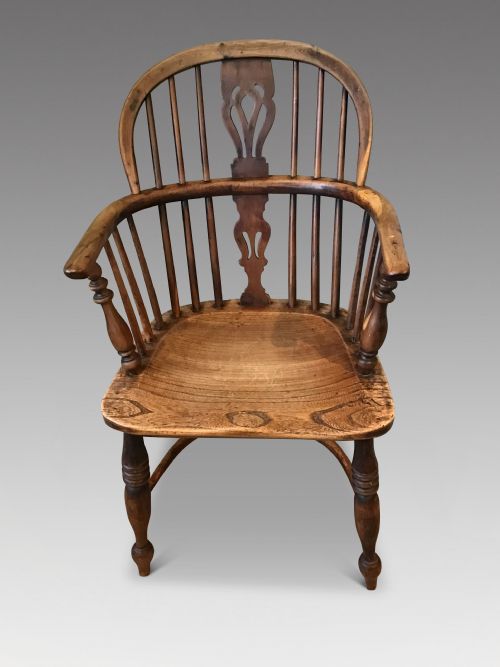
Elm Seated Bow Back
These elm seated bow back chairs offer sturdy rural comfort and honest craftsmanship, making them a practical choice for everyday seating.
Elm Seated Bow Back
An elm seated bow back chair combines a solid, sculpted elm seat with a continuous steam-bent wooden bow forming the arm rail and backrest. These pieces span the eighteenth, nineteenth, and early twentieth centuries, reflecting English country and vernacular traditions.
Buyers will most commonly encounter nineteenth-century armchairs and low back Windsor chairs on this page. Examples often feature combinations of ash, beech, and yew alongside the characteristic elm seat.
How They Were Made
Maker-craftsmen utilised green woodworking techniques, selecting timbers for their specific structural properties. Elm provided a tough, interlocking grain for the solid seat that resisted splitting under heavy use.
Ash and beech were shaped into turned spindles and legs, while flexible yew or ash was steam-bent to form the continuous bow back. Traditional wedged tenon joints secured the legs and spindles directly into the carved seat plank.
Elm Seated Bow Back Retail Price Guide 2026
Typical asking prices for elm seated bow back among the pieces listed under this phrase on Sellingantiques today, from the lower quarter to the upper quarter. They describe what is for sale here now, not the wider market.
Listings feature items from the eighteenth, nineteenth, and early twentieth centuries, created within English country vernacular traditions.
What Varies in Quality
Quality rests in the selection of timbers and the depth of figuring within the wood. Burr yew accents and richly patinated surfaces elevate the presence of certain examples.
Structural integrity depends on the precision of the turned spindles and the comfort of the sculpted seat saddle. Proportion and balance across the arms and legs distinguish standard utility items from finer vernacular work.
The Elm Seated Bow Back Glossary
- Bow back
- A continuous steam-bent rail that forms the upper back and arms of the chair. This construction distributes weight evenly and provides robust structural support.
- Smoker's bow
- A low-backed Windsor armchair with a rounded arms rail, often used in public houses and parlours. These chairs feature sturdy turned spindles and low profiles.
- Windsor chair
- A chair built with a solid wooden seat into which the legs and back spindles are tenoned directly. They developed distinct regional variations across the English countryside.
- Vernacular
- Objects made by local tradesmen using traditional methods and native materials rather than following high-style academic designs. These pieces prioritize function and local availability.
- Comb back
- A Windsor chair variation where the central spindles rise through a horizontal crest rail to resemble the teeth of a comb.
Elm Seated Bow Back: Frequently Asked Questions
What is an elm seated bow back?
An elm seated bow back is a traditional wooden chair featuring a sculpted elm seat and a continuous bentwood rail forming the back.
These pieces belong to the wider Windsor family and were made across English rural workshops for domestic and commercial use.
How do I care for my chair?
Keep wooden chairs away from direct heat sources and sudden temperature changes to prevent the timber from drying out or splitting.
Apply a natural wax polish occasionally to nourish the surface and maintain the historic patina.
Are these chairs comfortable for daily use?
The saddle-shaped elm seats are ergonomically carved to fit the body, offering surprising support for dining or desk work.
Adding a simple loose cushion can provide extra comfort for prolonged sitting.
How are different periods identified?
Turned leg styles, the thickness of the bentwood rail, and tool marks on the underside of the seat help indicate the period of manufacture.
Earlier eighteenth-century examples often display simpler, heavier turnings compared to later Victorian iterations.