

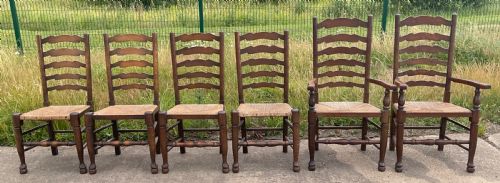


Elm and Rush Chairs
Elm and rush chairs are honest country seating built for daily toil, bringing tactile texture and rustic warmth directly into modern interiors.
Elm and Rush Chairs
Elm and rush chairs encompass robust seating forms rooted in vernacular British tradition, ranging from single farmhouse chairs to large dining sets. When you search for elm and rush chairs, you encounter regional variations shaped by local makers during the eighteenth, nineteenth, and early twentieth centuries.
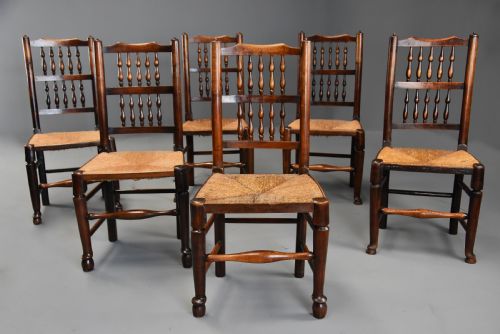
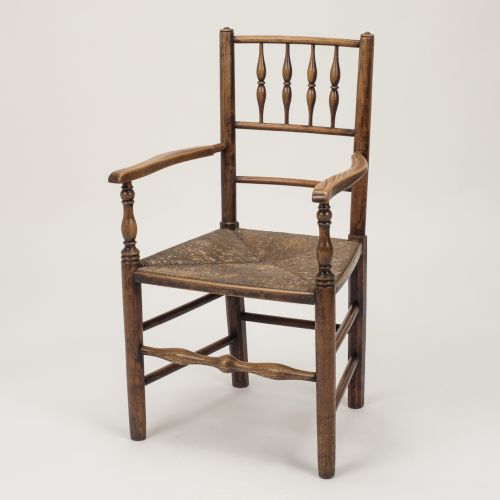
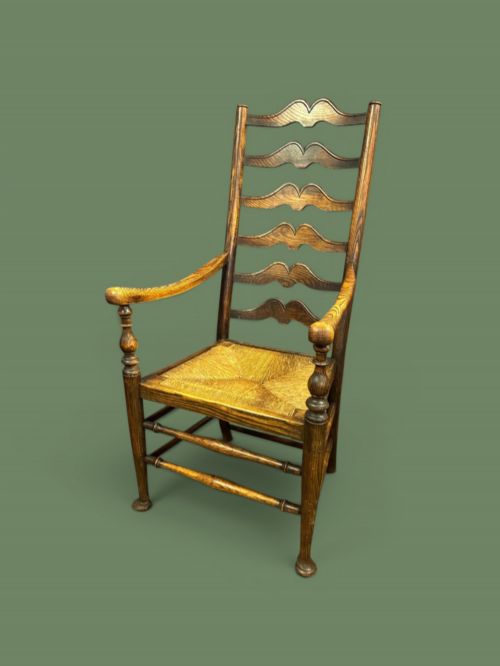
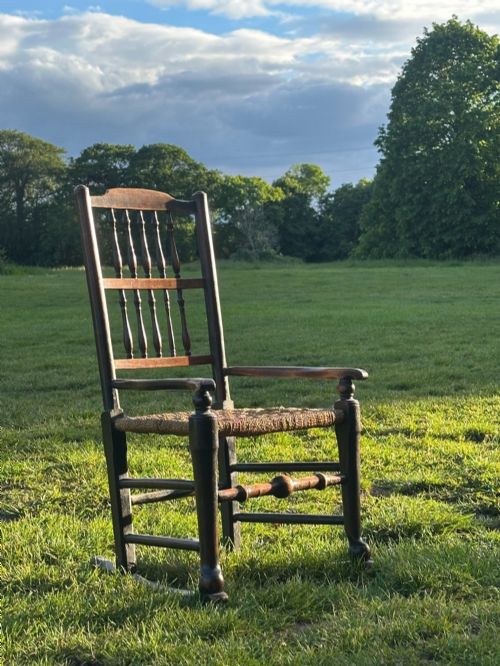
The dominant forms on this page include ladderback and spindleback dining chairs, sturdy armchairs, carvers, and occasional rocking chairs. These pieces originate primarily from English country workshops, carrying the functional hallmarks of provincial domestic life.
Materials and construction
Makers built these chairs using strong native timbers, pairing resilient elm for seats with ash, beech, fruitwood, or oak for spindles, frames, and ladderbacks. Elm provided a tough, interlocking grain that resisted splitting under heavy use.
Seats were hand-woven using natural rush material, wound tightly around timber rails to create a springy, durable platform. Turning lathes and hand-drawknives shaped the uprights and stretchers, relying on traditional pegged joinery rather than metal fastenings.
Elm and Rush Chairs Retail Price Guide 2026
Typical asking prices for elm and rush chairs among the pieces listed under this phrase on Sellingantiques today, from the lower quarter to the upper quarter. They describe what is for sale here now, not the wider market.
Many of these chairs bear the subtle indentations of generations of elbows and coats, proof that country furniture was built for real living.
Judging quality and character
Quality rests in the integrity of the timber framing and the tightness of the original rush weaving. Better examples display balanced proportions, deep surface patination from centuries of handling, and minimal structural replacement.
The sophistication of the spindle turning and the elegance of the ladderback crest rails distinguish finer provincial pieces from simpler utility seating. Uniformity across larger dining sets also elevates a group above mismatched assemblies.
The Elm and Rush Chairs Glossary
- Rush
- A marsh plant used for centuries to weave durable, flexible chair seats by hand. It provides a comfortable, textured surface that ages to a warm straw tone.
- Spindle back
- A chair back constructed with vertical turned wooden spindles supporting the top rail. This design lightened the frame while maintaining structural strength.
- Ladderback
- A chair back featuring horizontal arched slats between the rear uprights. The style dates back centuries and remains a staple of country vernacular furniture.
- Carver
- An armchair, usually designed with elbow rests to sit at the head of a dining table. These pieces often match a larger set of single dining chairs.
- Patina
- The deep, lustrous surface sheen developed on wood through decades of use, cleaning, and exposure to light. It is a key indicator of age and careful handling.
Elm and Rush Chairs: Frequently Asked Questions
Are these chairs comfortable for daily dining?
Country chairs were designed for practical, everyday use around farmhouse tables. The woven rush yields slightly to the body, offering surprising support during long meals.
Adding loose seat pads is optional if you prefer extra softness. Their ergonomic upright backs encourage a natural, supportive seating posture.
How can I tell an 18th-century chair from a Victorian copy?
Examine the tool marks, timber shrinkage, and wear patterns on the frame and underside. Earlier eighteenth-century chairs often show hand-adzed seats and irregular lathe turnings.
Victorian and later vernacular pieces tend to feature more uniform machine-assisted components and tighter, standardised dimensions. The depth of the surface patina also reveals the true passage of time.
Can I mix different styles around a table?
Country vernacular furniture was rarely produced in identical factory sets until the industrial era. Mixing ladderback and spindleback designs from similar periods creates an authentic, collected interior.
Matching the timber type, such as elm and ash, helps unify disparate chairs around a single dining table. Similar seat heights ensure everyone sits at a comfortable level.