





Elephant Accent Table
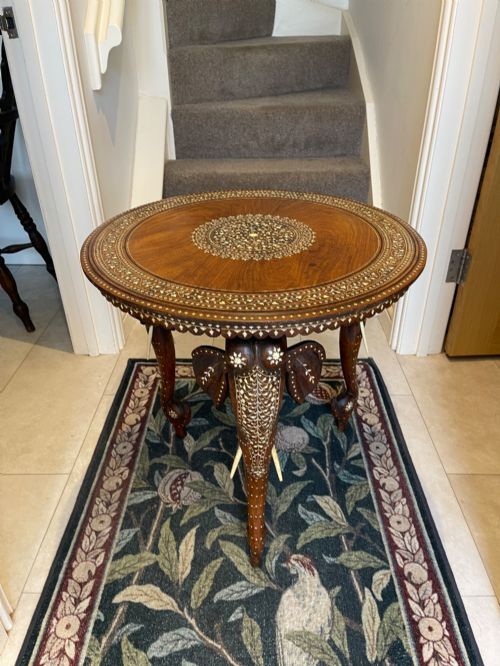
These carved elephant accent table examples bring distinct nineteenth and early twentieth century colonial craftsmanship into a room.
Elephant Accent Table
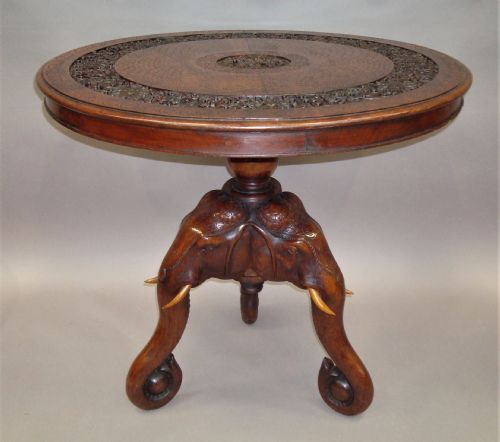
An elephant accent table serves primarily as an occasional or side table, incorporating carved animal figures into the structural support of the piece. The designs range from tripod bases featuring detailed elephant heads to side tables resting on four distinct elephant legs.
Most pieces seen here originate from nineteenth and early twentieth century workshops, spanning periods from the 1870s through the 1930s. The forms manifest predominantly within Anglo-Indian, Anglo-Burmese, and Chinoiserie styles.
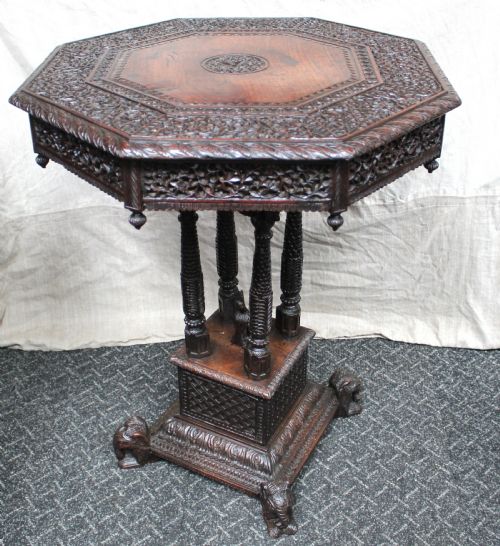
Makers utilised regional aesthetic traditions, often combining animal motifs with geometric or architectural elements such as octagonal tops and Taj Mahal inspired fretwork. Buyers encounter both utilitarian side tables and decorative plant stands within this category.
How they were made
Artisans constructed these tables using dense tropical timbers such as teak, rosewood, and general hardwood, which provided a sturdy foundation for intricate carving. Workshops in Hoshiarpur and the wider Bombay Presidency specialised in working these hard timbers.
Surface decoration frequently involved detailed bone inlay set directly into the wooden framework, contrasting light white bone against dark polished wood. Certain forms also incorporated carved bone components alongside timber structures.
Chinoiserie variations utilised porcelain as a primary structural or decorative element, exemplified by figural table lamps integrating ceramic animals. Woodcarving techniques varied from deep relief work on animal legs to delicate pierced patterns on table tops.
Elephant Accent Table Retail Price Guide 2026
Typical asking prices for elephant accent table among the pieces listed under this phrase on Sellingantiques today, from the lower quarter to the upper quarter. They describe what is for sale here now, not the wider market.
Countless Victorian tea drinkers discovered that a miniature pachyderm holding up the biscuit stand made Monday afternoons considerably more civilised.
What varies in quality
The precision of the bone inlay work dictates the refinement of decorated surfaces, with tighter geometric fits and minimal filler indicating superior craftsmanship. The choice of dense timbers like rosewood or well-selected teak also elevates the standing of a piece.
The Elephant Accent Table Glossary
- Anglo-Indian
- Describing decorative arts produced during the British Raj by local craftsmen adapting traditional motifs for Western buyers. These items often blend British furniture forms with indigenous carving techniques.
- Bone inlay
- A decorative technique where small pieces of animal bone are embedded into recesses carved into a wooden surface. This method creates contrasting patterns, frequently geometric or floral in design.
- Hoshiarpur
- A city in Punjab known historically for intricate woodwork and inlay traditions. Pieces from this region commonly feature dense ivory or bone decoration set into shisham or teak wood.
- Chinoiserie
- European interpretations and imitations of Chinese and East Asian artistic traditions, popular across various historical periods. The style emphasises exotic motifs and figural porcelain elements.
Elephant Accent Table: Frequently Asked Questions
How do I use an elephant accent table at home?
These tables function well as compact side tables beside seating or as display surfaces for lamps and decorative objects. Their distinct figural supports allow them to serve as focal points within a room.
Keep the surrounding decor relatively simple to let the carved timber or inlay work stand out without visual clutter. Placing them in studies, hallways, or drawing rooms preserves their traditional display context.
What is the difference between Anglo-Indian and Anglo-Burmese tables?
Anglo-Indian pieces typically emerge from workshops in regions like the Bombay Presidency or Hoshiarpur, often featuring dense carving and bone inlay. They frequently employ teak or rosewood as a primary material.
Anglo-Burmese furniture reflects the distinct carving styles and timber traditions of Burma, prioritizing deep figural relief work. Both styles developed under British colonial influence to cater to export markets.
How do I date an antique elephant table?
Dating relies on examining the timber species, tool marks left by the carver, and the style of the inlay or relief work. Pieces from the late nineteenth century often display heavier, darker hardwoods and more naturalistic animal proportions.
Twentieth-century examples sometimes incorporate lighter woods or modified structural formats influenced by changing interior tastes. Comparing the piece to documented regional patterns helps narrow the period of manufacture.
Are these tables sturdy enough for daily use?
Most surviving examples are constructed from durable tropical hardwoods like teak and rosewood, which remain structurally robust. The carved elephant legs provide a stable base when the joints are secure.
Care should be taken with delicate bone inlay or intricate pierced fretwork during routine cleaning. Placing them out of high-traffic pathways prevents accidental knocks to protruding tusks or carved details.