




Edwardian Wood Scuttle
An edwardian wood scuttle brings fireside hearths together, combining practical timber storage with the refined cabinet-making of the period.
Edwardian Wood Scuttle
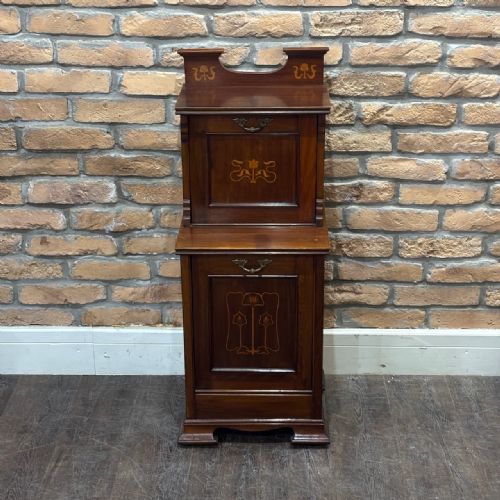
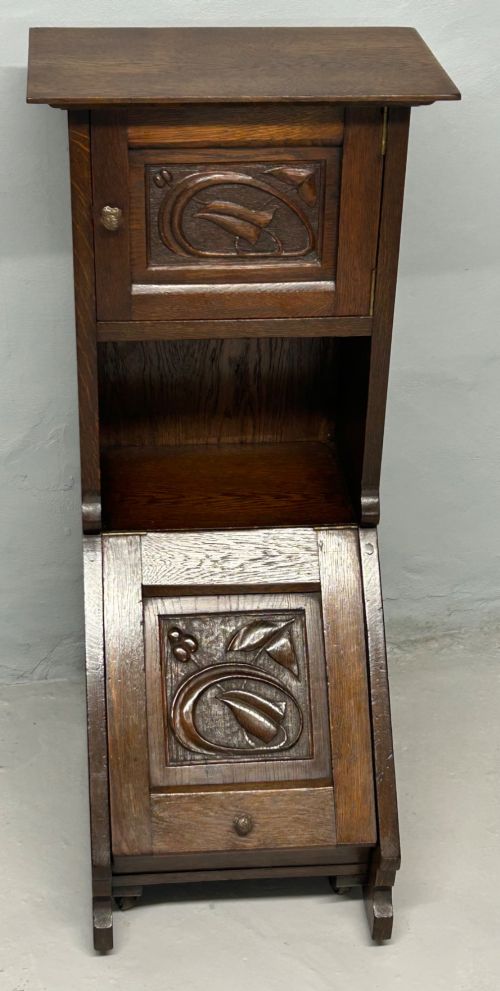
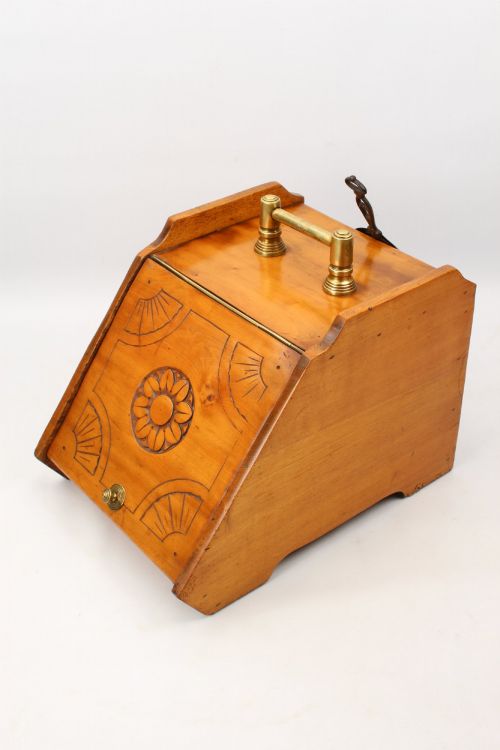
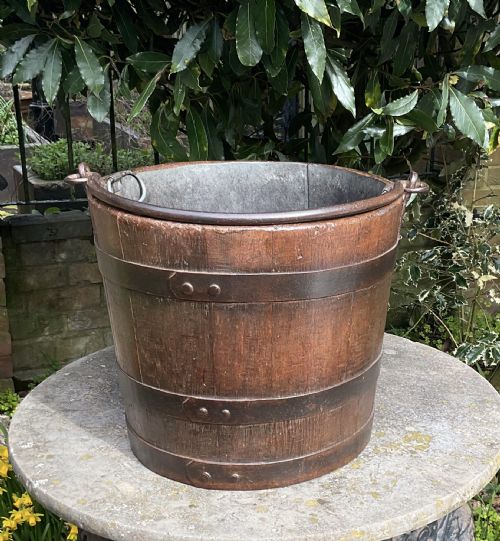
When you search for an edwardian wood scuttle, you are looking at fireside coal boxes, purdoniums, and log buckets designed to hold solid fuel neatly beside the fireplace. These functional containers range from simple coopered wooden buckets to elaborate freestanding cabinets with fitted interiors and matching shovels.
The versions you meet most frequently on this page date from the Edwardian period and the late nineteenth century, built in forms such as purdoniums with fall fronts or hinged lids. Many incorporate metal liners in zinc or brass to contain the coal dust and protect the timber structure from moisture.
Makers of the era drew on diverse stylistic influences, producing pieces that span Arts and Crafts simplicity, Liberty-inspired designs, and inlaid rosewood or mahogany cabinets. Alongside traditional English forms, Scottish coopered peat buckets and brass-mounted containers appear within the selection.
How they were made
Makers built these pieces primarily using hardwoods such as oak, mahogany, and rosewood, often enhanced by intricate marquetry inlay, brass mounts, and carved fronts. Coopered construction appears frequently in cylindrical buckets, utilising tightly fitted wooden staves held together by metal bands.
Interior functionality relied on durable metal liners made of zinc or brass, designed to lift out independently for emptying and cleaning. Hinges, handles, and drop-shovels in cast or pressed brass completed the construction, securing the functional elements within a decorative wooden exterior.
Edwardian Wood Scuttle Retail Price Guide 2026
Typical asking prices for edwardian wood scuttle among the pieces listed under this phrase on Sellingantiques today, from the lower quarter to the upper quarter. They describe what is for sale here now, not the wider market.
Listed forms span late nineteenth century styles alongside Edwardian pieces, incorporating Arts and Crafts and Art Nouveau aesthetic influences.
What varies in quality
Quality rests in the crispness of the cabinet-making, from the precision of the dovetail joints and coopered staves to the subtlety of the wood figure and marquetry inlay. Pieces featuring well-preserved interior brass liners and original matching shovels stand apart from those altered or stripped of their companion tools.
The ambition of the design distinguishes everyday utility boxes from finer parlour cabinets, particularly where makers incorporated carved details, brass mounts, or Liberty-style aesthetics. The integration of decorative elements with robust internal construction defines the upper tier of these fireside pieces.
The Edwardian Wood Scuttle Glossary
- Purdonium
- A specialised coal cabinet featuring a sloping fall-front door that drops forward to reveal a metal-lined interior for holding solid fuel. This form kept coal neatly concealed within a domestic reception room.
- Coopered
- A method of construction where tapered wooden staves are joined side by side and bound with metal hoops, traditionally used for buckets and tubs. This technique provided structural strength for holding loose materials like coal or peat.
- Marquetry
- The art of applying decorative veneer pieces in various woods to form pictorial or geometric patterns on a surface. It appears on finer Edwardian and Victorian rosewood and mahogany cabinets.
- Fireside companion
- An accompanying tool, such as a shovel or poker, designed to sit with or slot directly into the coal box or purdonium. These utensils were often made of brass or iron to match the mounts of the container.
- Spelter
- A zinc alloy frequently used during the nineteenth and early twentieth centuries for cast decorative mounts and handles. It offered a durable alternative to solid brass while accepting similar metallic finishes.
Edwardian Wood Scuttle: Frequently Asked Questions
How were these coal boxes used?
They sat beside the hearth to hold the daily supply of coal, keeping domestic fuel close at hand while concealing it from view.
The inclusion of drop-shovels and removable metal liners allowed users to scoop fuel cleanly and empty ash or dust without damaging the surrounding wooden cabinet.
How do I care for wooden fireside pieces?
Keep wooden coal containers away from direct, intense heat sources and sudden temperature shifts to prevent the timber from drying out or splitting.
Apply occasional suitable furniture wax to nourish the grain and gently wipe the metal liners clean of coal dust to protect the interior surfaces.
How do I distinguish Edwardian from Victorian examples?
Victorian coal boxes often display heavier carved ornamentation, darker rosewood or walnut timbers, and prominent brass mounts with robust proportions.
Edwardian versions frequently exhibit lighter mahogany or oak construction, simpler Arts and Crafts influences, or refined inlaid decoration following Sheraton revival tastes.