




Edwardian Whatnot
Edwardian whatnots are tiered open display shelves designed for the parlour, bringing useful vertical surface area to period rooms.
Edwardian Whatnot
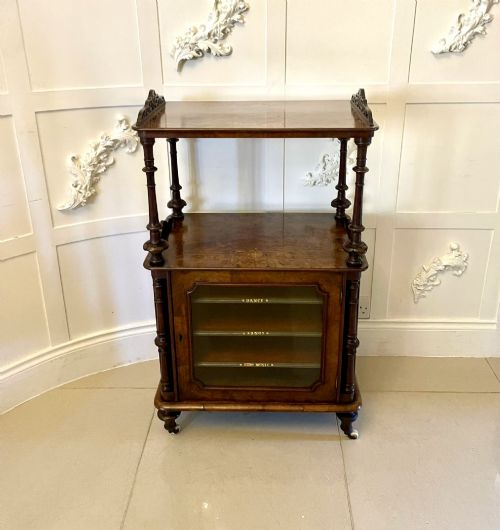
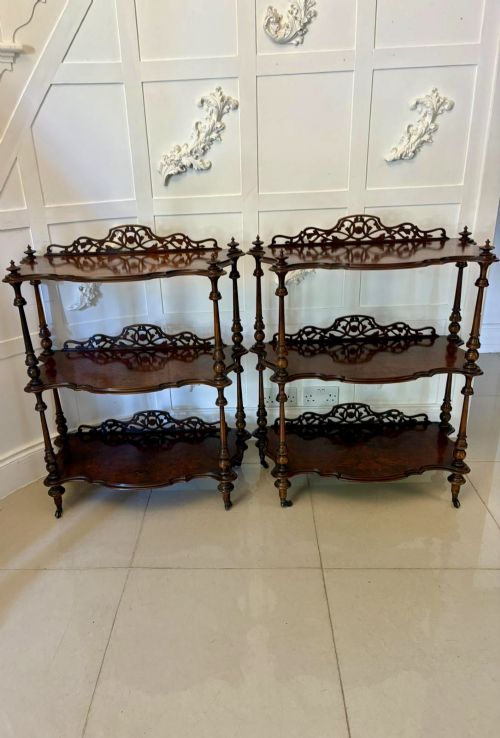
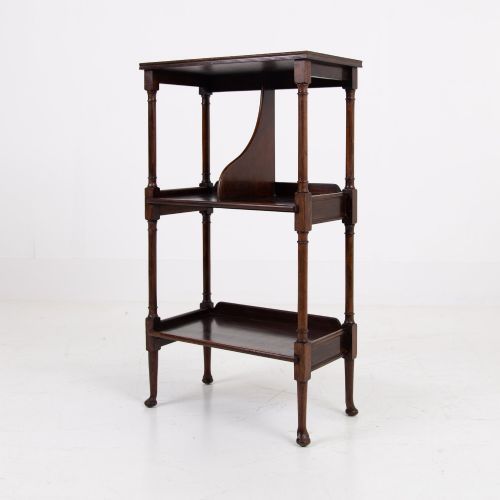
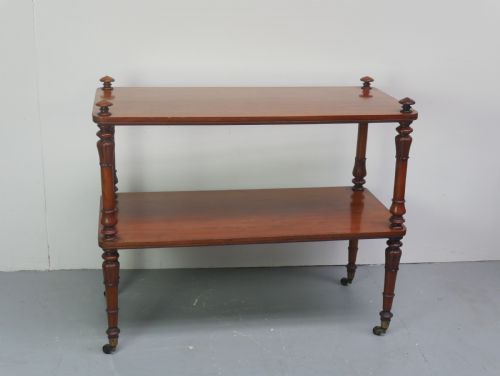
When a buyer searches for an edwardian whatnot, they encounter multi-tiered shelving units designed to hold ornaments, books and small decorative objects. The forms span standing four-tier models in walnut, hanging shelves and pieces combining display surfaces with enclosed storage.
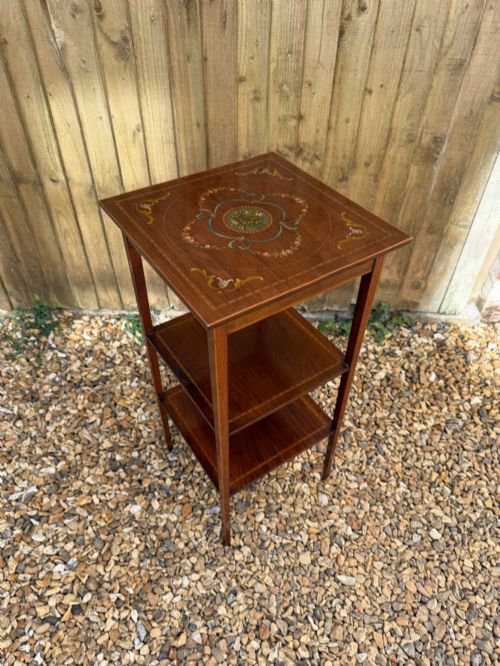
While the title specifically invokes the Edwardian period, listings also bridge into Victorian and late nineteenth-century iterations, reflecting how cabinetmakers continued these multi-tiered forms across decades. Standing walnut and mahogany examples dominate the selection, often featuring inlaid details.
The objects served primarily as display furniture in principal rooms, providing vertical storage without dominating the floor plan. Their open construction allowed light to pass through while exhibiting collections of ceramics, silver or books.
How they were made
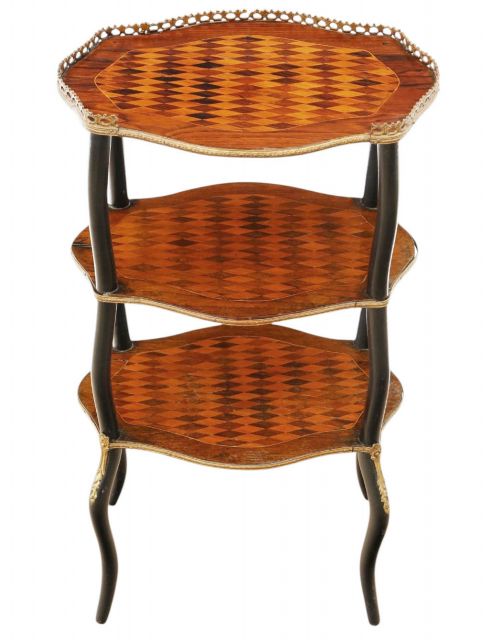
Makers utilised timber veneers such as burr walnut and mahogany over solid secondary woods, constructing tiered platforms supported by turned columns, uprights or barley twist pillars. Marquetry and parquetry inlays frequently decorate the shelves and friezes, alongside brass mounts and gallery rails.
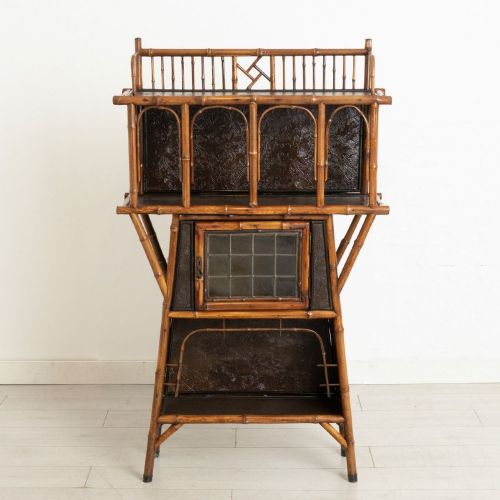
Construction methods involved pegged joints and dovetailing for small drawers incorporated into the lower tiers of hybrid pieces like music cabinets and canterburys. Ebonised finishes and bamboo frameworks also appear, demonstrating the diverse structural approaches used by late period workshops.
Edwardian Whatnot Retail Price Guide 2026
Typical asking prices for edwardian whatnot among the pieces listed under this phrase on Sellingantiques today, from the lower quarter to the upper quarter. They describe what is for sale here now, not the wider market.
Listings demonstrate that walnut is the predominant timber utilised for these multi-tiered display pieces, closely followed by mahogany.
What varies in quality
The distinction between ordinary and superior pieces rests on the choice of timber veneer, the crispness of the marquetry inlay and the stability of the tiered structure. Burr walnut examples with rich grain patterns and fine brass or ceramic detailing occupy the upper tier of execution.
Joinery execution at the junctions where uprights meet the shelves determines overall rigidity. Pieces retaining original surface patination and undamaged ormolu mounts demonstrate superior preservation compared to those with replaced elements.
Leonard Wyburd·Liberty and Co·Samson and Son
The Edwardian Whatnot Glossary
- Whatnot
- A piece of furniture consisting of a set of open shelves for displaying small objects or books. They typically range from two to six tiers in height and appear in floor-standing or hanging formats.
- Etagere
- A piece of furniture with a series of open shelves for displaying ornaments. The term is frequently used interchangeably with whatnot in period listings.
- Canterbury
- A low stand with partitions for sheet music, books or portfolios, often combined with whatnot shelving above. They frequently incorporate a single shallow drawer in the base.
- Marquetry
- Decorative woodwork in which small pieces of various coloured woods are fitted together to form a geometric or floral mosaic pattern. It adorns the top surfaces and shelves of many walnut examples.
- Burr walnut
- Timber taken from a walnut tree outgrowth, prized for its swirling, highly figured grain patterns. Cabinetmakers utilised it as a veneer on principal display surfaces.
Edwardian Whatnot: Frequently Asked Questions
What rooms suit an edwardian whatnot best?
These tiered pieces fit well in living rooms, hallways or studies where vertical display space is required without occupying a large footprint.
Their open shelves hold books, ceramics or small plants while maintaining an airy feel in the interior.
How do you distinguish an edwardian whatnot from a victorian one?
Edwardian examples tend to feature lighter timber tones, restrained inlay patterns and sometimes painted finishes compared to heavier Victorian walnut and rosewood iterations.
Construction details and stylistic revival cues also help date the piece to the turn of the twentieth century.
Can these shelves hold heavy books?
Most are designed primarily for decorative ornaments, small collections and light volumes rather than heavy reference libraries.
Using the lower tiers for heavier items maintains the stability of the upright structure.
What is a whatnot with a drawer used for?
The integrated drawer provides concealed storage for small household items, writing materials or sheet music depending on the specific hybrid form.
Combinations with canterburys and music cabinets offer both open display and enclosed organisation.