








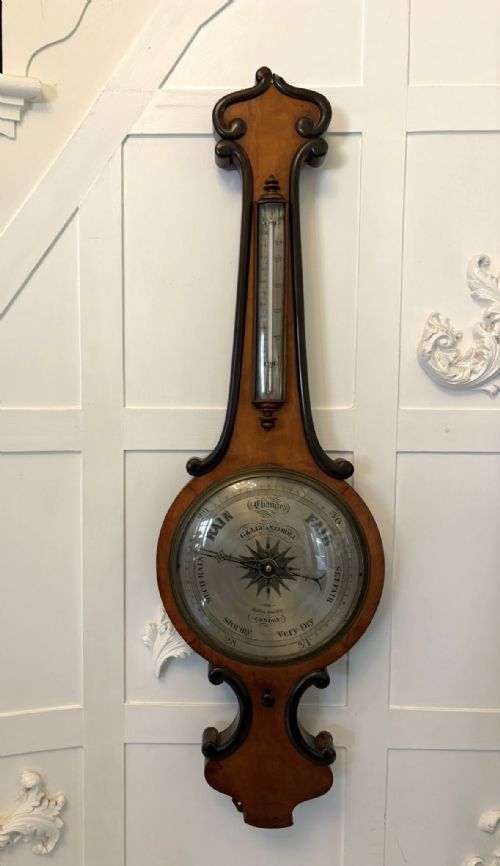
Edwardian Weather Glass
These edwardian weather glass instruments and associated barometers combine practical meteorology with refined period craftsmanship.
Edwardian Weather Glass
When searching for an edwardian weather glass, a buyer encounters domestic meteorological instruments designed to measure atmospheric pressure and predict local atmospheric changes inside the home. The pieces appearing in this category include aneroid barometers, mercury stick barometers, and mechanical barographs housed in wooden cases.
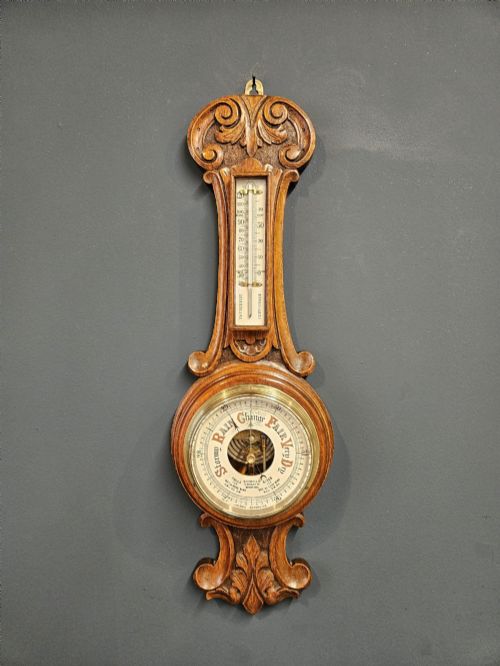
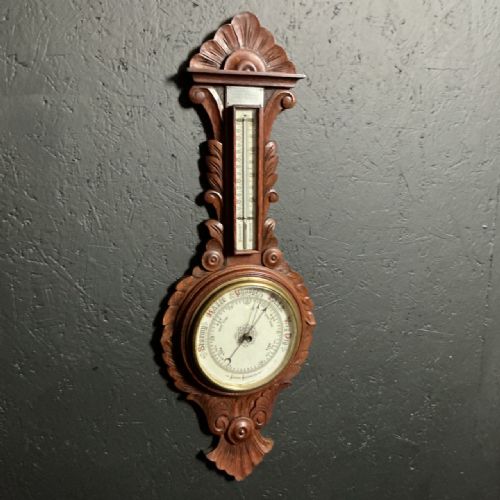
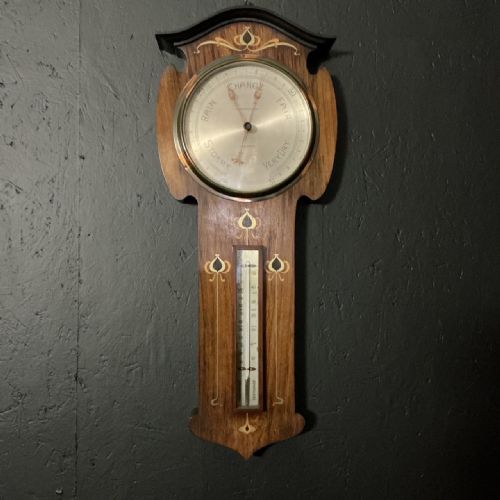
The domestic weather glass most frequently met on this page is the aneroid barometer, often configured as a wall-hanging banjo barometer or a circular desk model. These instruments utilise a sealed metal capsule that expands or contracts with pressure shifts, moving an indicator needle across a marked dial.
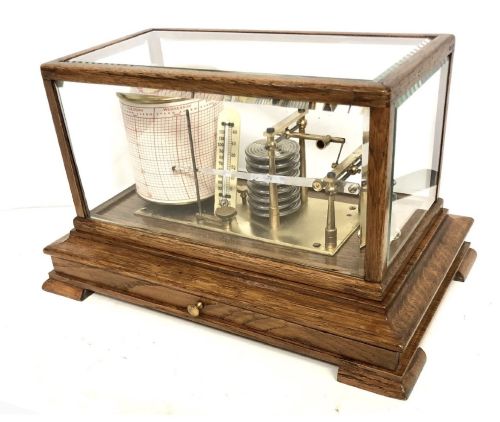
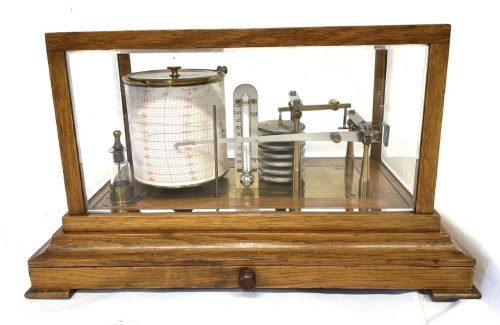
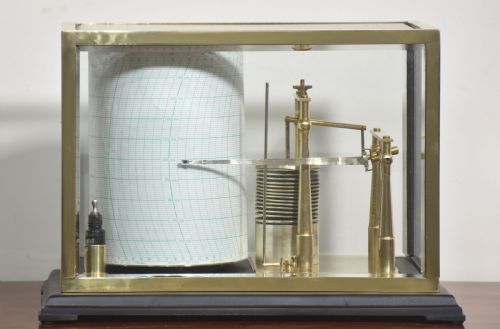
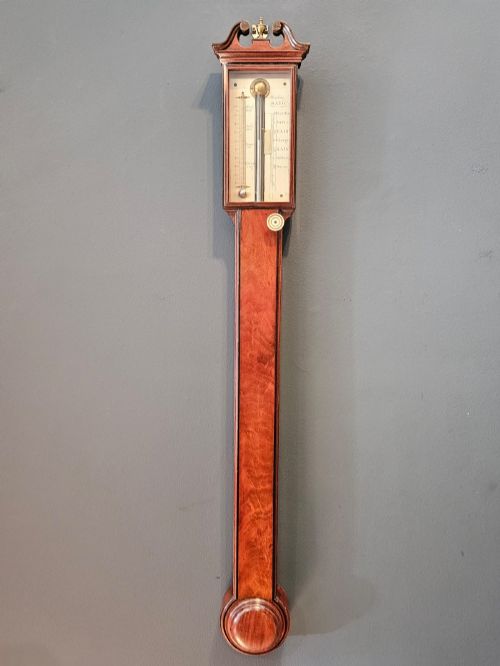
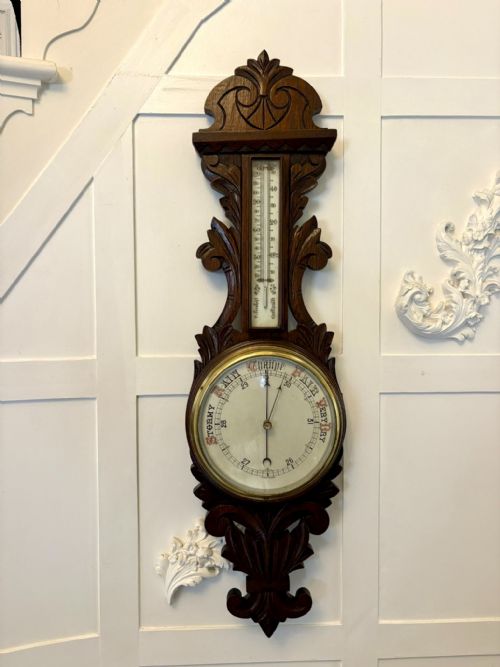
Beyond standard aneroid dials, listings incorporate stick barometers containing mercury columns and continuous-recording barographs set within glass and wood enclosures. The forms range from plain circular oak cases to elaborate carved mahogany banjo designs incorporating Fahrenheit and Centigrade thermometers.
Materials and Construction
Makers constructed the housing of an edwardian weather glass predominantly from dense hardwoods such as oak, mahogany, walnut, and rosewood. These timbers were selected for stability and grain figure, then polished, carved with foliate motifs, or inlaid with lighter decorative veneers.
Dial faces and mechanical components integrate brass, silvered metal, porcelain, and bevelled glass panels to protect the sensitive internal linkages. Barographs typically feature enclosed five-glass mahogany or oak cases allowing continuous visibility of the revolving paper chart drum and recording arm.
Edwardian Weather Glass Retail Price Guide 2026
Typical asking prices for edwardian weather glass among the pieces listed under this phrase on Sellingantiques today, from the lower quarter to the upper quarter. They describe what is for sale here now, not the wider market.
Listings feature oak, mahogany, walnut, and rosewood cases alongside brass, silvered metal, porcelain, and bevelled glass components.
Judging Quality and Execution
The distinction between standard domestic models and finer examples rests upon the crispness of the cabinet carving, the selection of timber veneers, and the legibility of the engraved metal dials. Superior instruments frequently incorporate specialised thermometers or secondary recording mechanisms alongside the primary pressure dial.
Makers known for scientific precision produced movements with minimal friction and robust linkages that maintained calibration over decades. The integration of bevelled glass panes, substantial brass bezels, and secondary chart drawers elevates the execution of the piece far beyond utilitarian domestic items.
G and L Guanziroli London·Negretti and Zambra London·Short and Mason Limited·Depree and Young Ltd Exeter·Baines Harrogate
The Edwardian Weather Glass Glossary
- Aneroid barometer
- An instrument measuring atmospheric pressure through the expansion and contraction of a sealed corrugated metal capsule without using liquid. This design allowed barometers to be built into compact wall-hanging banjo shapes.
- Barograph
- A self-recording aneroid barometer that traces pressure variations continuously onto a paper chart fitted to a clockwork rotating drum. They are usually housed in glazed wooden cases with multiple bevelled glass panels.
- Stick barometer
- A tall, vertical instrument containing a column of liquid mercury that rises and falls within a glass tube in response to barometric pressure. These traditional designs require careful handling and vertical mounting.
- Banjo barometer
- A household barometer shaped roughly like the stringed instrument, featuring a large circular dial at the base and a long trunk holding a thermometer. They were widely produced in mahogany and carved oak during the period.
- Silvered metal
- A brass or copper dial plate treated to achieve a bright silver finish, onto which graduations and weather descriptions were engraved and darkened for readability.
Edwardian Weather Glass: Frequently Asked Questions
How do I read an aneroid barometer?
Read the main pointer against the calibrated dial face, noting whether the pressure scale trends towards rising or falling weather. Many instruments include a manually adjustable reference needle to track daily changes.
Tapping the glass gently before reading helps settle any friction in the internal linkages, giving a true indication of the current atmospheric pressure.
Where should I hang a wall barometer?
Hang your barometer on an interior wall away from direct sunlight, central heating radiators, and draughty doorways. Rapid temperature fluctuations affect the internal mechanism and distort pressure readings.
A stable indoor environment preserves both the delicate wooden case and the sensitive mechanical movement inside.
What is the difference between a barograph and a barometer?
A standard barometer displays only the current atmospheric pressure at the exact moment you look at the dial. It relies on a single pointer moving across a graduated scale.
A barograph records pressure continuously over the course of a week by drawing a permanent ink line onto a rotating paper chart secured to a clockwork drum.
How do I care for the wooden case?
Dust the timber case regularly with a soft, dry cloth and apply a quality furniture wax sparingly when the wood appears dry. Avoid commercial liquid polishes containing silicone.
Keep the bevelled glass panels clean with standard glass cleaner applied to a cloth rather than sprayed directly near the wood and metal bezel.