



Edwardian Vanity Chair
These Edwardian vanity chair pieces are low-slung seating forms designed for the dressing room, offering period charm and comfort.
Edwardian Vanity Chair
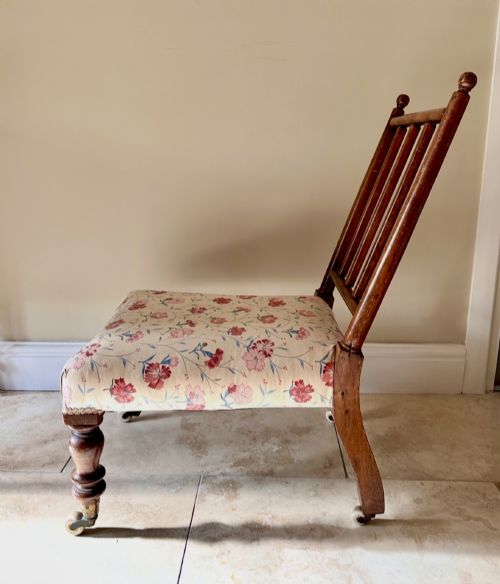
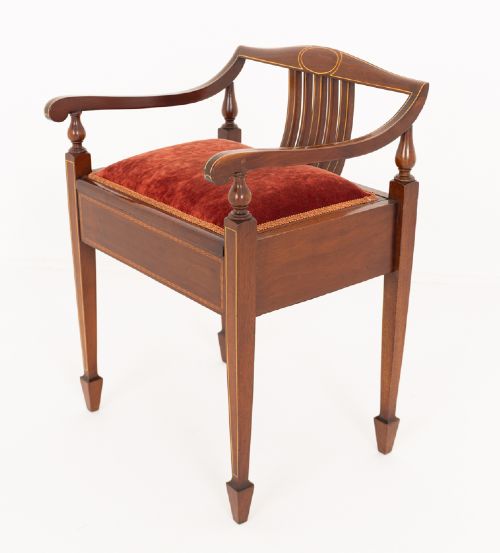
An edwardian vanity chair encompasses low bedroom seating forms including slipper chairs, nursing chairs, dressing table stools, and piano stools intended for personal grooming spaces.
The selections recorded here span the Edwardian era alongside Victorian and late nineteenth-century iterations, featuring styles such as Sheraton Revival and Queen Anne Revival alongside plain frames.
Forms vary from compact spindle-back and corner chairs to circular stools and upholstered armchairs, constructed primarily for placement beside a dressing table.
Materials and construction methods
Frames are built from solid timbers including mahogany, walnut, oak, and satinwood, occasionally exhibiting carved details, twisted rope legs, or inlaid marquetry.
Upholstery materials range from modern fabric covers and tweed linen to traditional velvet and original textiles, sometimes supported by brass elements or gilt legs.
Edwardian Vanity Chair Retail Price Guide 2026
Typical asking prices for edwardian vanity chair among the pieces listed under this phrase on Sellingantiques today, from the lower quarter to the upper quarter. They describe what is for sale here now, not the wider market.
Some chairs were built low enough to let Victorians put on their slippers without tripping over their own petticoats.
Judging the quality of pieces
Quality rests upon the integrity of the timber frame, the crispness of any applied carving or inlay, and whether original upholstery methods have been preserved during restoration.
Finer examples demonstrate balanced proportions and considered timber selection, whilst simpler variations rely on straightforward turned legs and basic structural framing.
James Shoolbred
The Edwardian Vanity Chair Glossary
- Slipper chair
- A low-set upholstered chair traditionally used in a bedroom or dressing room for putting on shoes. These pieces sit close to the floor for added comfort during personal grooming.
- Nursing chair
- A low-seated Victorian or Edwardian chair originally designed to allow a mother to feed an infant comfortably. They typically feature a padded backrest and an accessible frame.
- Piano stool
- A seat built for use at a keyboard instrument, frequently constructed with a circular top or fitted with an adjustable mechanism. Examples often include mahogany or walnut frames.
- Sheraton Revival
- A late nineteenth and early twentieth-century design movement inspired by the neoclassical furniture of Thomas Sheraton. Pieces in this style utilise light timbers, satinwood, and delicate inlay.
- Spindle-back
- A chair back constructed with a series of thin, turned wooden rods arranged vertically. This method provides lightweight structural support to the frame.
Edwardian Vanity Chair: Frequently Asked Questions
What is an edwardian vanity chair used for?
These low seats were originally placed in bedrooms or dressing rooms to provide comfortable seating while attending to personal grooming or dressing.
Today, they function well as accent seating in smaller spaces, dressing areas, or living rooms due to their compact footprints.
How do I identify an edwardian piece?
Edwardian seating typically exhibits lighter proportions and simpler lines than heavier Victorian predecessors, often drawing on Sheraton or Queen Anne revival motifs.
Inspect the timber species, construction joints, and upholstery style to help determine whether a piece belongs to the early twentieth century or the late nineteenth century.
Are these chairs comfortable for daily use?
Their low seats and supportive upholstered backs make them well-suited for relaxed sitting, reading, or use at a dressing table.
Many examples have been restored with fresh covers or renewed padding to ensure they remain practical for modern living.
What woods were used for these chairs?
Cabinetmakers utilised a variety of hardwoods including mahogany, walnut, oak, and satinwood depending on the desired aesthetic and period style.
Rich dark tones appear alongside lighter figured timbers, frequently complemented by decorative inlays or carved wooden details.