
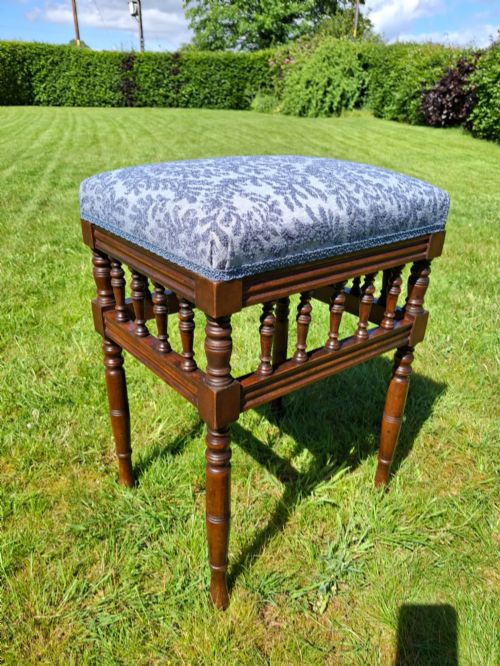


Edwardian Turned Wood Stools
Edwardian turned wood stools combine practical seating with robust joinery, offering a functional addition to period interiors.
Edwardian Turned Wood Stools
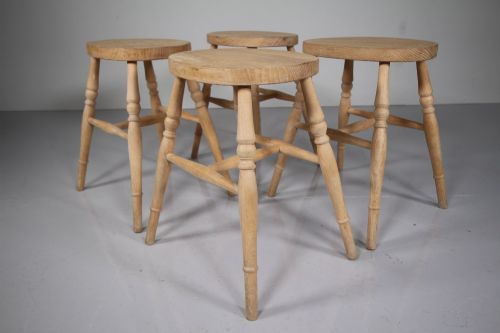
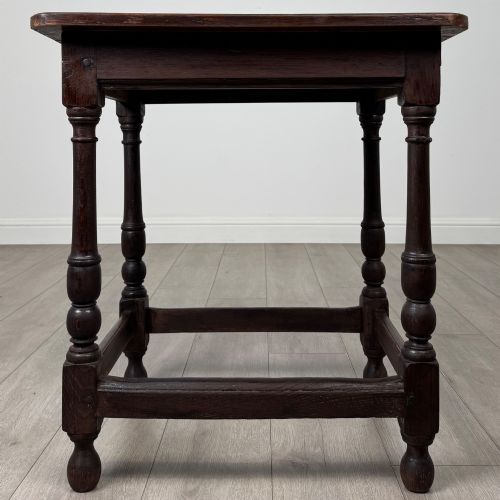
When buyers search for edwardian turned wood stools, they encounter a variety of forms including piano stools, footstools, and dining stools dating from the Edwardian period and the broader early twentieth century. These pieces frequently feature turned wooden legs supporting timber frames in oak, mahogany, beech, elm, and ebonised wood.
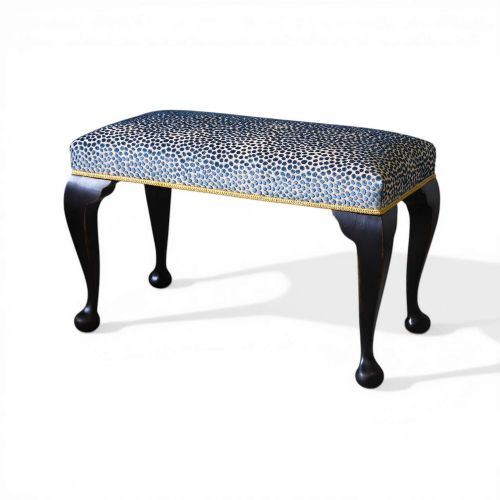
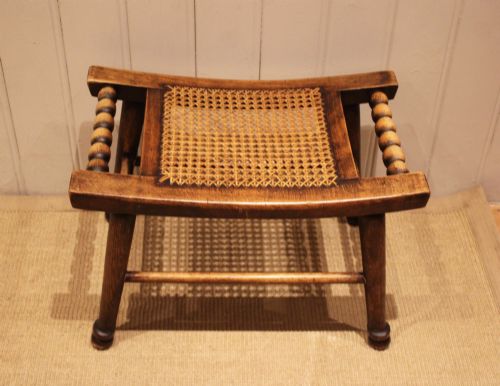
The selection on this page demonstrates diverse regional influences and practical seating arrangements, ranging from compact domestic footstools to swivel base piano seats. Upholstered options incorporate traditional fabric, textile, and braid finishes alongside cane seats and solid timber tops.
Makers and workshops of the era produced both simple utility items and more ornate revival pieces, reflecting the diverse domestic needs of the period. Buyers find both individual items and matched sets designed for specific domestic functions.
Materials and construction
The construction of these pieces relies on solid hardwoods such as oak, mahogany, beech, and elm, shaped through traditional turning techniques to form sturdy legs and supports. Ebonised finishes appear on select frames, providing a dark, uniform appearance distinct from natural timber grain.
Seating surfaces utilise a combination of solid wood, woven cane, and upholstered pads secured with textile and braid edgings. Joinery methods of the period ensure structural stability, visible in traditional joint stools and framed piano seats.
Some piano stools include a swivel base, offering unexpected motion for a stationary piece of antique seating.
Assessing quality and craftsmanship
Quality in these pieces is determined by the selection of timber and the precision of the turning work on the legs and stretchers. Denser hardwoods and crisper detail in the turned elements distinguish superior examples from simpler utilitarian items.
The integrity of the original upholstery materials, cane work, and swivel mechanisms influences the overall character of the piece. Well-preserved joinery without excessive replacement parts maintains the historical continuity of each item.
James Shoolbred
The Edwardian Turned Wood Stools Glossary
- Edwardian
- Pertaining to the reign of King Edward VII, spanning from 1901 to 1910, though the style extends slightly either side. It is characterised by lighter furniture forms compared to the preceding Victorian era.
- Turned wood
- Timber shaped on a lathe to create symmetrical, rounded decorative and structural components such as legs and stretchers. This technique has been employed by woodworkers for centuries.
- Joint stool
- A traditional form of wooden stool constructed with mortise and tenon joints rather than turned legs alone. These pieces offer high structural rigidity.
- Ebonised
- Wood finished with a dark stain or paint to imitate the appearance of ebony. This treatment was popular for achieving formal, contrasting interiors.
Edwardian Turned Wood Stools: Frequently Asked Questions
What materials were used?
Listings show furniture constructed from oak, mahogany, beech, elm, and ebonised wood.
Upholstery finishes include various textiles, fabrics, and decorative braids alongside woven cane.
How are piano stools different?
Piano stools often incorporate specialised mechanisms such as swivel bases or adjustable height screws.
They were designed specifically for the posture and functional requirements of musicians at the keyboard.
Are these pieces from the Edwardian era?
The listings include items specifically from the Edwardian period alongside pieces dated around 1900, 1920, and the late nineteenth century.
Styles span Edwardian design, Victorian survivals, and Jacobean revival influences.
How do I care for wooden stools?
Maintain the timber surfaces by keeping them away from direct heat sources and sudden humidity changes.
Regular gentle dusting preserves the finish of both the turned wood and any associated upholstery.