

Edwardian Tier Bookshelf
An Edwardian tier bookshelf offers practical multi-level storage, bringing timber craftsmanship and compact organisation to a room.
Edwardian Tier Bookshelf
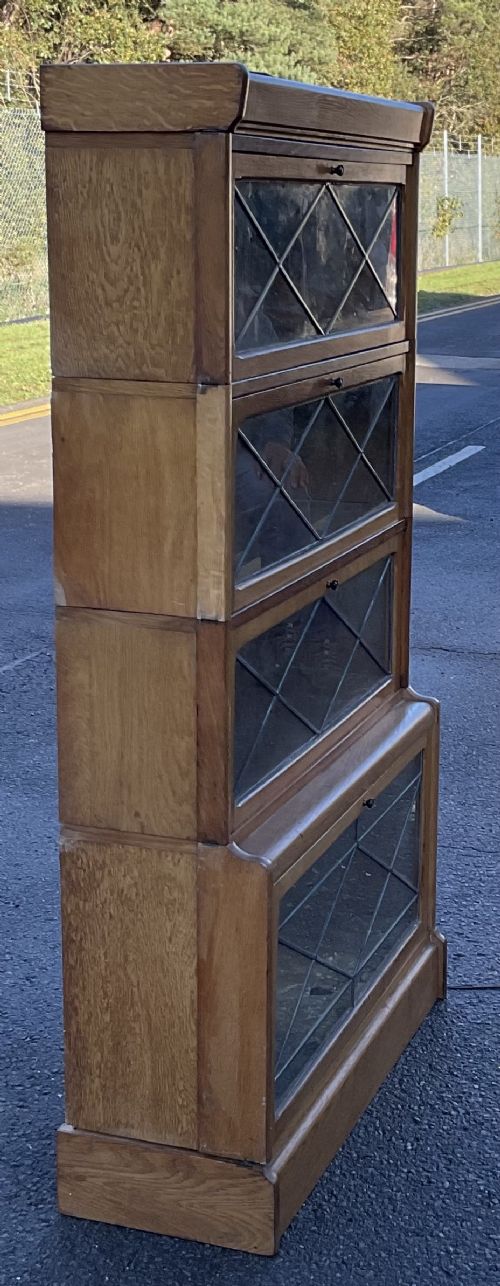
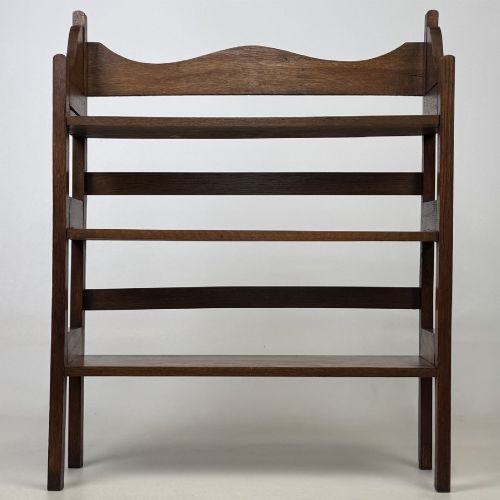
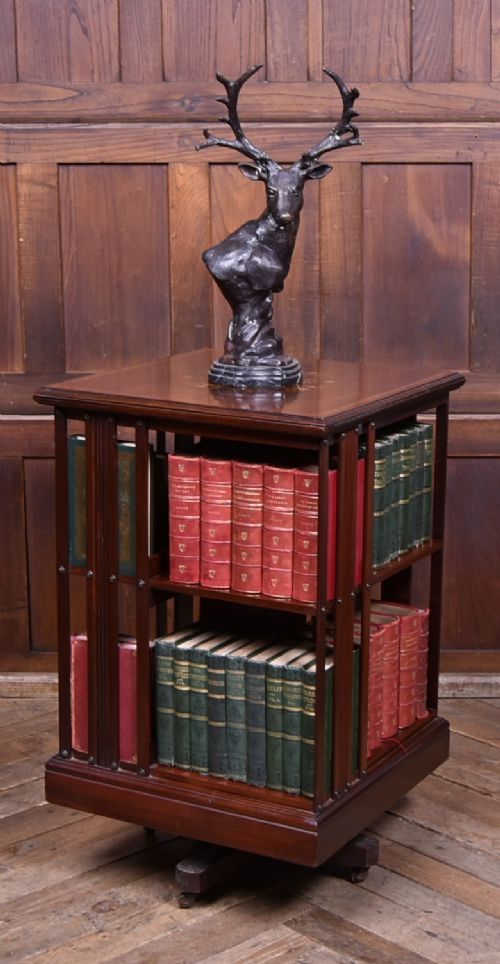
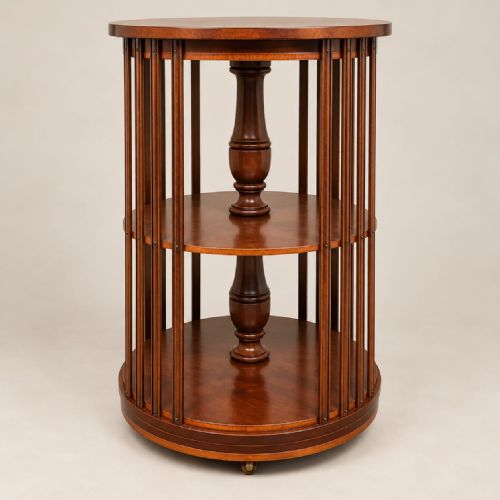
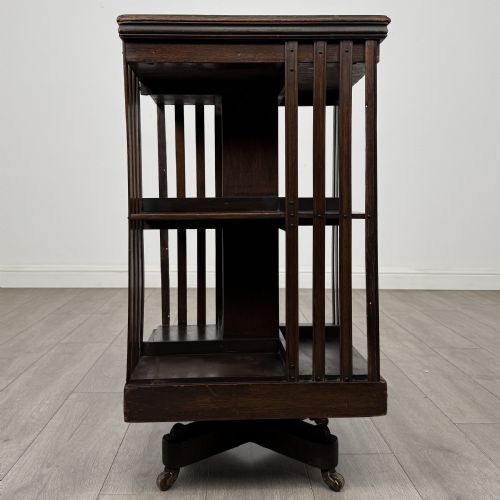
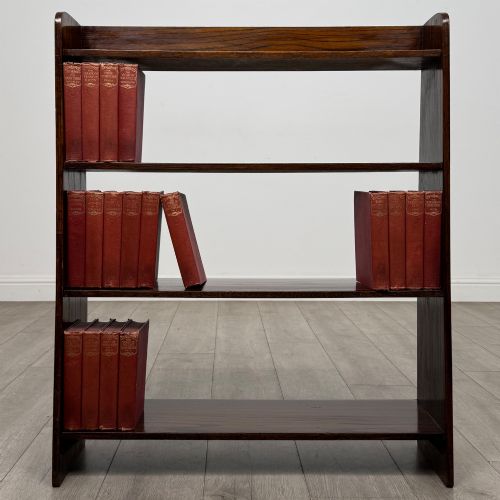
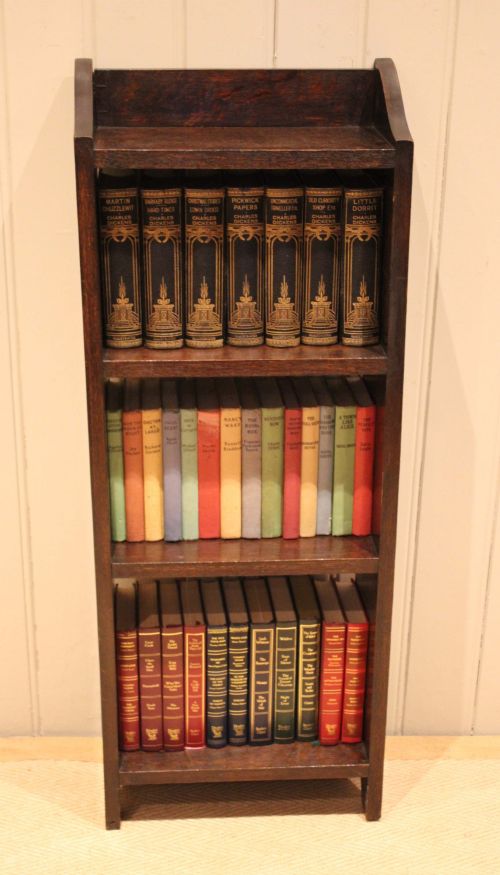
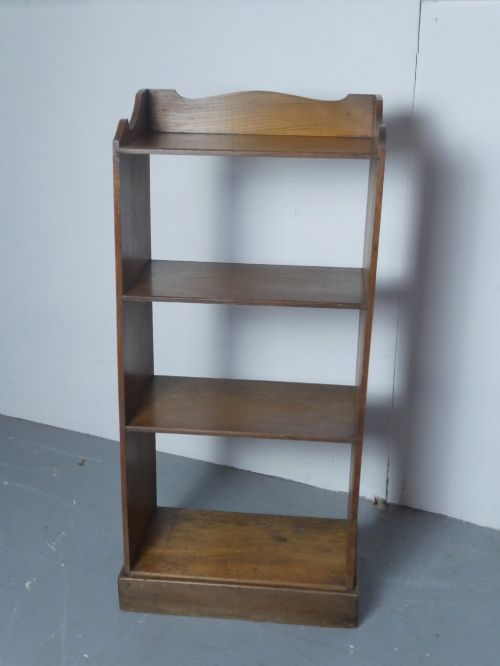
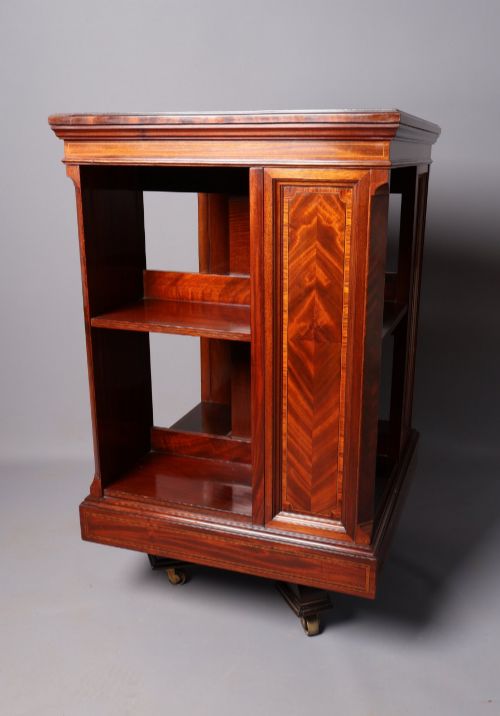
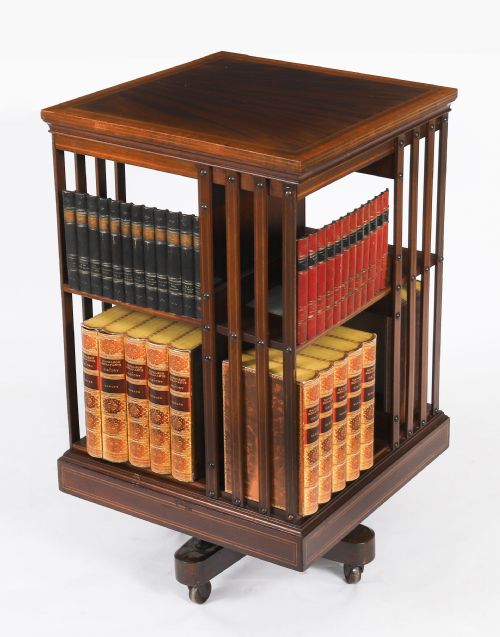
An edwardian tier bookshelf encompasses multi-level open shelving units, rotating table models, and wall-hanging units designed to hold volumes within easy reach. These pieces draw on earlier styles while prioritizing functional domestic storage for the home.
Makers and manufacturers of the period utilised domestic and imported timbers to construct tiered formats that suited contemporary library spaces and drawing rooms. The resulting forms range from low revolving table models to taller wall-mounted shelves.
How they were made
Cabinet makers constructed these tiers primarily using solid mahogany, oak, and walnut, often applying flame mahogany veneers or satinwood inlay for decorative contrast. Structural stability in revolving designs relied on internal metal or brass mechanisms hidden beneath the timber tiers.
Surface finishing involved hand-polishing timber to highlight natural grain patterns, whilst specialised pieces incorporated fret-cut woodwork, brass castors, and raised wooden galleries. Joinery methods prioritized sturdy open frames and secure tier attachment to support the weight of heavy books.
Edwardian Tier Bookshelf Retail Price Guide 2026
Typical asking prices for edwardian tier bookshelf among the pieces listed under this phrase on Sellingantiques today, from the lower quarter to the upper quarter. They describe what is for sale here now, not the wider market.
Early twentieth-century readers trusted rotating tiers to save them from walking around the room for a dictionary.
What varies in quality
The refinement of timber selection distinguishes standard utility shelving from finer library furniture, with figured mahogany and rich burr walnut marking the higher end of production. Subtle details such as satinwood inlay, pierced fret-cut sides, and original brass hardware elevate a piece above simpler workshop output.
Mechanical smoothness defines the better surviving revolving bookcases, where rotation remains balanced and effortless across multiple tiers. Structural integrity in the joints and the preservation of original polish further separate superior examples from heavily restored or utilitarian items.
Samson and Son London·Waring and Gillows
The Edwardian Tier Bookshelf Glossary
- Revolving bookcase
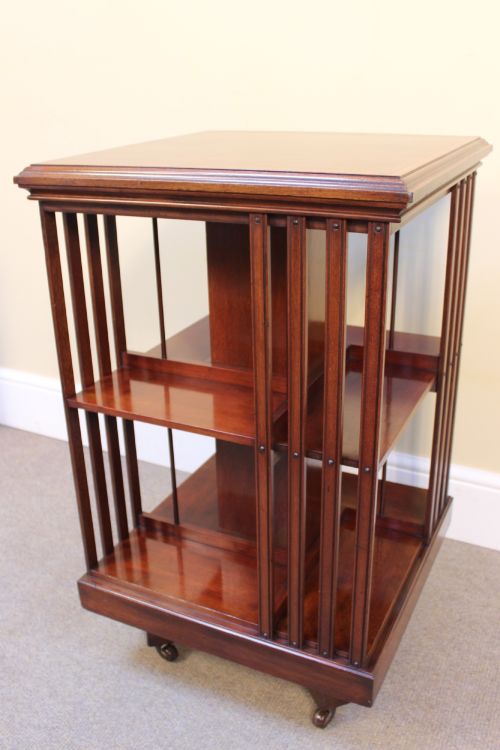
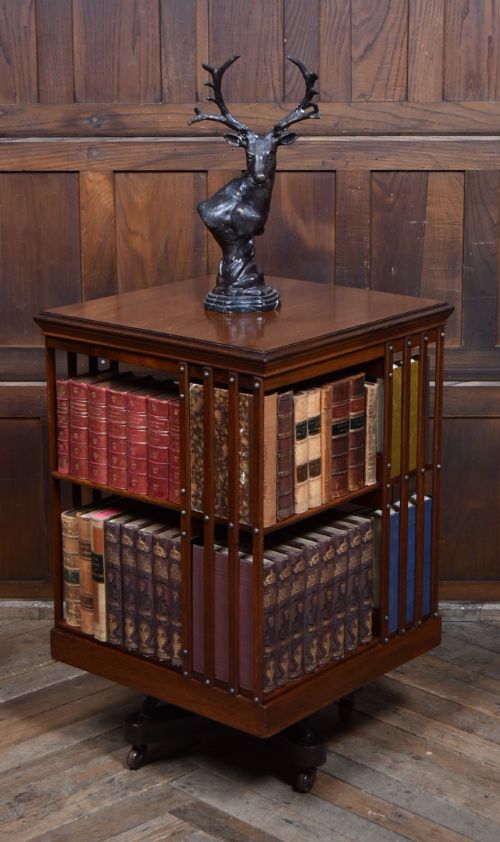
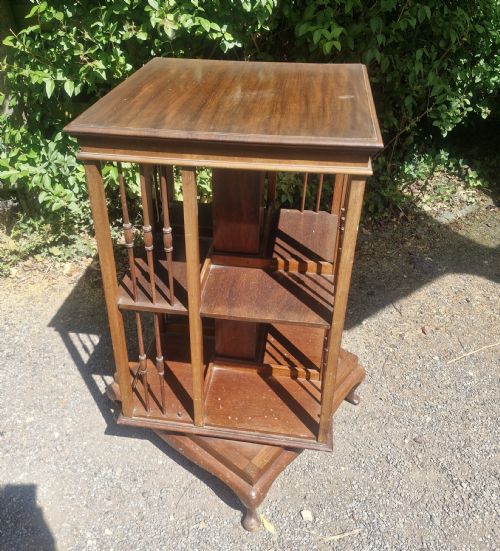
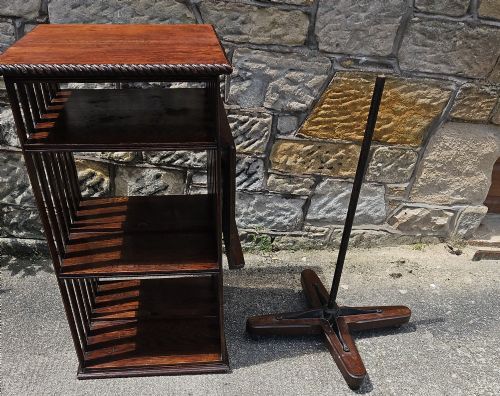
- A low or table-height tier bookshelf mounted on a concealed rotating mechanism to allow access from any angle. These units usually feature slatted or panelled sides divided into multiple book compartments.
- Whatnot
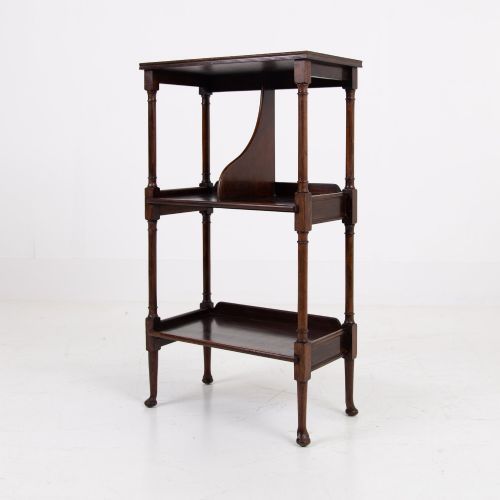
- A moveable multi-tiered piece of furniture with open shelves designed for displaying or holding books and ornaments. Examples range from simple corner stands to elaborate multi-tier stands on castors.
- Waterfall bookcase
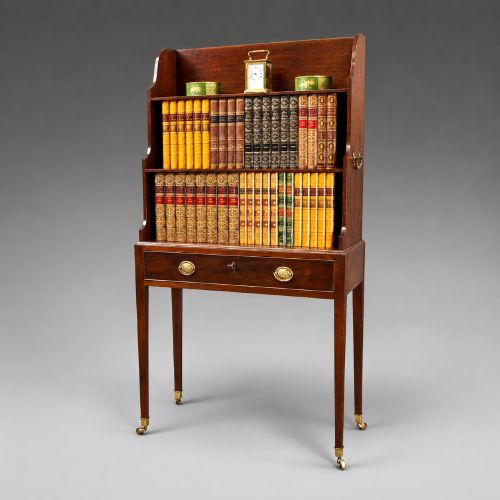
- A tiered shelving unit where each successive shelf steps back from the one below, following a cascade profile. These are frequently wall-mounted or built as standing open shelf units.
- Gallery
- A small decorative railing or raised edge fitted around the top tier of a bookshelf or table. This feature prevents items from sliding off the surface during use.
- Satinwood
- A pale, hard timber used extensively during the Edwardian period for stringing and decorative inlay work. Its golden lustre provides sharp contrast against darker woods like mahogany.
Edwardian Tier Bookshelf: Frequently Asked Questions
What is an Edwardian tier bookshelf?
An edwardian tier bookshelf is a multi-level wooden storage unit designed during the early twentieth century to hold books in domestic interiors. These pieces include revolving table models, standing open shelves, and multi-tiered whatnots.
Makers of the era produced these items in various timbers, prioritizing practical access and compact floor footprints for contemporary homes.
How do revolving bookcases work?
Revolving bookcases sit upon a concealed central pivot mechanism fitted with ball bearings or wooden spindles. This allows the entire multi-tiered tower to spin freely for easy book selection.
Owners typically placed these units beside armchairs or desks to keep reference volumes within arm's reach.
Where were tiered bookshelves placed?
Tiered bookshelves found homes in libraries, studies, and drawing rooms where floor space required efficient vertical storage. Smaller wall-hanging versions and table-top revolving models suited tighter domestic spaces.
Larger standing bookcases and multi-tier whatnots occupied corners or flanked larger pieces of seating furniture.
How do I care for antique mahogany?
Maintaining antique mahogany requires keeping the timber away from direct heat sources and sudden humidity changes. Regular dusting with a dry cloth prevents particle buildup on carved details and polished surfaces.
Periodic application of appropriate wax polish helps nourish the grain without leaving heavy residue on the woodwork.