
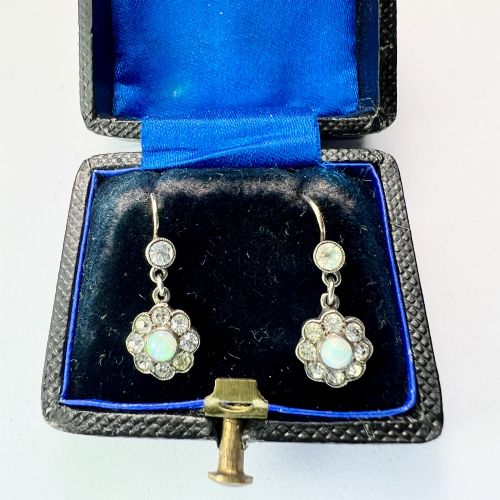


Edwardian Style Dangles
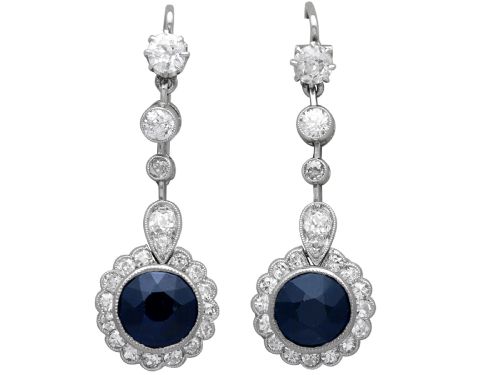
Edwardian style dangles encompass intricate drops and earrings crafted in silver, gold, and platinum.

Edwardian Style Dangles
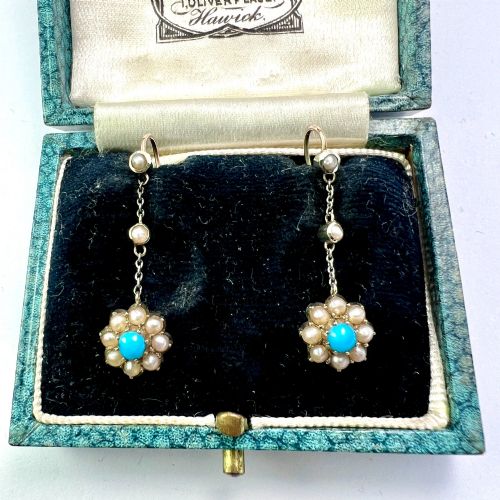
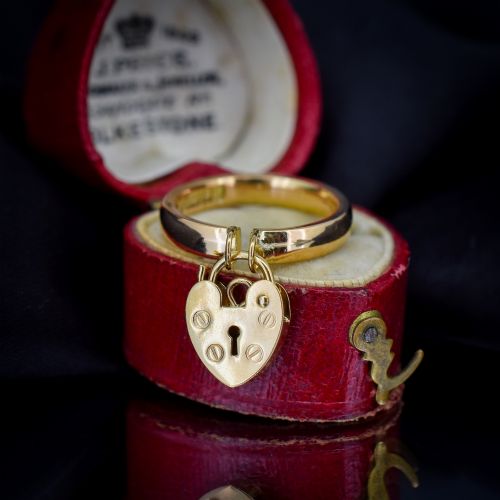
Edwardian style dangles primarily take the form of drop and cluster earrings, alongside select ring variations. These ornaments span the Edwardian period, the 1920s, the 1930s, and the Victorian era.
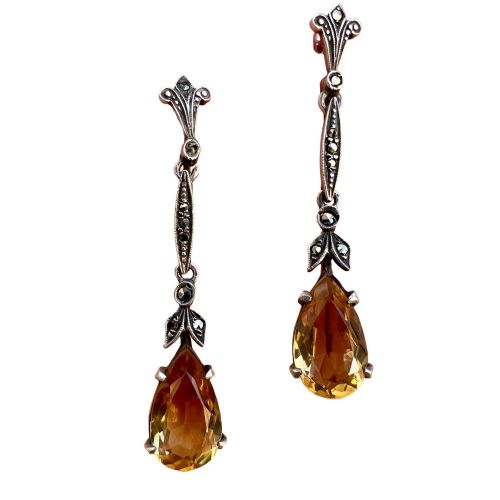
Earrings dominate the selection, featuring circular drops, floral motifs, teardrops, and geometric cluster configurations. Gemstone pairings range from diamonds and pearls to turquoise, citrine, marcasite, and chrysoprase.
Originating across multiple stylistic eras, these items combine Edwardian lightness with later Art Deco geometric influences and Victorian metalwork traditions.
How they were made
Makers shaped these jewels using silver, 9ct gold, 15ct yellow gold, 18ct gold, and platinum, often pairing white and yellow gold or combining silver with gold mounts.
Lapidaries set diamonds, old European cuts, old rose cuts, paste diamonds, turquoise, opals, chalcedony, zircons, and chrysoprase into the metalwork. Marcasite and natural pearls also appear alongside screwback and drop mechanisms.
Screwback fasteners let anyone wear antique drops, saving unpierced ears from the jeweler's needle.
What varies in quality
Quality rests on the selection and cut of the stones, distinguishing standard paste settings from old European and rose cut diamonds.
The sophistication of the metalwork defines the tier, separating simpler silver gilt components from integrated platinum and gold structures.
Knoll & Pregizer
The Edwardian Style Dangles Glossary
- Marcasite
- Pyrite cut and polished into small facets to resemble diamonds, typically set in silver. This material provides a dark, metallic sparkle popular in vintage jewellery.
- Old European Cut
- An early form of brilliant diamond cut characterised by a small table, a heavy crown, and a large culet. It defines genuine antique stones.
- Screwback
- A mechanical earring fastening utilising a threaded post and nut to secure the piece without pierced ears. This fitting frequently appears on older non-pierced designs.
- Paste
- Hand-cut glass or lead crystal used to imitate gemstones. High-grade paste demonstrates careful faceting and secure collet setting.
Edwardian Style Dangles: Frequently Asked Questions
How do I wear drop earrings safely?
Ensure the fastenings, whether standard posts or screwback mechanisms, fit securely before daily wear. Store them individually to protect delicate gemstones and intricate metal drops from friction.
Avoid exposing antique silver and pearl settings to water, perfumes, or harsh cleaning chemicals to preserve the original materials.
How do I tell Edwardian from Art Deco pieces?
Edwardian items tend to feature flowing floral patterns, airy platinum or white gold filigree, and soft pearl or diamond combinations. They emphasise lightness and lace-like grace.
Art Deco pieces shift toward rigid geometry, sharp lines, and contrasting stones like marcasite and chrysoprase, reflecting the design changes of the 1920s and 1930s.
What metals were used in these pieces?
Jewellery from these periods utilises a range of precious metals including silver, silver gilt, 9ct gold, 15ct yellow gold, 18ct gold, and platinum. Combinations of white and yellow gold also appear.
Makers frequently paired silver with gold to mount older diamond cuts securely while maintaining a bright face-up appearance.