

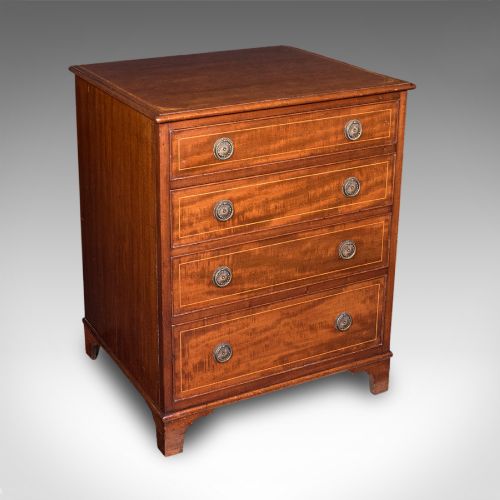
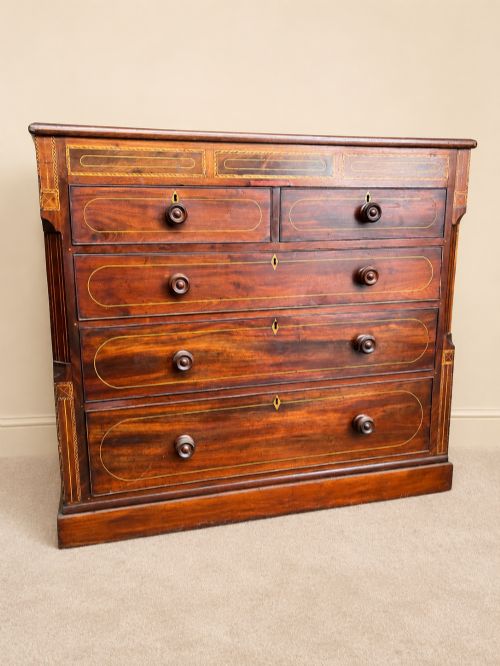
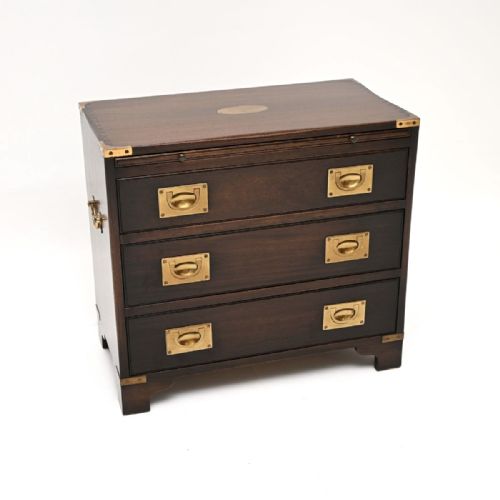
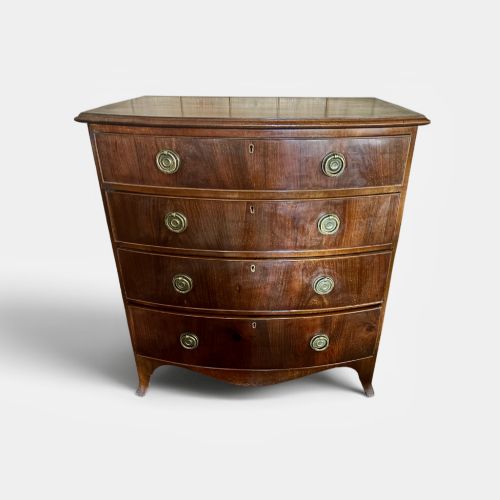
Edwardian Style Commode
An Edwardian style commode offers practical storage with the graceful lines of the early twentieth century.
Edwardian Style Commode
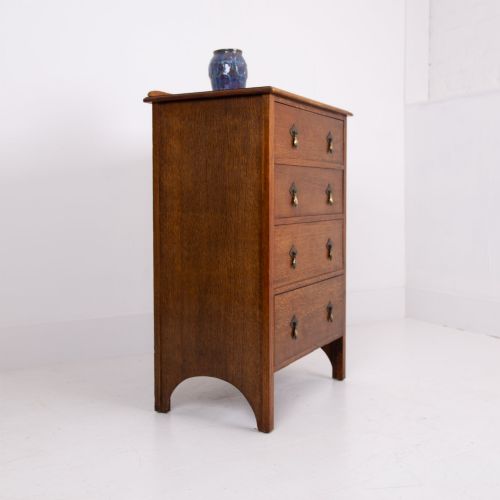
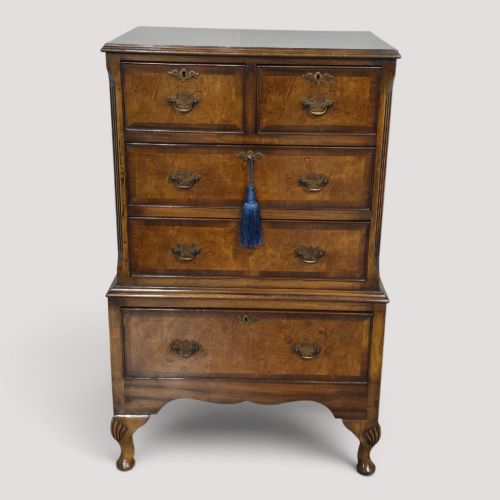
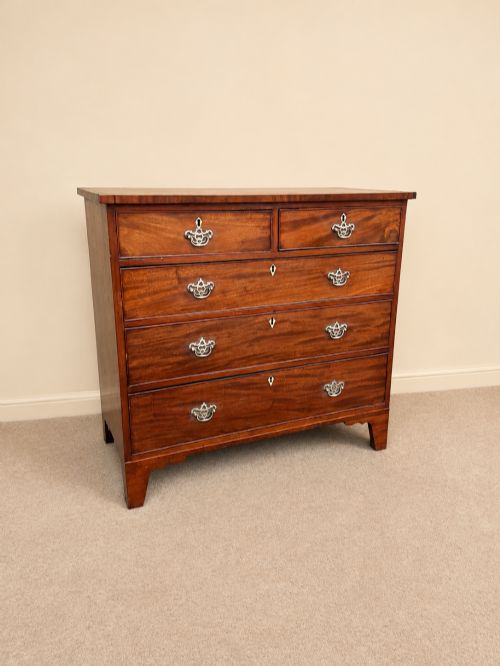
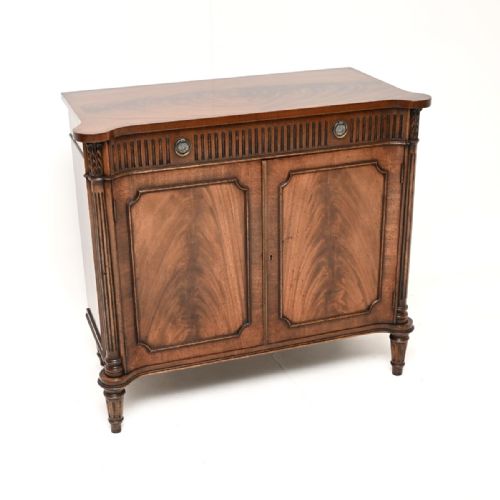
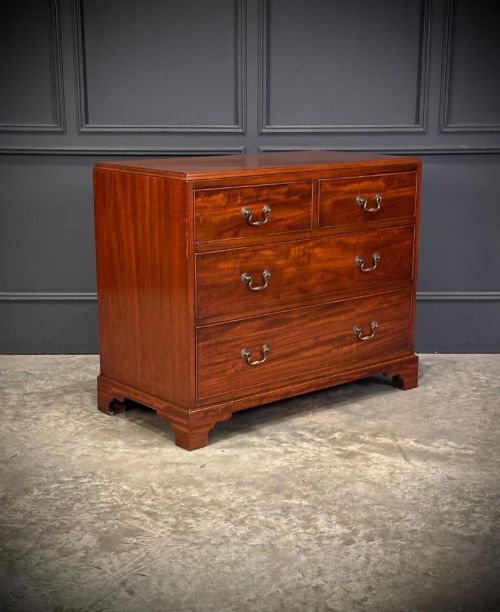
When you search for an edwardian style commode, you encounter a selection spanning chests of drawers, side cabinets, and serpentine commodes built in revivalist modes. The materials range across mahogany, satinwood, oak, and walnut, often reflecting the lighter aesthetic of the Edwardian period alongside influences from Georgian and Sheraton styles.
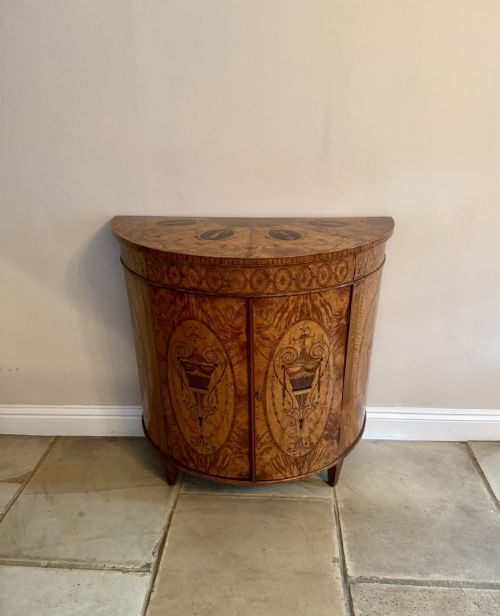
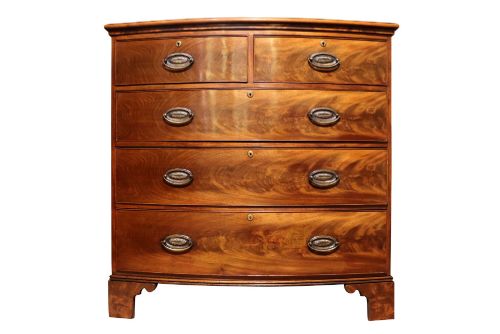
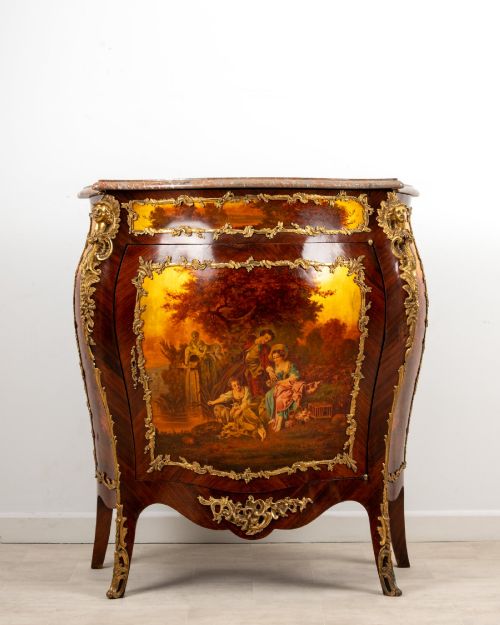
Many pieces on this page originate from the late nineteenth and early twentieth centuries, incorporating revival designs such as Sheraton Revival, Georgian Style, and Queen Anne Revival. The forms vary from bow-fronted chests to demi-lune side cabinets and painted commodes adorned with marquetry or classical panels.
Materials and Technique
Cabinet makers utilised dense hardwoods including mahogany, oak, and walnut, frequently pairing them with figured veneers such as satinwood and burr walnut to create visually striking surfaces. Decorative elements like brass handles, ormolu mounts, and inlaid marquetry were carefully applied to enhance the overall silhouette.
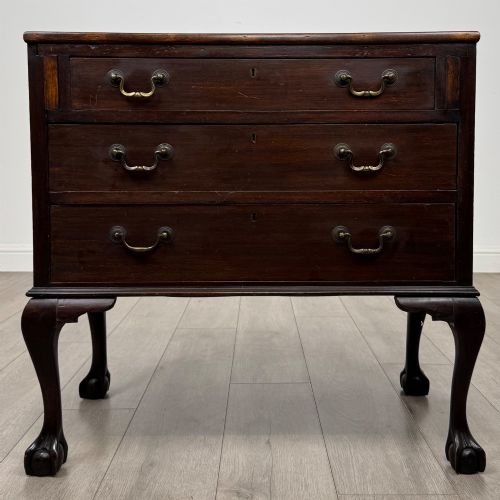
Construction techniques involved traditional joinery suited to structural cabinetry, while finishing touches often included hand-carved details, raised galleries, and claw and ball feet. Certain pieces incorporate marble tops or painted finishes such as japanning and Venetian scenes to achieve a distinctive continental aesthetic.
Edwardian Style Commode Retail Price Guide 2026
Typical asking prices for edwardian style commode among the pieces listed under this phrase on Sellingantiques today, from the lower quarter to the upper quarter. They describe what is for sale here now, not the wider market.
Several commodes feature painted Venetian scenes, bringing an unexpected touch of Italian waterside romance straight into the British parlour.
The Marker of Quality
Quality in these pieces rests upon the selection of timber and the precision of the cabinet work, distinguishing simpler utility furniture from elaborate workshop output. Figured veneers, balanced grain patterns, and crisp carving on details like top edges or feet elevate a piece significantly.
The sophistication of decorative additions, from delicate satinwood marquetry and hand-painted panels to cast ormolu mounts and substantial brass hardware, separates standard production items from finer examples designed for prominent reception rooms.
Whytock and Reid·Druce and Co·Edwards and Roberts
The Edwardian Style Commode Glossary
- Serpentine
- A curved shape featuring a convex centre flanked by concave curves. This contour is frequently seen on the fronts of higher-end commodes and side cabinets.
- Marquetry
- Inlaid wood veneers arranged to form decorative patterns or pictures. Craftsmen utilise different coloured timbers to achieve pictorial depth on cabinet doors and drawer fronts.
- Ormolu
- Gilt bronze ornamentation mounted onto furniture. This decorative technique adds metallic lustre and classical detail, particularly on French-influenced pieces.
- Demi-lune
- A half-moon shape characteristic of console tables and commodes. Such pieces sit flush against walls while projecting a curved profile into the room.
- Gallery
- A raised rim or rail placed around the top edge of a cabinet or chest. It prevents objects placed on the surface from sliding off.
Edwardian Style Commode: Frequently Asked Questions
What is an Edwardian style commode?
An Edwardian style commode is a storage piece, typically a chest of drawers or small cabinet, produced during the early twentieth century or later in revival aesthetics. These items draw heavily on eighteenth-century design vocabulary, particularly Sheraton and Georgian forms.
They utilise lighter timbers and refined decorative techniques such as inlay and painting, distinguishing them from heavier Victorian precedents.
How were these commodes used?
Historically, these pieces served as functional storage furniture in bedrooms, hallways, and drawing rooms for clothing, linens, or household documents. Their decorative surfaces also provided display space for porcelain, clocks, and lamps.
Today, they continue to function as versatile storage units in contemporary interiors while adding period character to a room.
How do you style one in a modern home?
An Edwardian style commode functions effectively as a focal point in a hallway, a bedside table, or a living room accent piece. Pairing the wooden or marble surface with contemporary lighting or art creates a balanced interior.
Allowing sufficient space around the curved or serpentine profiles ensures the architectural details remain visible.
How do I tell different revival periods apart?
Distinguishing revival periods involves examining the choice of wood, hardware, and decorative motifs. Sheraton and satinwood revivals often feature lighter colour palettes and delicate floral marquetry.
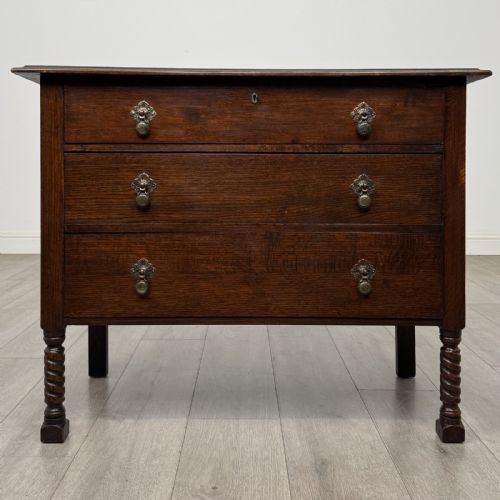
Heavier oak pieces with barley twist legs or carved details typically point towards Jacobean or earlier revival influences spanning the late nineteenth and early twentieth centuries.