



Edwardian Stone Light
These pieces gathered under edwardian stone light offer a subtle glow and heavy mineral presence that transforms a room.
Edwardian Stone Light
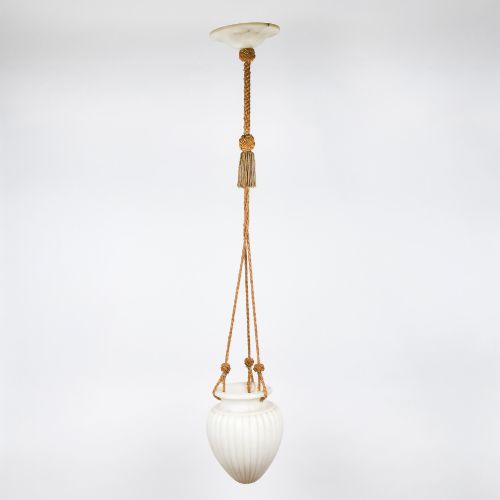
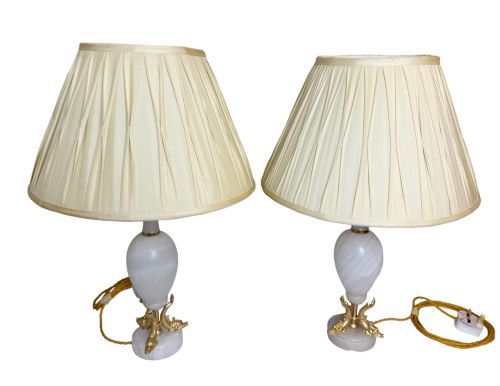
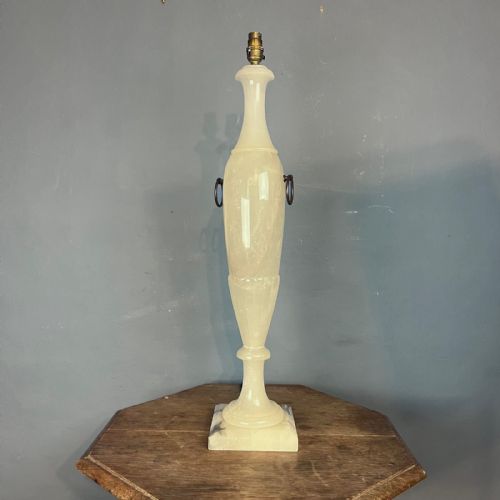
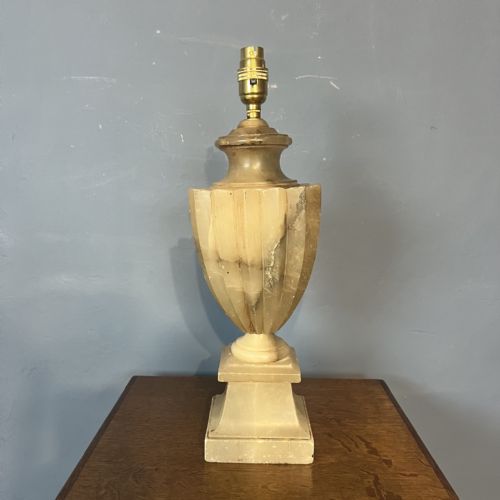
When you search for edwardian stone light, you encounter heavy mineral forms designed to illuminate interiors through translucent carved bowls and slender columns. These domestic items span table lamps, floor lamps, and hanging pendants produced across the early decades of the twentieth century.
The most common versions on this page are carved alabaster table lamps and hanging bowls from around nineteen ten, often paired with brass or gilt bronze trim. You also find larger floor standing marble lamps and onyx fixtures that bring substantial weight and classical proportion to a space.
Makers drew on classical revival and neoclassical styles, creating lighting that relies on the natural banding and milky white opacity of the stone rather than applied surface ornament. These objects combine utilitarian function with the architectural presence of carved mineral.
Materials and construction
Craftsmen shaped white alabaster and onyx on lathes or by hand to achieve thin-walled bowls and smooth cylindrical columns that diffuse electrical light or candle flames. The stone surfaces often retain subtle natural veining and variable opacity.
Metal mounts in brass, silver plate, and gilt bronze secure the stone components, joined with threaded rods or fine collars. Fabric cords and braided elements complete the wiring on electrical pieces.
Edwardian Stone Light Retail Price Guide 2026
Typical asking prices for edwardian stone light among the pieces listed under this phrase on Sellingantiques today, from the lower quarter to the upper quarter. They describe what is for sale here now, not the wider market.
Some heavy alabaster lamp bowls from nineteen twenty weigh enough to double as modest strength-training equipment if unbolted.
Assessing quality in stone lighting
Quality rests upon the purity and translucency of the carved mineral, where finer pieces show an even, luminous glow without heavy occlusions or dense grey clouding. The depth of the hand-carving in hanging bowls and the crispness of any classical relief work also separate standard items from superior examples.
The integration of the metal mounts dictates the overall finish, with heavier gilt bronze trim and well-fitted brass collars showing greater refinement than plain or thin plated fittings. Proportion between the stone body and the supporting base determines the visual balance of the lamp.
The Edwardian Stone Light Glossary
- Alabaster
- A fine-grained, translucent stone commonly carved into hanging light bowls and table lamp bodies. It allows light to pass softly through its milky surface.
- Onyx
- A banded variety of chalcedony or calcite used for heavy table lamps and decorative objects. Its distinct layered strata create natural visual patterns in the stone.
- Gilt bronze
- A metal alloy treated with a gold coating, frequently used for the structural mounts and decorative trim on French and English stone lamps.
- Neoclassical revival
- An artistic movement drawing inspiration from classical antiquity, reflected in the column forms and urn shapes of these lighting pieces.
Edwardian Stone Light: Frequently Asked Questions
How do I clean an alabaster lamp?
Use a soft, dry microfibre cloth to gently remove dust from the carved stone surface.
Avoid using water or liquid chemical cleaners, as porous stone absorbs moisture and can stain easily.
Are these lamps safe for modern wiring?
Many antique lamps retain older electrical components that require professional rewiring to meet current safety standards.
Consult a qualified electrician to inspect and update the internal cord and bulb holder before regular use.
How do I distinguish alabaster from onyx?
Alabaster typically presents a uniform milky white appearance with soft opacity and minimal veining.
Onyx displays distinct parallel bands of contrasting colour and a higher degree of natural translucency in thin sections.
Where should I place a heavy stone lamp?
Position these substantial pieces on sturdy furniture such as sideboards, heavy timber desks, or directly on the floor for larger column models.
Ensure the supporting surface can safely bear the considerable weight of the stone and metal components.