



Edwardian Sterling Belt
These edwardian sterling belt pieces are striking silver accessories that bring period elegance and wearable history to any modern wardrobe.
Edwardian Sterling Belt
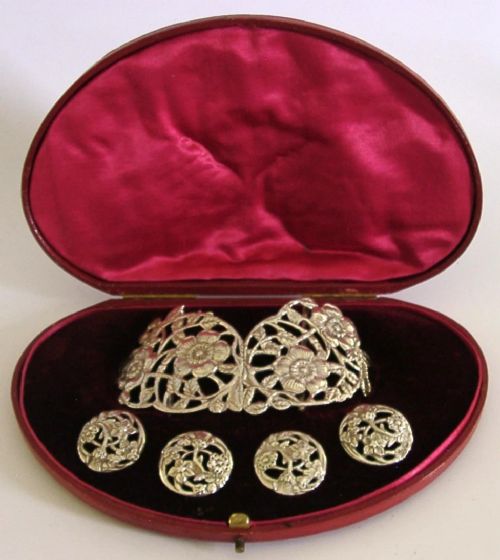
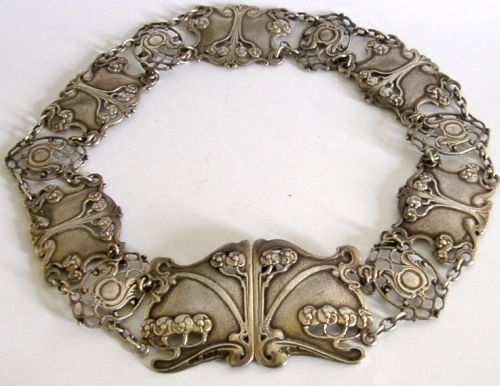
An edwardian sterling belt typically comprises a cast or pierced silver buckle paired with textile bands, or survives purely as a substantial buckle designed to fasten a waist accessory. You will most frequently encounter complete sets or individual buckles dating from the early twentieth century, spanning the Edwardian era down to later nursing uniform iterations.
The aesthetic is heavily influenced by contemporary design movements, displaying flowing organic lines, floral motifs and rich polychrome decoration. Pieces range from delicate dress accessories to robust institutional uniform buckles produced in solid silver.
Origins trace primarily to British workshops and silversmiths operating during the first decade of the nineteen hundreds, alongside later mid-century examples. The surviving items demonstrate the versatility of silver accessories across both fashionable attire and professional uniforms.
Materials and Construction
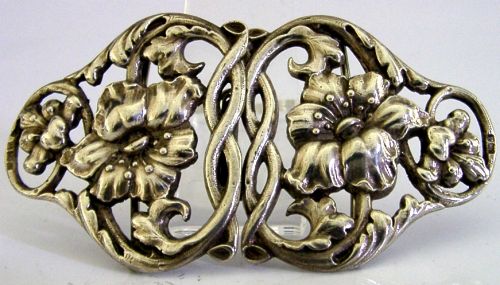
Makers utilised sterling silver and solid silver as the primary structural medium, often shaping the metal through casting or piercing techniques. This allowed workshops to achieve complex, high-relief floral designs and sinuous organic outlines characteristic of the period.
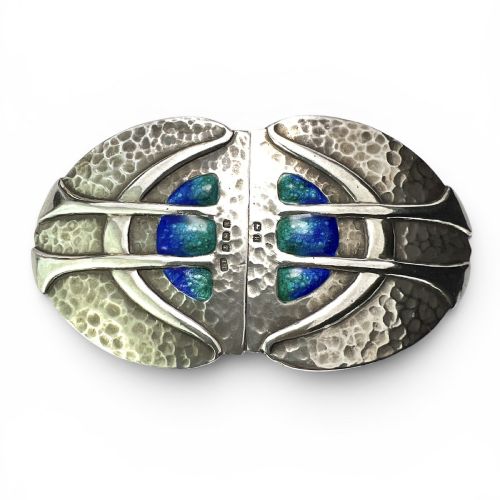
Vitreous enamel and glass enamel were frequently applied to the silver surface to introduce vibrant colour panels. Artisans fused powdered glass to the metal backing under high heat, creating durable decorative fields that complemented the polished silver framework.
Where complete assemblies survive, buckles were mounted onto supportive backing materials such as velvet or leatherette to provide structure and comfort when worn around the waist.
Edwardian Sterling Belt Retail Price Guide 2026
Typical asking prices for edwardian sterling belt among the pieces listed under this phrase on Sellingantiques today, from the lower quarter to the upper quarter. They describe what is for sale here now, not the wider market.
Listings span the Edwardian era alongside later mid-century pieces, combining sterling silver with vibrant vitreous enamel and velvet.
Assessing Quality and Craftsmanship
Quality in an edwardian sterling belt is determined by the crispness of the casting and the depth of the metalwork relief. Superior examples exhibit sharply defined details in motifs such as English roses and sinuous plant stems without softness in the edges.
The inclusion of hand-applied enamel elevates a piece, with finer examples showing smooth, even vitrification free from cracks or excessive pitting. The skill required to fuse glass enamel into complex silver cells distinguishes standard production from exceptional silversmithing.
Hallmarking adds clarity and authority, allowing collectors to trace pieces to specific assay offices and recognised makers. Clear, legible stamps confirm the purity of the metal and anchor the object to a precise year of manufacture.
James Fenton·Henry Matthews·Liberty's
The Edwardian Sterling Belt Glossary
- Sterling silver
- A silver alloy containing 92.5 percent pure silver and 7.5 percent other metals, usually copper, chosen to impart durability. This standard is universally marked with a lion passant on British silver.
- Vitreous enamel
- A material made by fusing powdered glass to a metallic substrate by firing, usually between 750 and 850 degrees Celsius. The powder melts, flows, and hardens to a smooth, durable glass coating.
- Art Nouveau
- An international style of art, architecture and applied art most popular between 1890 and 1910. It is characterised by a sense of dynamism and asymmetry, often using tall, flowing plant-inspired lines.
- Assay office
- A body charged with testing the purity of precious metals and stamping them with hallmark punches. Major British offices include London, Birmingham, Sheffield and Edinburgh.
- Cast silver
- Molten metal poured into a mould to take on a specific three-dimensional shape. This technique allows for heavier, deeply contoured forms with intricate relief work.
Edwardian Sterling Belt: Frequently Asked Questions
How do I wear an antique silver belt buckle?
These buckles can be mounted onto custom fabric bands or worn as statement closures on modern dresses and coats. Ensure the weight of the buckle matches the thickness of the fabric you choose.
Historical buckles were originally designed to cinch tightly woven belts or uniform sashes. Modern wearers often adapt them with velvet or silk ribbon to suit contemporary waistbands.
What periods do these silver buckles date from?
The pieces span from the late Victorian era through the Edwardian period and into the mid-twentieth century. Most examples cluster around the early nineteen hundreds during the height of the Art Nouveau movement.
Later items often date to the middle decades of the twentieth century, reflecting institutional uniform requirements. Comparing the design motifs helps distinguish early decorative items from later utility pieces.
How should I clean enamelled silver?
Enamelled silver requires gentle cleaning with a soft, dry microfibre cloth to remove dust and skin oils. Avoid standard silver dips, as harsh chemical liquids can seep beneath the enamel and cause permanent staining.
If tarnish accumulates on the silver sections, use a mild cream polish applied sparingly with a cotton bud. Keep polishing agents away from any glass enamel surfaces to preserve their glossy finish.
How do I identify the maker and date?
Look closely at the reverse side or edges of the metal for stamped hallmarks. These tiny struck symbols typically include a standard mark for silver purity, an assay office symbol, and a date letter.
Reference books or online assay office registers will decode the date letter and maker's mark initials. These stamps provide definitive evidence of where and when the piece was assayed.