



Edwardian Smokers Box
An edwardian smokers box is a fitted tabletop cabinet or container for tobacco, cigars, and pipes, offering a tidy way to store smoking gear.
Edwardian Smokers Box
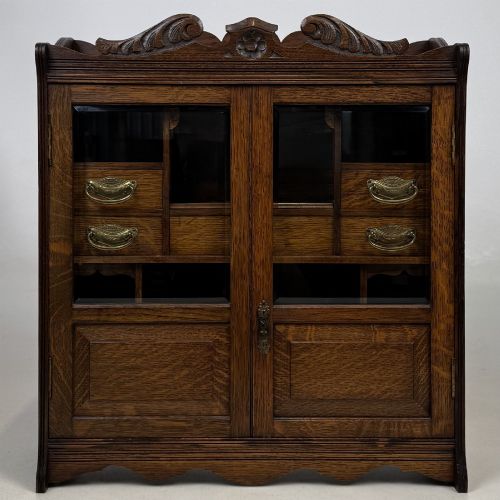
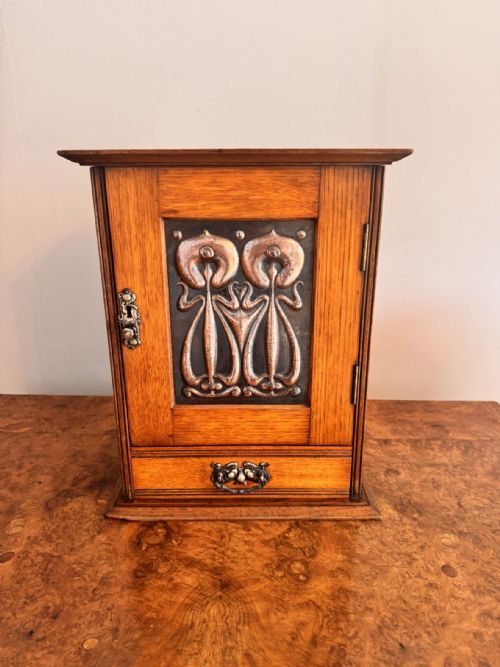
An edwardian smokers box encompasses tabletop cabinets, wall cabinets, and compact smoking cabinets designed for domestic use. The pieces appearing here span the Edwardian period alongside Victorian and later examples from around nineteen twenty.
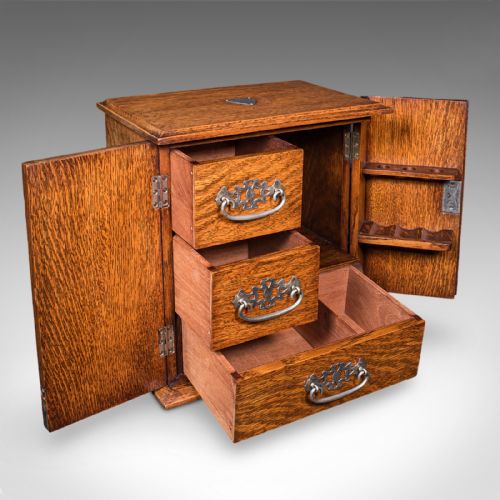
Most items are constructed as small cupboards or tabletop cabinets intended to sit neatly in a study, club lounge, or smoking room. Forms range from simple rectangular boxes to novelty designs modelled as coal wagons or fire carriages.
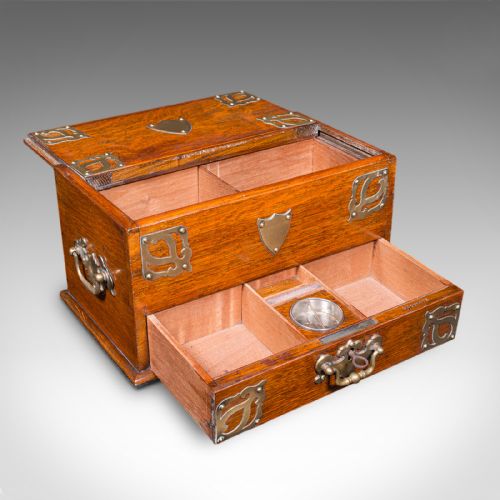
Makers utilised timber alongside metal fittings to create practical containers for pipes, cigars, and cigarettes. Oak and satinwood provide the primary wooden structures, often complemented by brass handles, locks, and hinges.
Materials and construction methods
Makers relied on solid oak and satinwood for the main bodies of these cabinets, frequently finishing surfaces with inlay or polish. Timber selection dictated the weight and durability of each container, with golden oak appearing frequently across the surviving items.
Brass hardware and sterling silver mounts provided structural reinforcement and decorative contrast against the wood. Glass panels and copper elements also feature in compendiums and novelty pieces to enclose or highlight the contents.
Edwardian Smokers Box Retail Price Guide 2026
Typical asking prices for edwardian smokers box among the pieces listed under this phrase on Sellingantiques today, from the lower quarter to the upper quarter. They describe what is for sale here now, not the wider market.
Smoking equipment occasionally arrived disguised as a railway coal wagon or a fire carriage.
Distinctions in quality and execution
The standard of an edwardian smokers box depends on the crispness of cabinet-making joinery and the quality of internal fittings. Superior examples display precise inlay work, well-fitted drawers, and robust hinges that withstand regular use.
Novelty and specialist pieces, such as those shaped like railway wagons or incorporating silver and glass compendiums, demonstrate greater ambition in design. Plain oak boxes rely entirely on timber selection and proportion for their appeal.
SAMPSON MORDAN
The Edwardian Smokers Box Glossary
- Humidor
- A moisture-controlled container designed specifically for storing cigars in optimum condition. These boxes maintain humidity to preserve the flavour of the tobacco.
- Compendium
- A comprehensive collection of smoking accessories housed within a single fitted cabinet or box. They often include compartments for pipes, matches, and various forms of tobacco.
- Tambour
- A flexible shutter door constructed from narrow strips of wood glued to a fabric backing. This mechanism allows the front of a cigar cabinet to slide smoothly around a curve.
Edwardian Smokers Box: Frequently Asked Questions
What fits inside an edwardian smokers box?
These cabinets generally accommodate smoking pipes, loose tobacco, cigars, and matches within dedicated drawers and compartments. Some configurations include glass sections or specialised holders for specific items.
Larger tabletop versions provide space for multiple pipes and cigar cases, whilst compact boxes hold only cigarettes or a small supply of smoking requisites.
Where were these boxes used?
They typically sat on tables, desks, or sideboards within studies, club lounges, and private smoking rooms during the late nineteenth and early twentieth centuries. Their portable nature allowed them to be moved easily around a home.
Wall-mounted variants were also utilised to keep smoking gear accessible yet tidy in domestic or club environments.
How do I care for the timber?
Maintain the wood by keeping the cabinet away from direct sunlight and sudden temperature shifts that might cause timber to warp or split. Occasional application of suitable wax helps protect the polished surface.
Avoid using excess moisture when cleaning internal compartments, particularly where unvarnished wood or metal fittings are exposed.
How can I tell the period?
Dating relies on examining the timber types, construction techniques, and decorative styles such as Art Nouveau or Edwardian Arts and Crafts. Hardware like brass locks and hinges also offers clues to the era of manufacture.
Comparing the piece against dated examples helps place it within the Victorian, Edwardian, or later periods represented in the materials.