



Edwardian Small Armchair
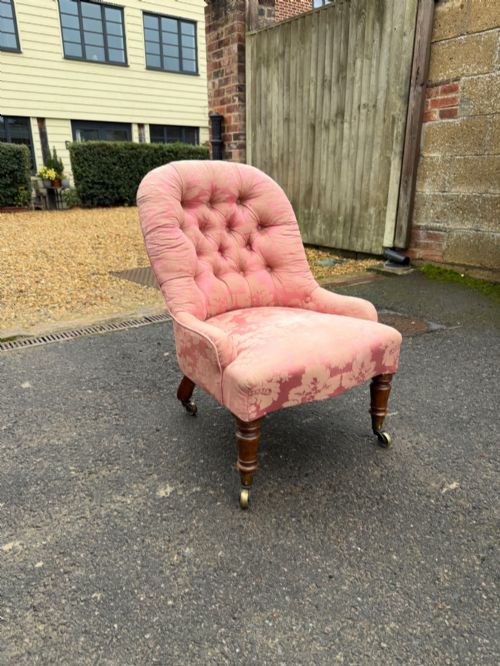
An edwardian small armchair offers compact seating with period charm, giving smaller rooms proper scale without losing traditional comfort.
Edwardian Small Armchair
An edwardian small armchair brings domestic scaling to period seating, often appearing as bedroom chairs, children's versions, or compact library seats. Buyers searching for an edwardian small armchair generally encounter domestic seating scaled down for parlours, bedrooms, or nurseries rather than grand reception rooms.
The evidence shows these pieces span multiple influences, including Queen Anne Revival forms, Regency adaptations, and traditional English country house seating. Makers ranged from workshop productions like Whytock and Reid to stamped pieces, reflecting diverse domestic requirements across the late nineteenth and early twentieth centuries.
How they were made
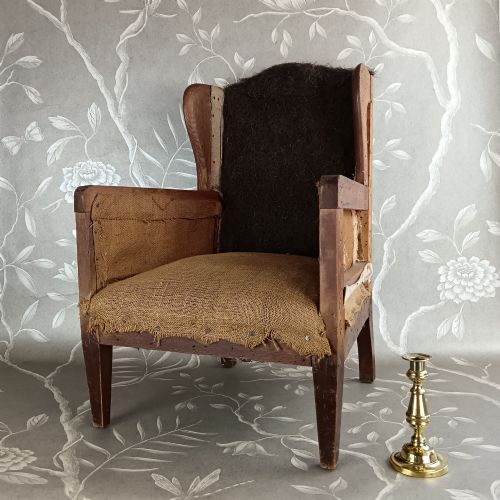
Frames rely on timber construction, principally mahogany and oak, providing sturdy internal support for upholstered bodies. Inlays and brass elements frequently accent the woodwork on refined examples.
Upholstery relies on traditional textiles including fabric, linen, hessian, and buttoned finishes, often paired with iron-backs or bergere panels. Craftspeople combined textile layering with timber framing to build durable, comfortable small-scale seating.
Edwardian Small Armchair Retail Price Guide 2026
Typical asking prices for edwardian small armchair among the pieces listed under this phrase on Sellingantiques today, from the lower quarter to the upper quarter. They describe what is for sale here now, not the wider market.
Some chairs were simply built small enough for children to rule the nursery like miniature monarchs.
What varies in quality
The distinction between standard production and finer work rests on timber selection and decorative detail, such as the precision of mahogany inlays and carved elements. Maker attribution, like workshop stamps, separates ordinary seating from documented workshop output.
Upholstery integrity and material selection dictate overall refinement, distinguishing plain country house utility chairs from sophisticated bedroom and library seating.
Whytock and Reid
The Edwardian Small Armchair Glossary
- Bergere
- A type of upholstered armchair with enclosed cane or wicker sides. This style appeared frequently in historic interiors to provide lighter-weight seating.
- Wingback
- An armchair with side panels attached to the arms and framing the back. These extensions originally blocked drafts in older homes.
- Inlaid
- A technique where contrasting materials are inserted into the timber surface to create decorative patterns. This ornamentation is common on better quality Edwardian cabinet work and seating frames.
Edwardian Small Armchair: Frequently Asked Questions
Where were small armchairs used?
These compact seats served in bedrooms, dressing rooms, and nurseries where full-sized armchairs took up too much floor space. They also functioned as fireside seating in smaller parlours.
Their reduced proportions allowed them to fit easily into corners or beside dressing tables without crowding the room.
How do I identify an Edwardian piece?
Edwardian seating often combines lighter mahogany frames with subtle inlay work, reflecting a shift away from heavier Victorian styles. Proportions tend to be dainty and decorative.
Reviewing the materials and construction helps distinguish these early twentieth-century examples from nineteenth-century work.
What is a bergere chair?
A bergere is an enclosed armchair featuring woven cane panels on the back and sides. This construction lightened the visual weight of the chair.
They became popular choices for drawing rooms and bedrooms during various revival periods.
Are child's armchairs common?
Scaled-down seating for children appears frequently alongside adult pieces from the same periods. These miniature chairs replicated the upholstery and framing styles of full-sized furniture.
Craftspeople built them with the same attention to timber selection and joinery as standard armchairs.