






Edwardian Silver and Leather
Edwardian silver and leather items combine precious metal mounts with supple hides to create portable luxuries for travel and the desk.
Edwardian Silver and Leather
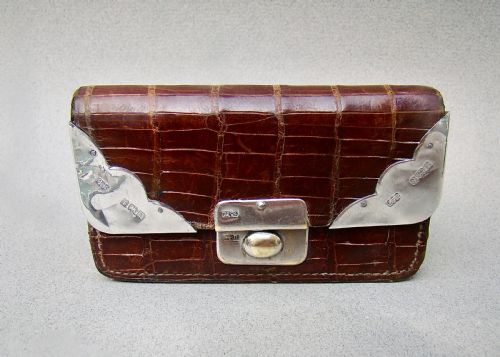
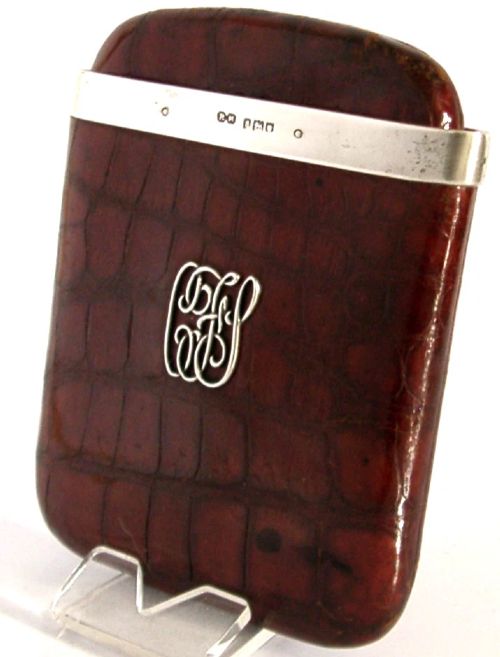
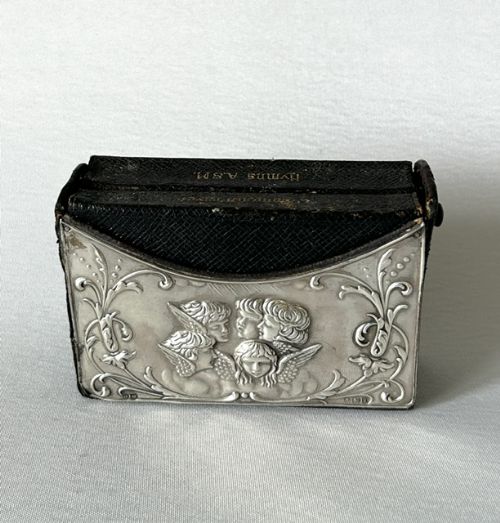
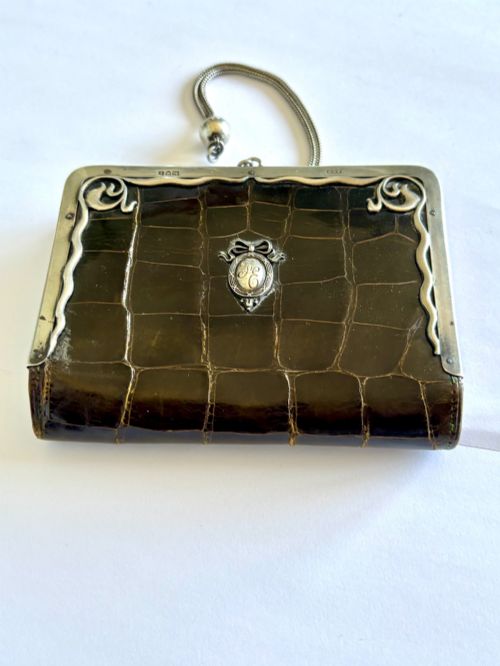
When searching for edwardian silver and leather, collectors encounter portable accoutrements designed for personal use, writing desks, and travel. These items pair sterling silver mounts, shields, and hinges with durable hides, most frequently standard leather or textured crocodile skin.
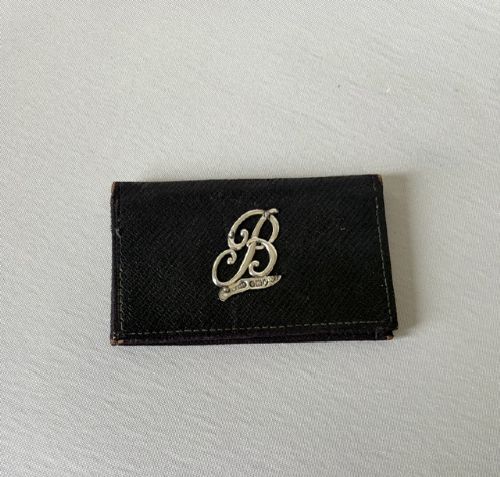
The objects on this page span several functional categories, dominated by hip flasks, card and game boxes, stamp cases, and vanity accessories. While the majority originate in the Edwardian period and the early twentieth century, pieces from adjacent eras such as the Victorian and Art Deco periods also appear.
Materials and Construction
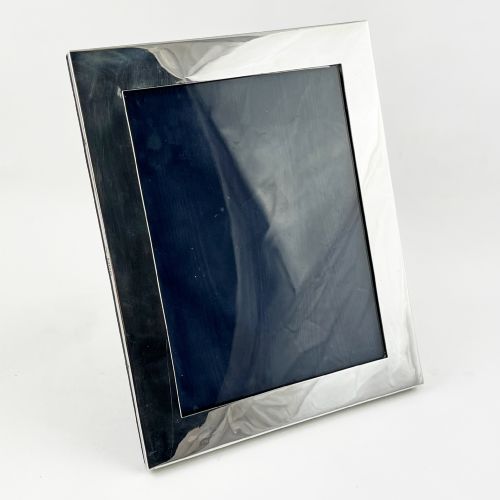
Silversmiths shaped sterling silver and silver plate into protective corners, collars, lids, and frames, often applying hallmarks to indicate the assay office, year, and maker. These metal elements were fastened securely to structural cores wrapped in smooth leather, parchment leather, or exotic crocodile skin.
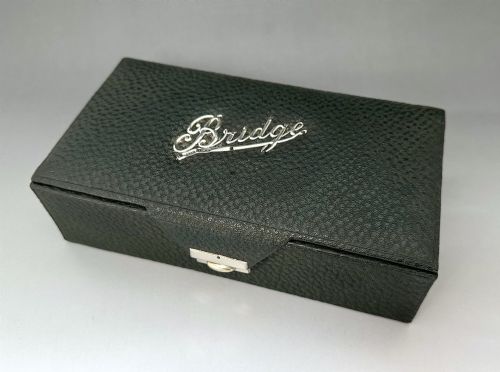
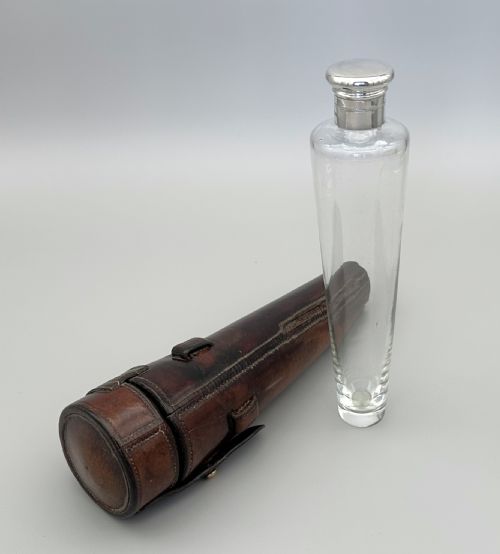
Makers utilised specialised stitching and adhesives to bond organic hides to rigid wooden or metal foundations used in items like bridge boxes and travelling cases. Glass inserts frequently appeared within silver-mounted and leather-covered vessels such as hip flasks and hunting flasks.
Edwardian Silver and Leather Retail Price Guide 2026
Typical asking prices for edwardian silver and leather among the pieces listed under this phrase on Sellingantiques today, from the lower quarter to the upper quarter. They describe what is for sale here now, not the wider market.
Listings feature items spanning the Victorian, Edwardian, and Art Deco periods, utilising sterling silver, silver plate, glass, and crocodile skin.
Assessing Quality and Execution
Quality in these pieces rests upon the crispness of the silver hallmarks, the weight of the metal mounts, and the preservation of the underlying hide. Superior examples display tight, even stitching and well-fitted hinged lids that close with a secure snap.
Makers who supplied luxury goods paid particular attention to interior linings, such as silk or velvet within game caskets and prayer book duos. The integration of specialised mechanisms, such as collapsible cups on spirit flasks or functional locks on card boxes, distinguishes finer workshop production from standard commercial output.
Charles Penny Brown·John Collard Vickery·Hukin and Heath·Ross of London·James Dixon
The Edwardian Silver and Leather Glossary
- Sterling silver
- An alloy containing 92.5 percent silver by mass, with the remainder composed of copper or other metals to improve durability. This standard metal forms the protective mounts, frames, and hardware across many personal accessories.
- Crocodile skin
- A durable, scaly hide utilised for the outer covering of luxury pocket items, purses, and hip flasks. Its distinct natural texture provides both tactile grip and visual distinction.
- Hallmark
- A formal stamp applied to precious metals by an assay office to certify the purity of the metal, the place of testing, and the year of production. These marks allow collectors to date silver mounts precisely.
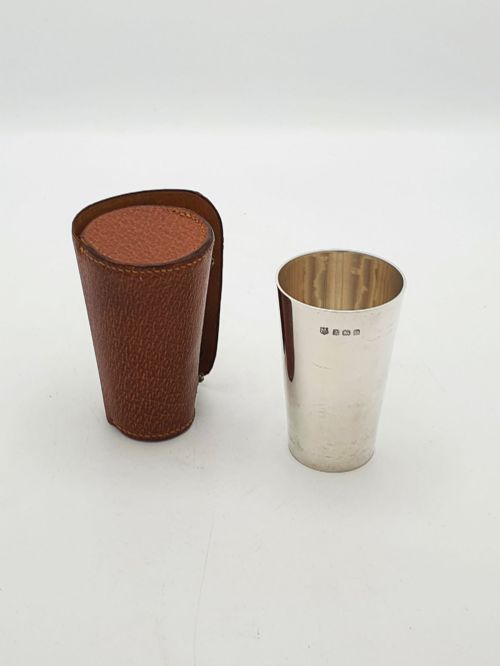
- Stirrup cup
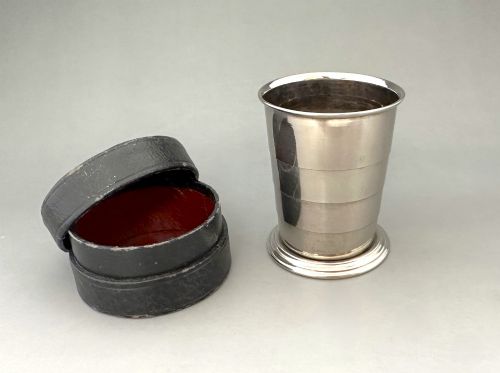
- A traditional drinking vessel, often silver-plated with a collapsible design, handed to riders before a hunt. They frequently paired with leather carrying cases for field use.
- Desk accessory
- A functional item intended for writing or correspondence, including stamp boxes, blotters, and inkstands. These objects often combine silver mounts with leather body panels.
Edwardian Silver and Leather: Frequently Asked Questions
How were hip flasks used?
Hip flasks served to carry personal spirits during travel, sporting events, or outdoor pursuits like hunting. Their curved profiles allowed them to fit comfortably against the body inside a pocket or coat.
Many examples feature captive caps and removable or collapsible metal cups integrated into the leather or crocodile skin casing.
How should I clean silver mounts on leather?
Cleaning requires keeping silver polish away from the surrounding leather or crocodile skin to prevent staining or drying the hide. Apply polish carefully to the metal mounts using a soft cloth.
Conditioning the leather separately with appropriate balms helps maintain the suppleness of the hide without affecting the adjacent silver elements.
How do I identify an Edwardian piece?
Identification relies primarily on reading the hallmarks stamped onto the silver mounts, which indicate the specific assay office and year of manufacture. Stylistic cues such as Edwardian proportions and Art Nouveau motifs also point to the era.
The inclusion of specific objects like bridge boxes and stamp wallets frequently aligns with early twentieth-century social habits.