
Edwardian Satinwood Inlaid Tables
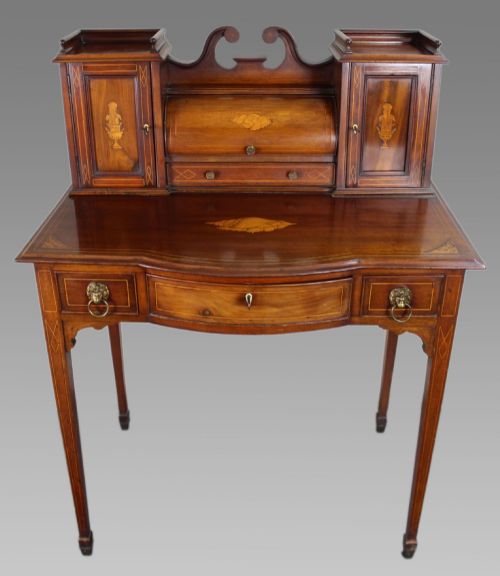
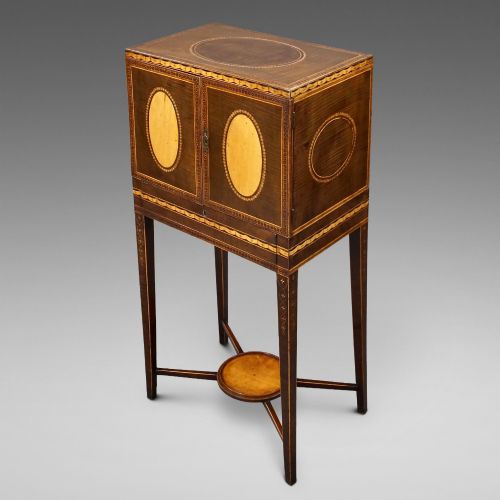
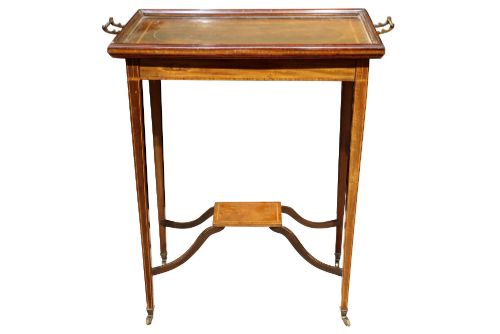
Edwardian satinwood inlaid tables combine pale timbers with precise linear ornament, offering light proportions suited to domestic spaces.
Edwardian Satinwood Inlaid Tables
When searching for edwardian satinwood inlaid tables, buyers encounter lighter furniture forms dating primarily from the late nineteenth and early twentieth centuries.
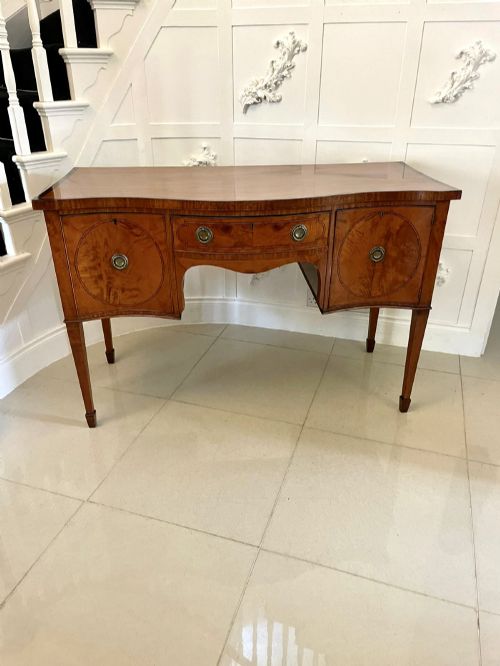
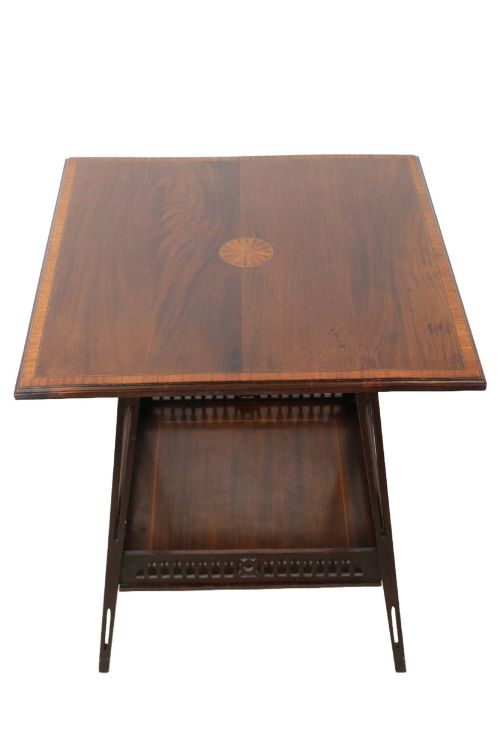
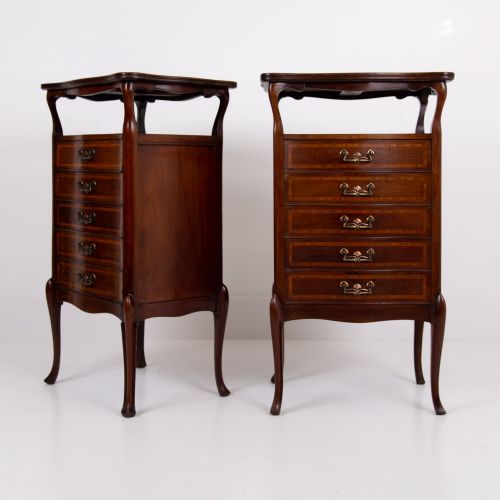
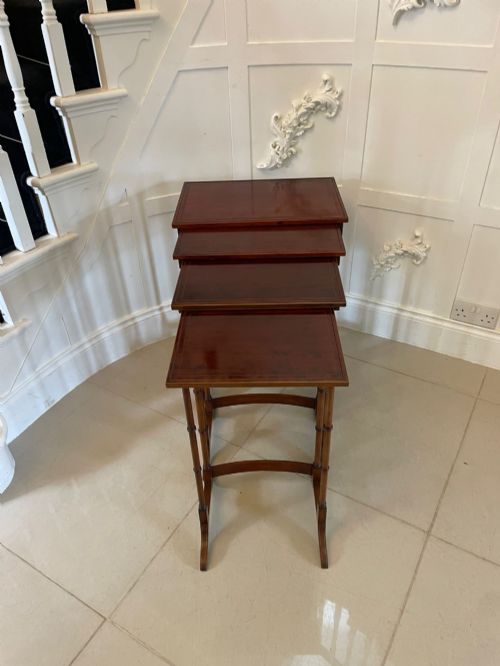
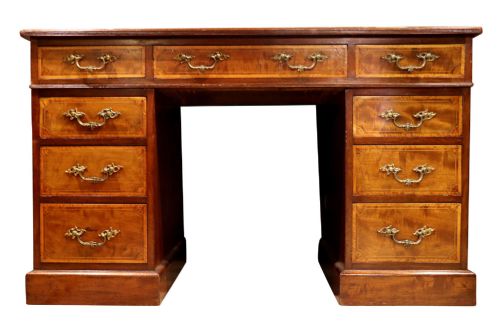
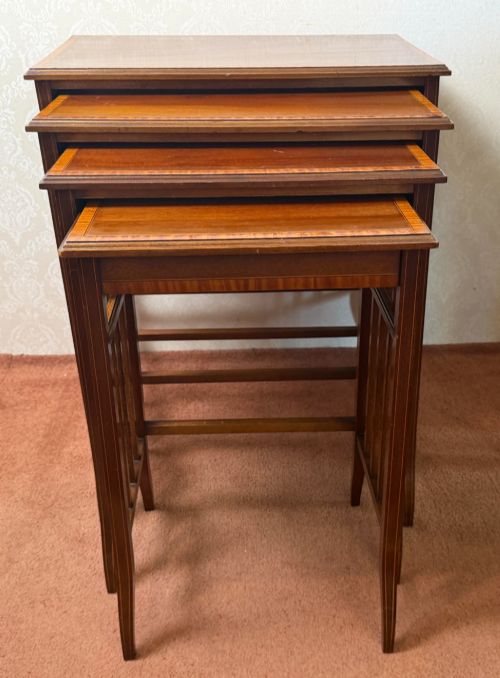
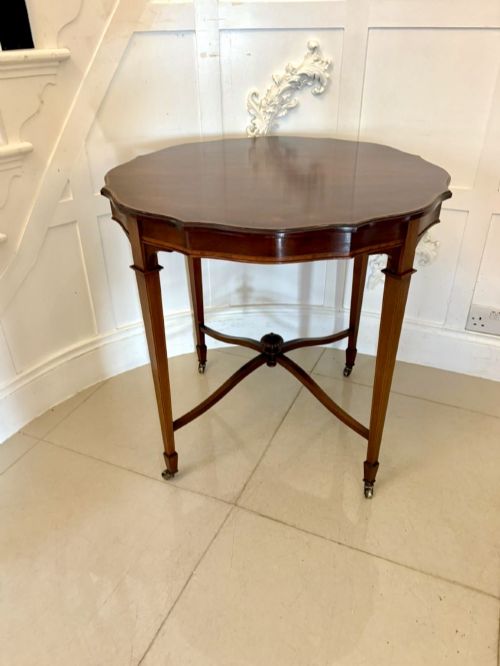
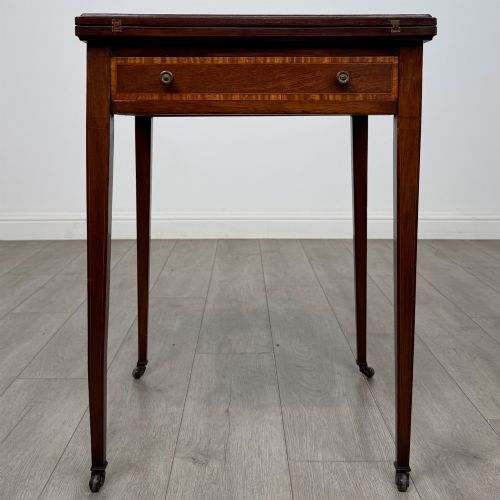
The selection on this page centres on occasional tables, nests of four tables, and envelope card tables, alongside related forms such as desks and side tables.
Most pieces originate from the Edwardian era and the Sheraton Revival movement, utilising the aesthetic of the eighteenth century within later domestic interiors.
Materials and Construction
Makers constructed the primary carcases in mahogany or satinwood, applying contrasting stringing and crossbanding in boxwood.
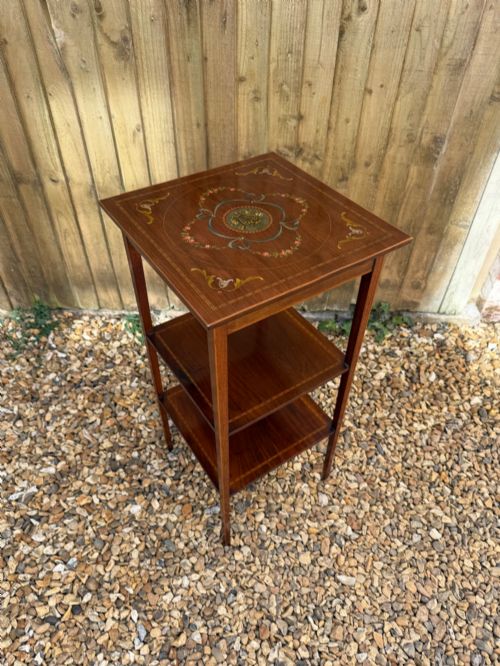
Surface ornament relied heavily on geometric inlay and painted details, set into satinwood and harewood veneers over stable timber foundations.
Functional pieces integrated brass hardware and leather writing surfaces alongside fine cabinetry joints suited to everyday use.
Listings feature multiple examples of satinwood, mahogany, boxwood, and brass utilised across Edwardian occasional tables and desks.
Assessing Quality
Distinctions in quality rest on the precision of the timber matching and the crispness of the boxwood inlay rather than mere age.
Higher-tier examples display thoughtful grain selection, harmonious crossbanding, and intact original surfaces without heavy restoration.
The finesse of the tapering legs and the stability of nested table sets indicate the skill involved in the original workshop construction.
Trevor Page & Co·Edwards & Roberts·Morant & Co London·Maple & Co
The Edwardian Satinwood Inlaid Tables Glossary
- Crossbanding
- A border strip of veneer laid perpendicular to the grain of the main surface. This technique frames the top of a table to create visual contrast.
- Satinwood
- A lustrous, hard timber native to Ceylon and India with a pale yellowish sheen. It provides the bright primary surface or veneer for decorative Edwardian pieces.
- Stringing
- Thin lines of contrasting wood inlaid into channels cut into the surface. It defines the edges and panels of drawers and table tops.
- Sheraton Revival
- A design movement drawing inspiration from late eighteenth-century neoclassical furniture. It reinterprets classical motifs with Edwardian lightness.
- Envelope Table
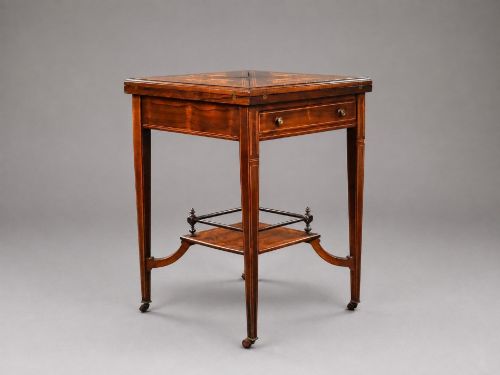
- A card table with four triangular flaps that fold over each other like an envelope. Rotating the top reveals a baize-lined playing surface.
Edwardian Satinwood Inlaid Tables: Frequently Asked Questions
How do I care for satinwood furniture?
Keep these pieces away from direct sunlight and heat sources to prevent the satinwood veneer from fading or drying out. Gentle dusting with a dry, soft cloth maintains the polished surface without the need for heavy chemical waxes.
Avoid placing damp items directly onto the timber. Using coasters and protective mats preserves the delicate crossbanding and inlaid borders from moisture rings.
Where should I place an occasional table?
These lighter tables suit drawing rooms, studies, and hallways where space is restricted. Their compact proportions allow them to function easily beside seating without crowding the room.
Nest tables offer flexibility because they separate for entertaining and stack together when floor space is required. Their finished tops make them suitable as lamp or display surfaces.
How do I spot Sheraton Revival pieces?
Look for neoclassical elements such as square tapered legs, painted floral motifs, and symmetrical urn or bellflower inlays. These details mimic late eighteenth-century design standards.
The lighter construction methods and typical Edwardian secondary timbers help differentiate these revival pieces from genuine Georgian items.
What is an envelope card table used for?
An envelope table functions as a decorative small table when closed, with a square top and folding flaps. The clever mechanism allows the leaves to open outward to reveal a felt-lined gaming area.
They were designed for drawing rooms where multipurpose furniture saved space. Small interior wells often hold counters or playing cards.