

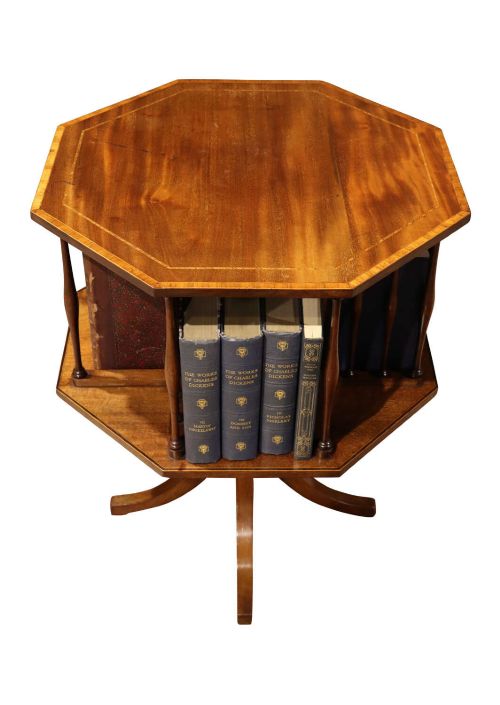
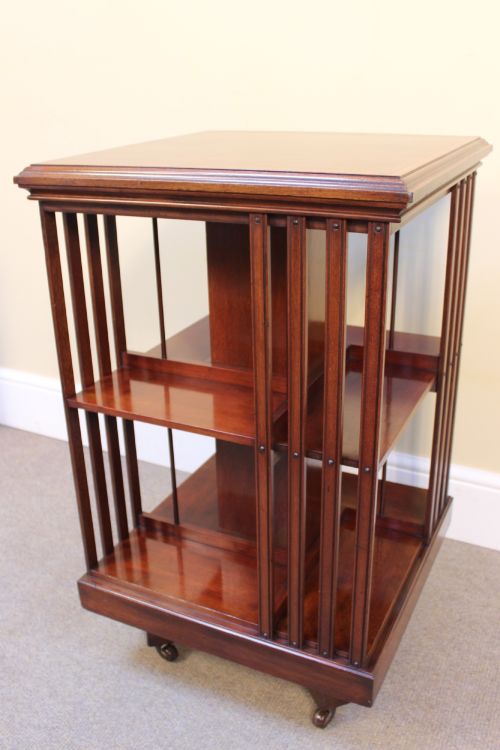
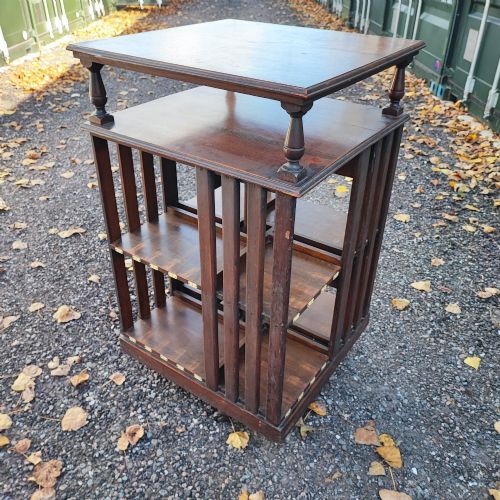
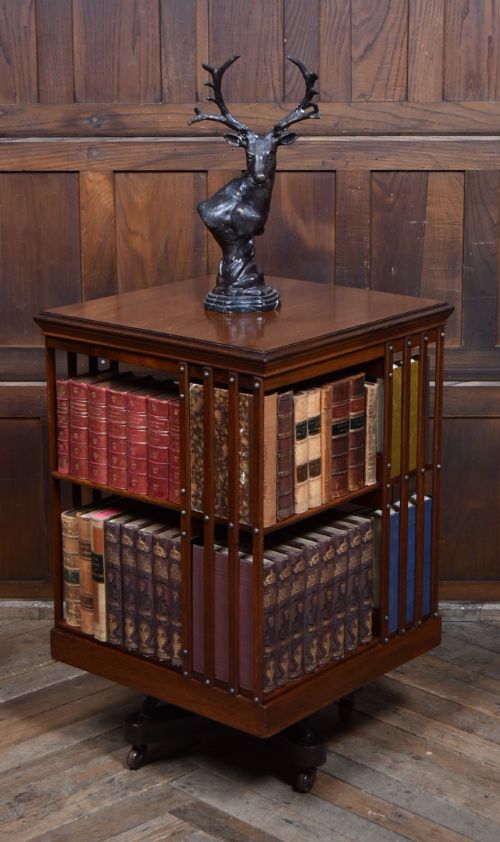
Edwardian Rotating Book Table
An edwardian rotating book table brings compact function to a room, offering immediate access to volumes from a seated position.
Edwardian Rotating Book Table
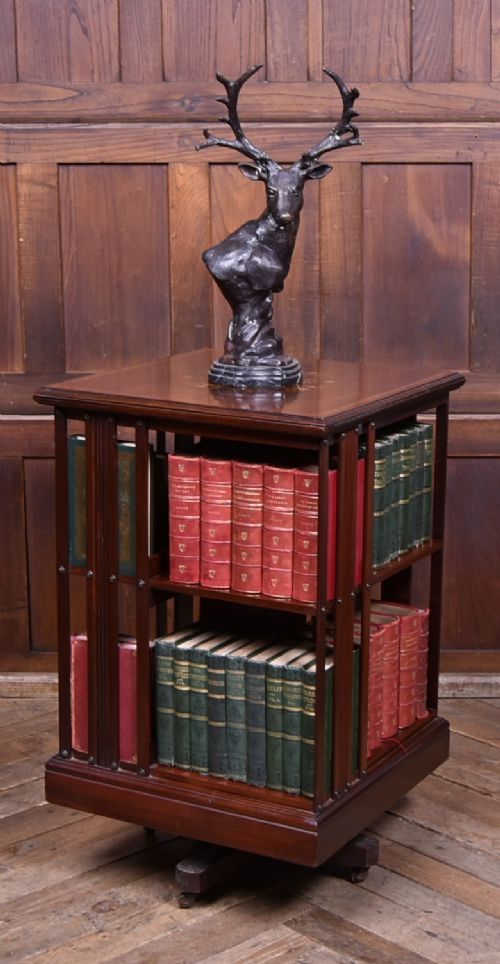
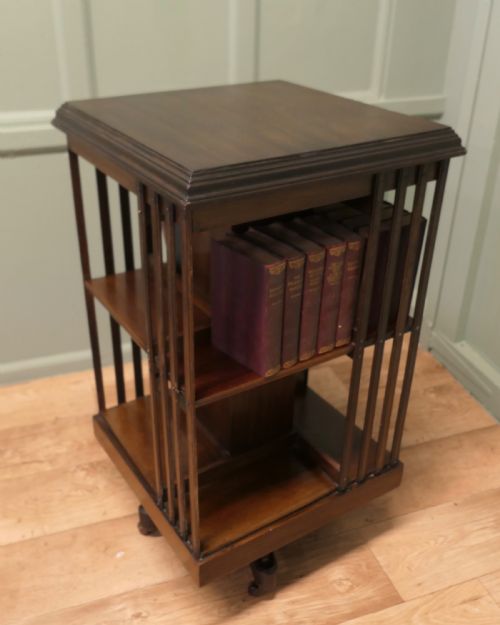
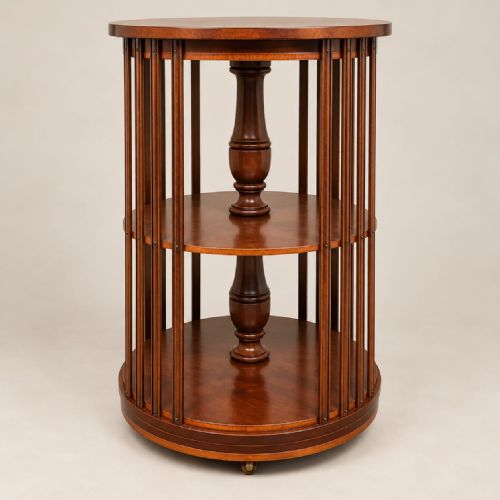
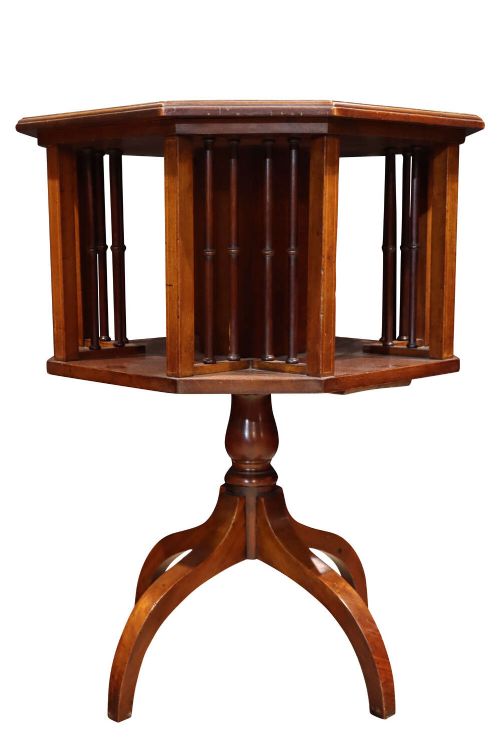
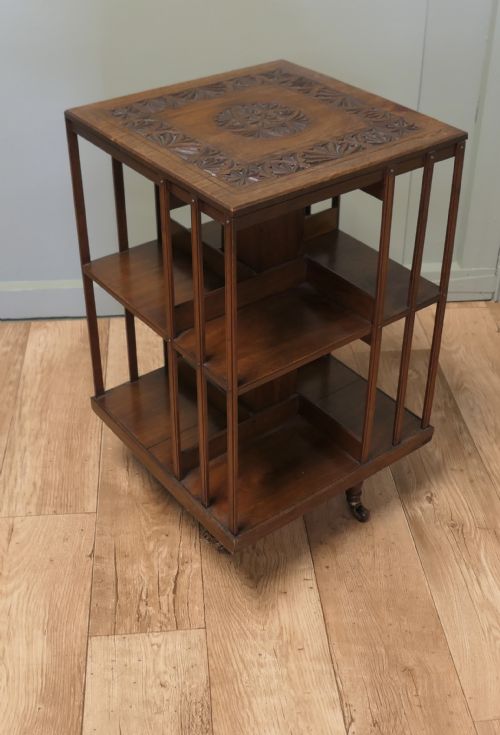
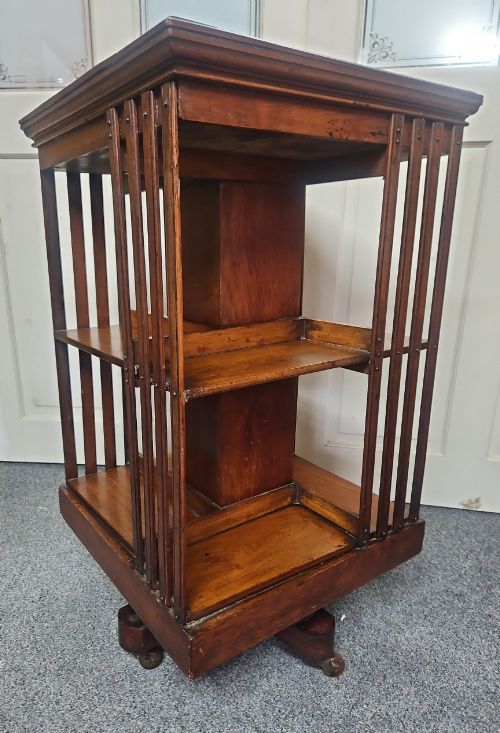
When you search for an edwardian rotating book table, you encounter pieces designed to hold a working library within arm's reach of a desk or armchair. These items take the form of floor-standing revolving bookcases or smaller table-top bookstands that spin smoothly on a concealed pivot mechanism.
The selections on this page centre predominantly on Edwardian and late Victorian examples, alongside pieces spanning from the late nineteenth century into the interwar years of the twentieth century. The primary forms range from simple square units to circular and octagonal shapes, including variants fitted with reading stands or integrated drop leaves.
Construction and materials
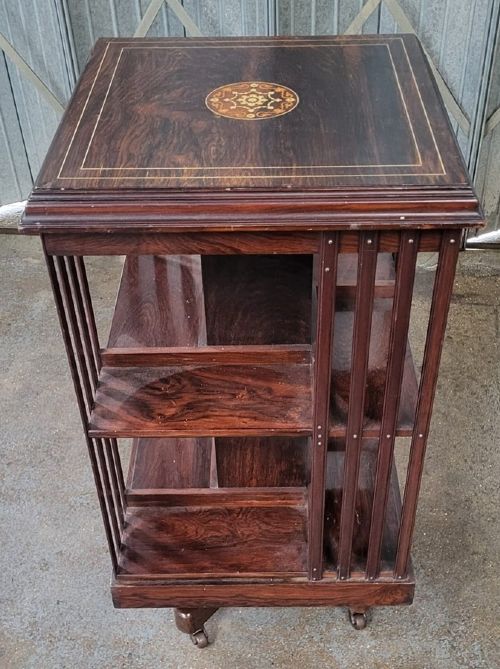
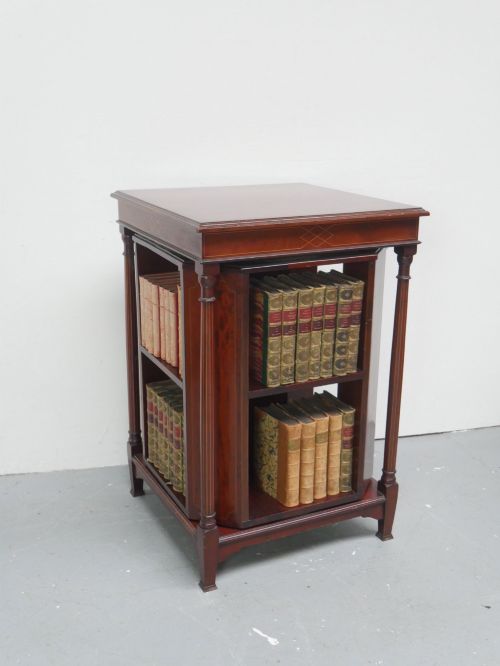
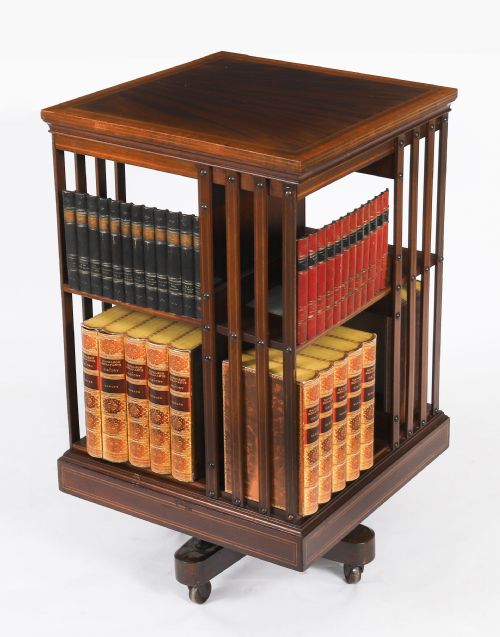
Cabinet makers built these rotating pieces primarily using dense hardwoods such as mahogany and oak, occasionally selecting walnut or rosewood for finer commissions. Surfaces often received decorative treatment through satinwood inlay, contrasting banding, or flame mahogany veneers.
Internal rotating mechanisms rely on iron and brass components to support the weight of heavy volumes while maintaining a balanced spin. Structural elements occasionally incorporate cast iron components within the base assembly to stabilise the taller floor-standing editions.
Edwardian Rotating Book Table Retail Price Guide 2026
Typical asking prices for edwardian rotating book table among the pieces listed under this phrase on Sellingantiques today, from the lower quarter to the upper quarter. They describe what is for sale here now, not the wider market.
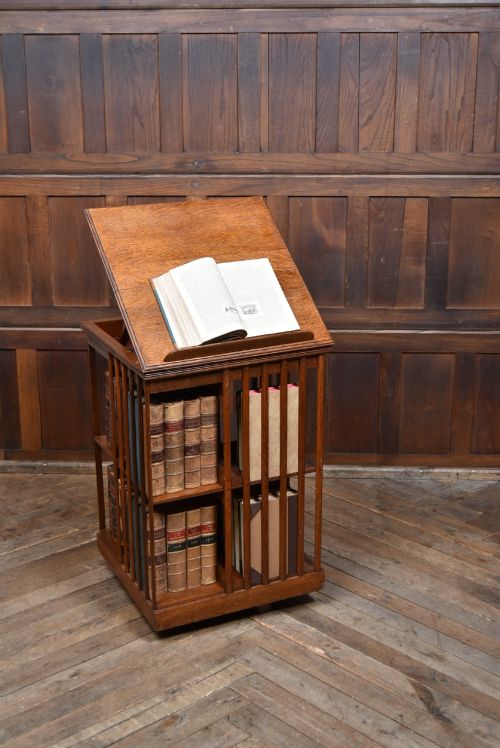
Some rotating book tables included built-in reading stands so you could consult heavy reference volumes without ever lifting your elbows from the desk.
Judging the construction and finish
The distinction between standard utility pieces and finer examples rests on the selection of timber and the precision of the joinery. Fine grain matching in the mahogany or oak veneers and crisp execution of satinwood inlay elevate a piece beyond a simple functional item.
The engineering of the revolving mechanism dictates daily performance. Superior models maintain an effortless, balanced rotation without wobbling or catching, supported by robust internal framing that withstands the weight of heavy books across all compartments.
The Edwardian Rotating Book Table Glossary
- Revolving bookcase
- A freestanding or table-top piece of furniture containing multiple book compartments arranged around a central vertical axis, allowing the entire unit to spin horizontally.
- Satinwood inlay
- A decorative technique involving contrasting light-toned wood fitted into recesses within the primary mahogany or rosewood surface to create geometric or floral borders.
- Reading stand
- An adjustable bookrest attached to the top surface of certain rotating tables, designed to hold an open volume at a comfortable angle.
- Cabriole leg
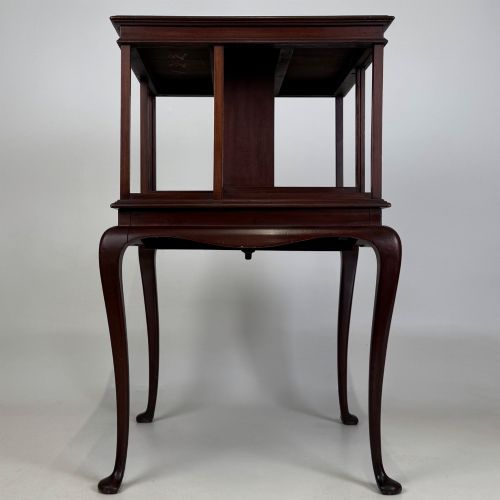
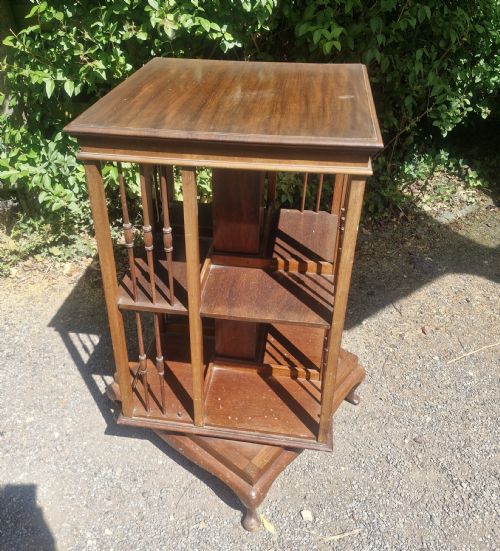
- A furniture leg that curves outward in a convex arc before tapering inward in a concave sweep toward the foot, seen on select table variants.
- Book mill
- An alternative historical term for a revolving bookcase or reading table designed to keep numerous reference texts accessible in a compact radius.
Edwardian Rotating Book Table: Frequently Asked Questions
How do I care for the rotating mechanism?
Keep the internal pivot clean and free from dust accumulation over decades of use. A light application of appropriate lubricant to the metal components ensures smooth rotation.
Avoid overloading individual shelves unevenly, as balanced weight distribution prevents undue strain on the central bearing axis during daily turning.
Where should I place a revolving book table?
These pieces function effectively beside an armchair, adjacent to a desk, or freestanding in the centre of a study. Their rotational design allows placement in tight corners where traditional shelving proves inaccessible.
Ensure adequate clearance from surrounding walls to allow full rotation of the book compartments without scuffing adjacent surfaces.
How do I tell Edwardian pieces from Victorian ones?
Edwardian examples generally favour lighter timbers, refined satinwood inlay, and airier proportions influenced by Sheraton revival styles. They often present simpler lines compared to earlier nineteenth-century furniture.
Victorian counterparts tend toward heavier timber construction, deeper carved details, and darker finishes in oak or solid mahogany, reflecting more substantial room proportions.
What is the difference between floor and table top versions?
Floor-standing models incorporate a heavy cruciform or cast base designed to support full tiers of books at seated height. They act as independent furniture items in a room.
Table-top versions scale down the rotating mechanism to sit directly upon a desk, sideboard, or side table, holding smaller selections of working reference books.