



Edwardian Pocket Card Case
An edwardian pocket card case is a portable silver or leather accessory designed for calling cards, combining period craftsmanship with everyday utility.
Edwardian Pocket Card Case
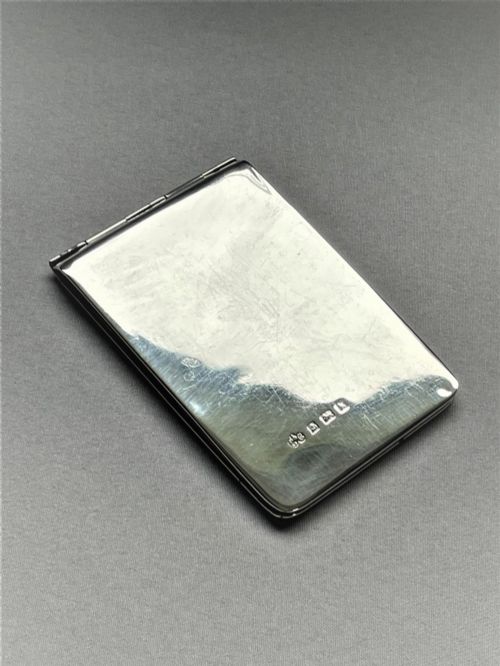
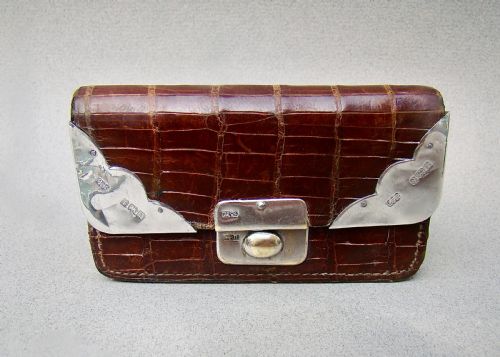
The edwardian pocket card case encompasses slim silver holders, combination stamp wallets, and leather-covered pouches made to fit neatly into a pocket or handbag. Most examples on this page date from the Edwardian period and the early twentieth century, though occasional Victorian and later pieces appear.
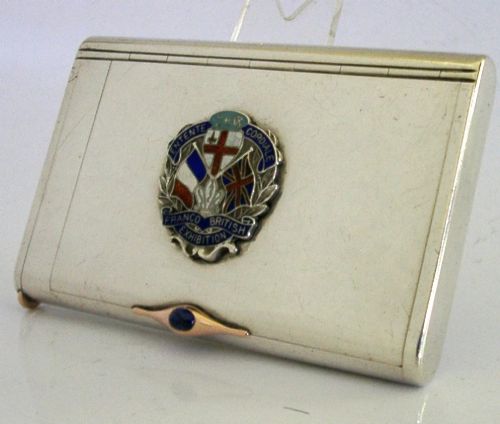
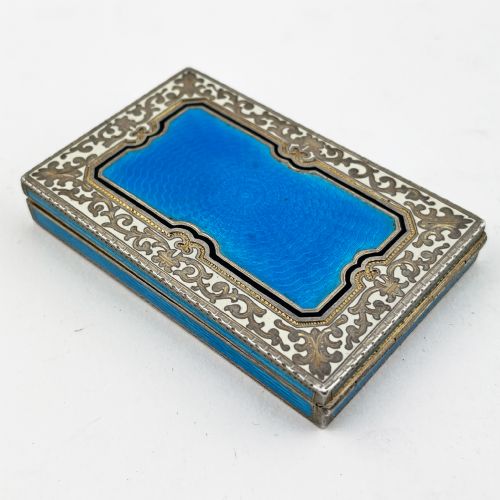
Makers produced these accessories in various formats, ranging from plain polished sterling silver to elaborate items decorated with enamel scenes or integrated aide-mémoire pads. Buyers encounter dedicated visiting card cases alongside dual-purpose items that also house stamps, cigarettes, or currency.
How they were made
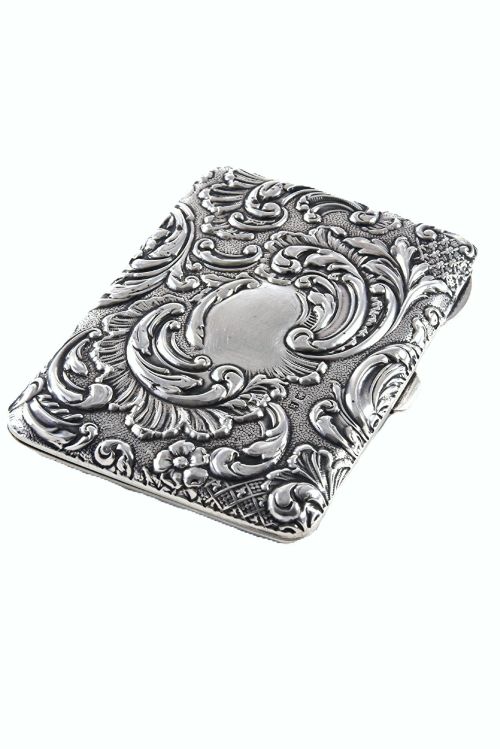
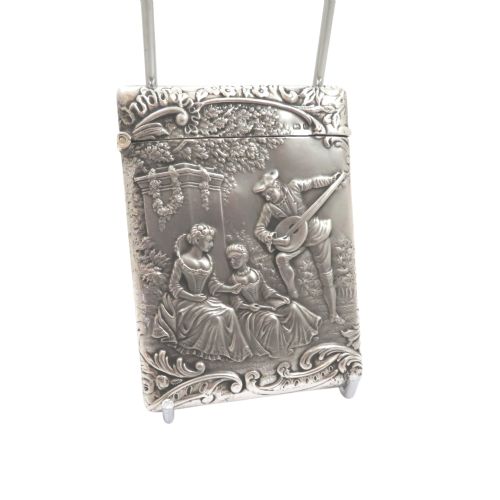
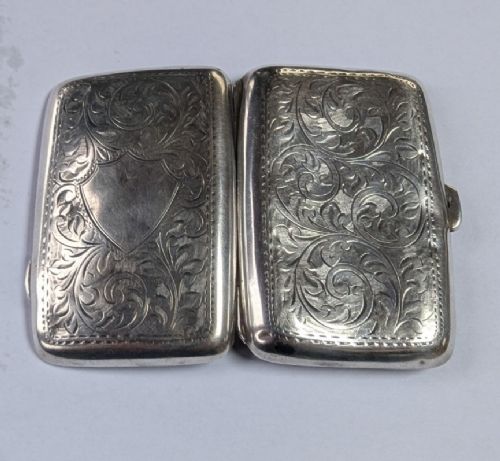
Silversmiths formed the bodies of these cases using sterling silver, frequently applying gilt linings to the interior and employing hinge mechanisms to secure the contents. Exterior surfaces often show engine-turned patterns, repoussé figural scenes such as musical or hunting motifs, or hand-applied vitreous enamel.
Certain models combine silver frames with organic materials like crocodile skin, crocodile leather, or Connemara marble, demonstrating diverse manufacturing techniques within the period.
One surviving pocket case preserves a contemporary handwritten note tucked inside its aide-mémoire pad.
What varies in quality
Quality in an edwardian pocket card case depends upon the crispness of the repoussé work, the complexity of any enamel decoration, and the weight of the sterling silver used in construction. Pieces featuring detailed pictorial panels or works by known firms display a higher degree of artisan skill than plain utilitarian examples.
The condition of interior gilt linings, the precise alignment of the spring hinge, and the preservation of delicate leather or enamel elements further distinguish finer items from standard production pieces.
Charles Penny Brown·Liberty and Co
The Edwardian Pocket Card Case Glossary
- Sterling silver
- A silver alloy containing 92.5 percent pure silver and 7.5 percent other metals, mostly copper. This standard metal forms the primary body of most cases listed.
- Aide-mémoire
- A small notepad or memorandum book fitted inside a case with a pencil. These allow the owner to record notes alongside their calling cards.
- Vitreous enamel
- Glass fused to a metal surface at high temperatures to create coloured decoration. This technique appears on decorative panels.
- Gilt metal
- A base metal coated with a thin layer of gold. It provides a golden interior finish in silver gilt lined examples.
- Repoussé
- A metalworking technique where the smith hammers the design from the reverse side to form a raised relief on the front.
Edwardian Pocket Card Case: Frequently Asked Questions
What is an edwardian pocket card case used for?
These cases held visiting cards, which Victorians and Edwardians exchanged during formal social calls. They protected delicate paper cards from bending while carried in pockets or handbags.
Over time, some owners repurposed them to hold stamps, notes, or cigarettes, reflecting the versatile nature of these small silver accessories.
How do I identify an Edwardian piece?
Edwardian items date from the reign of King Edward VII between 1901 and 1910, showing specific stylistic traits from that decade. Assay office marks and date letters stamped on the silver provide the exact year of manufacture.
Earlier Victorian pieces and later examples from the 1920s also appear, identifiable by their respective hallmarks and design characteristics.
Can I still use one today?
Many people carry these cases today for business cards, credit cards, or folded currency. The secure hinges and sturdy metal walls protect modern cards effectively.
Enamelled or leather-covered examples require gentle handling to prevent surface wear during daily use.
What materials are used besides silver?
While sterling silver dominates the selection, makers incorporated crocodile leather, crocodile skin, and Connemara marble. Vitreous enamel and gold accents also appear on decorative exterior panels.
Interiors frequently feature gilt metal linings or small integrated leather notepad compartments.