

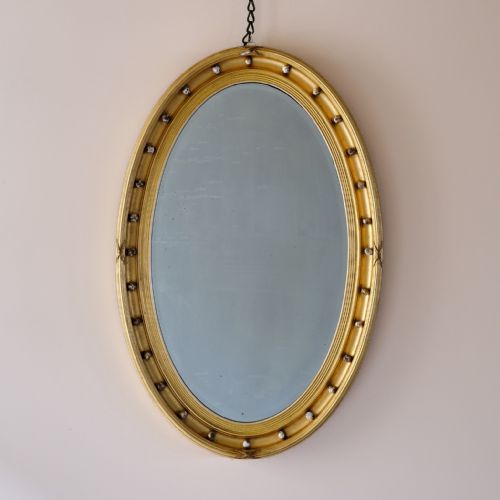

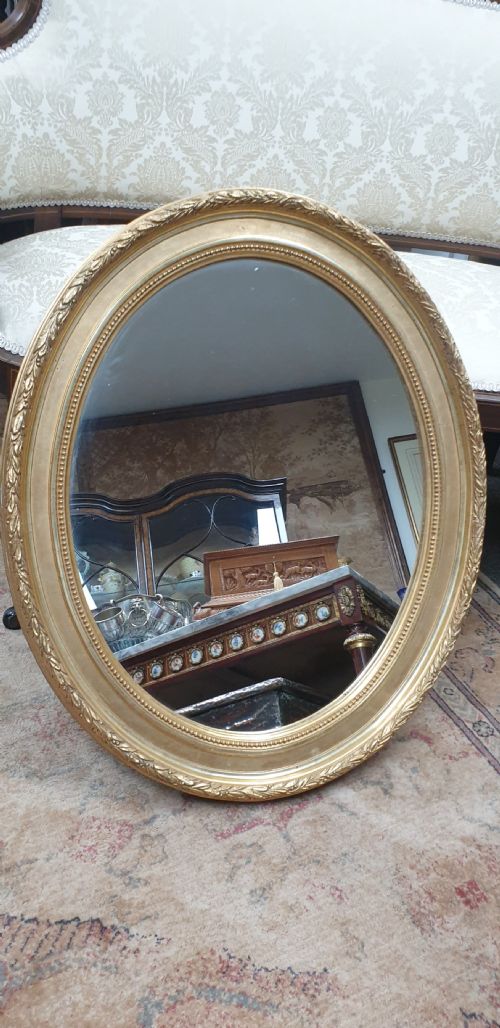


Edwardian Oval Gesso Mirror
An Edwardian oval gesso mirror brings lightness and reflected depth to a wall, combining classical proportion with crisp moulded relief.
Edwardian Oval Gesso Mirror
An edwardian oval gesso mirror is a wall hanging defined by a curved wooden or composition frame shaped with plaster ornament. The examples met on this page span the Edwardian era alongside pieces labelled under Victorian, 1890, 1900, 1910, and 1930 periods.
Most entries take the form of wall mirrors with giltwood and gesso surfaces, sometimes carrying floral decoration or French Rococo revival motifs. The primary object types seen across the records are wall mirrors designed for domestic interiors.
Makers and designers drew on Adam revival and neoclassical revival styles to shape these oval frames. Buyers also encounter pieces showing early eighteenth century influence and French taste alongside standard Edwardian forms.
How they were made
Frames are built from wood or giltwood, serving as the core structure for the applied decorative layers. Gesso, a mixture of plaster of Paris or chalk and a binder, is laid over the timber base and moulded into floral or classical reliefs.
Gold leaf or paint finishes are applied over the prepared gesso surface to achieve the characteristic metallic sheen seen on these mirrors. Some pieces retain mercury glass plates within their frames, contributing to the historic appearance of the glass.
Edwardian Oval Gesso Mirror Retail Price Guide 2026
Typical asking prices for edwardian oval gesso mirror among the pieces listed under this phrase on Sellingantiques today, from the lower quarter to the upper quarter. They describe what is for sale here now, not the wider market.
Listings feature pieces spanning the late Victorian period, 1890, 1900, 1910, and into the 1930s.
What varies in quality
The precision and depth of the gesso moulding separate finer examples from simpler production. Crispness in the floral and neoclassical relief work shows the skill applied to the frame before gilding or painting.
The choice of surface finish, whether genuine gold leaf or paint, alters the way light catches the moulded details. The integration of original glass plates, including mercury glass, adds historical depth that distinguishes different tiers of manufacture.
The Edwardian Oval Gesso Mirror Glossary
- Gesso
- A plaster-based material applied to wood frames and carved or moulded into decorative relief before gilding. This mixture provides the crisp surface detail characteristic of these mirrors.
- Giltwood
- Timber coated with gold leaf or gold paint to give a bright metallic finish. It forms the base of many classical revival frames.
- Mercury glass
- A type of double-walled glass blown with a silvering mixture inserted between the layers, creating a cloudy, reflective depth found in older plates.
- Adam revival
- A decorative style drawing on ancient Roman and Greek architecture, featuring symmetrical swags, urns, and neoclassical motifs popular in frame design.
Edwardian Oval Gesso Mirror: Frequently Asked Questions
Where were these mirrors hung originally?
These mirrors were traditionally placed above mantelpieces or on principal drawing room walls to reflect light and decorative schemes.
Their oval shape softened the geometry of Victorian and Edwardian reception rooms while adding formal balance.
How do I distinguish Edwardian from Victorian examples?
Edwardian frames generally show lighter neoclassical revival detailing and brighter gilding compared to heavier Victorian forms.
The evidence lists specific dates from 1880 through to 1910, reflecting subtle shifts in revival styles over the decades.
What is gesso decoration?
Gesso is a liquid plaster mixture built up on a wooden frame and carved or stamped with floral and classical patterns.
This technique allowed makers to produce ornate frames with sharp relief work without hand-carving every element from solid timber.
Do these pieces feature original glass?
Some pieces retain original mercury plates or early bevelled glass while others have been reglazed during their history.
The presence of original glass contributes to the historic character of the mirror plate.