

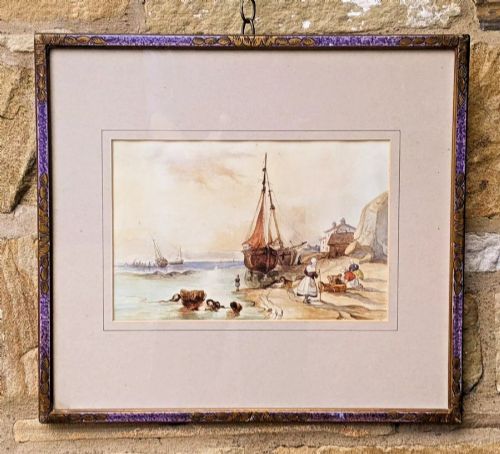


Edwardian Nautical Artwork
Edwardian nautical artwork captures the power and atmosphere of early twentieth-century maritime life through period paintings and prints.
Edwardian Nautical Artwork
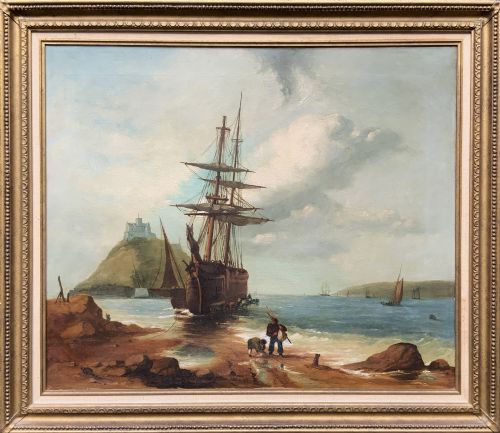
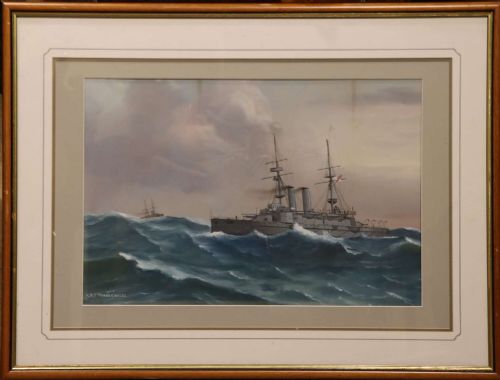
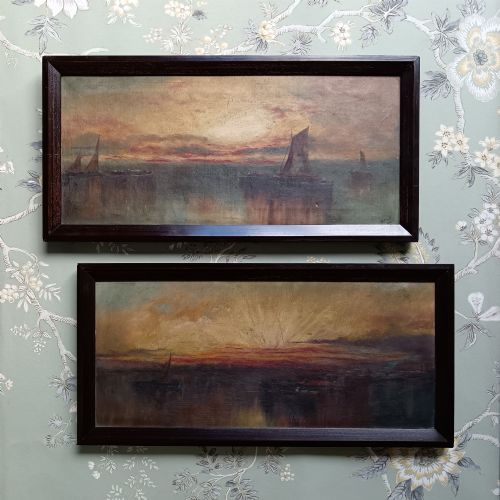
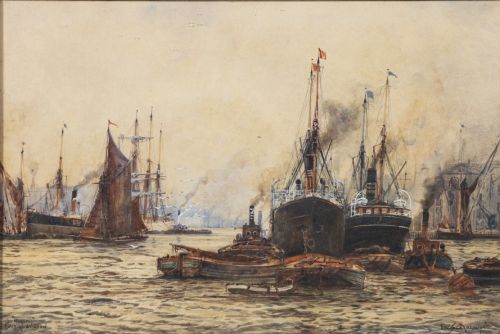
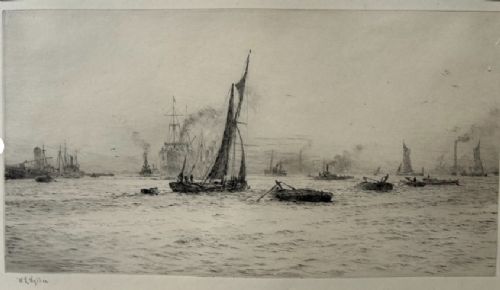
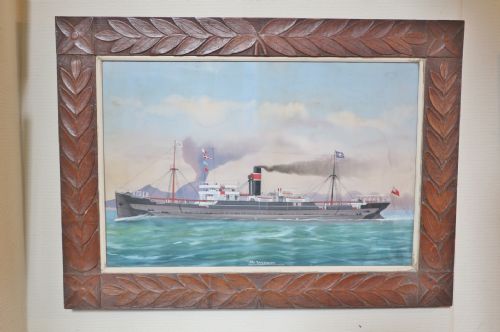
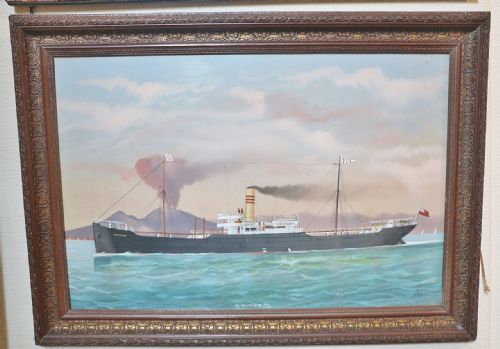
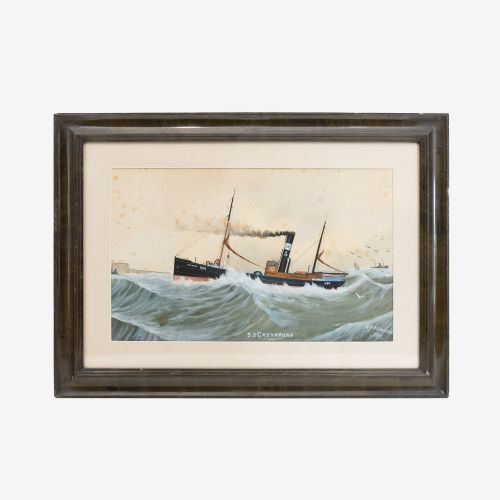
Edwardian nautical artwork encompasses original paintings, watercolours, gouache works, and signed etchings that focus on ships, ports, and coastal scenes. Buyers searching this phrase look for authentic period depictions of naval vessels, steamships, tall ships, and bustling harbours.
The selections on this page concentrate heavily on works created around the Edwardian era, featuring specific named vessels like the SS Bregonian and HMS Prince of Wales alongside tranquil coastal villages and busy river scenes. Mediums range from detailed pencil etchings to textured oils on canvas and delicate watercolour pigments on paper.
How they were made
Artists of this period utilised traditional materials such as canvas stretched over wooden frames, heavy watercolour paper, and fine wooden framing often accented with gilt. Pigments were applied with brushes to capture the shifting light of the sea, the smoke of steamships, and the intricate rigging of tall masts.
Techniques varied between the fluid transparency of watercolour washes and the rich, opaque buildup of oil paint and gouache. Many pieces were carefully framed behind glass to protect the paper works, while oil paintings on canvas were preserved in robust wooden surrounds.
Edwardian Nautical Artwork Retail Price Guide 2026
Typical asking prices for edwardian nautical artwork among the pieces listed under this phrase on Sellingantiques today, from the lower quarter to the upper quarter. They describe what is for sale here now, not the wider market.
Sailors occasionally painted their own vessels in gouache as sentimental tributes to shipmates before steam took over the oceans entirely.
What varies in quality
Quality in these maritime works rests upon the artist's command of proportion, maritime architecture, and atmospheric light. A superior piece demonstrates precise technical knowledge of rigging, hull design, and water movement rather than relying on generic formulas for waves and clouds.
The distinction also lies in the historical or documentary value of the subject, such as identifiable named vessels and specific coastal locations rendered by accomplished practitioners of the era. Preserved signatures, clear provenance, and skilled use of medium elevate certain examples well above standard decorative output.
William Lionel Wyllie·Frank William Scarbrough·Charles Napier Hemy·Pieter Cornelis Dommersen·Daniel Sherrin
The Edwardian Nautical Artwork Glossary
- Gouache
- An opaque watercolour paint that includes a binding agent, allowing for flat, bright areas of colour and sharp highlights on water and metal.
- Etching
- A printmaking technique where lines are bitten into a metal plate with acid before ink is applied and transferred to paper under pressure.
- Lugger
- A small fishing vessel carrying lug sails on one or more masts, frequently seen in West Country coastal paintings.
- Watercolour pigment
- Finely ground colour particles suspended in a water-soluble vehicle, used to create translucent washes on paper.
- Gilt
- A thin layer of gold leaf applied to wooden frames to provide a decorative metallic finish.
Edwardian Nautical Artwork: Frequently Asked Questions
What subjects appear in Edwardian nautical artwork?
These works typically depict named steamships, naval warships, tall-masted sailing ships, and busy trading vessels navigating rivers and ports. Coastal scenes also feature fishing boats, harbours, and lighthouses along British and foreign shores.
Many pieces document specific vessels from the era, recording the transition from sail to steam alongside traditional maritime trades.
How do I identify a period frame?
Period frames are constructed from wood and often feature moulded plaster details or gilt finishes that match the aesthetic of the early twentieth century. They are built to house either stretched canvases or glazed watercolours securely.
Original framing helps maintain the integrity of the piece, though many works have been reframed over the decades to suit changing tastes.
Are these works signed by the artists?
Many examples feature artist signatures, initials, or studio attributions inscribed directly onto the canvas, board, or paper margin. Signed etchings and watercolours often include the artist's handwritten signature in pencil beneath the image.
Unsigned works are frequently attributed through stylistic analysis, comparable subjects, or historical records linked to specific coastal art colonies.
How should I display these artworks at home?
Framed works on paper require placement away from direct sunlight to prevent the fading of watercolour pigments and paper degradation. Oil paintings on canvas benefit from stable indoor humidity and gentle, indirect lighting.
Secure wall fixings suited to the weight of heavy wooden frames and glass panels ensure safe hanging in domestic settings.