
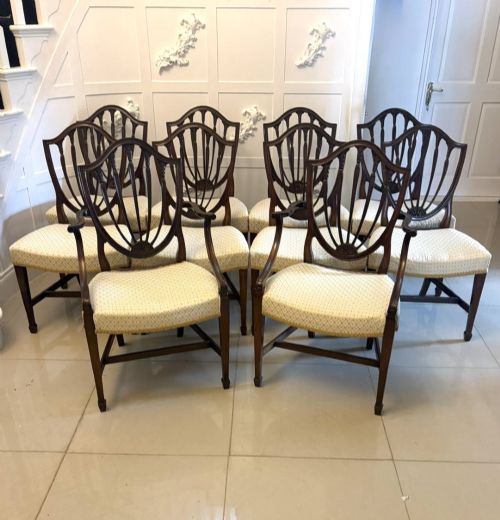
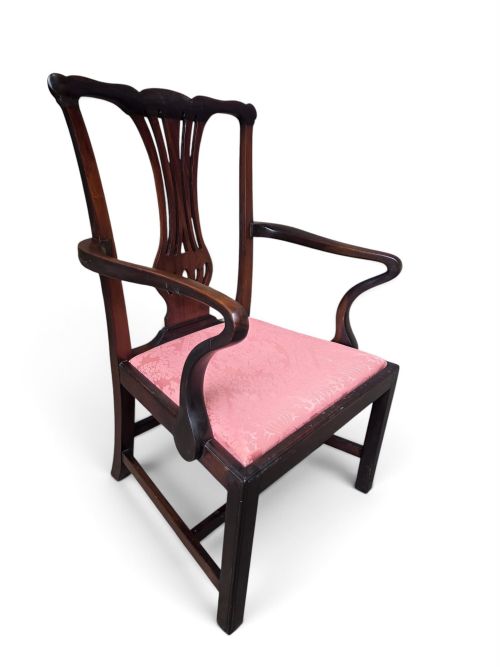
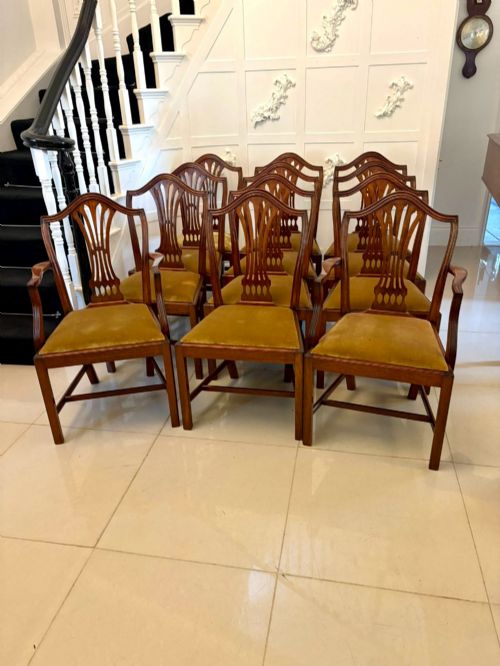
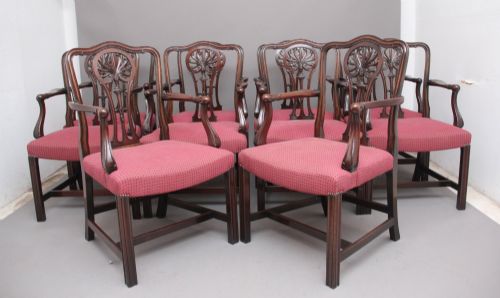
Edwardian Mahogany Carver Chair
When you search for an edwardian mahogany carver chair, you enter a world of finely constructed seating designed for comfort at the head of a dining table or beside a desk.
Edwardian Mahogany Carver Chair
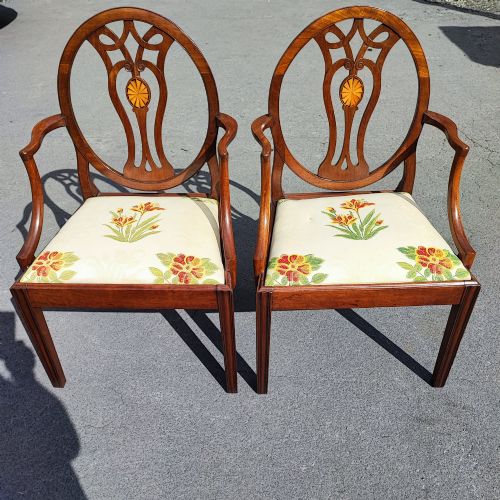
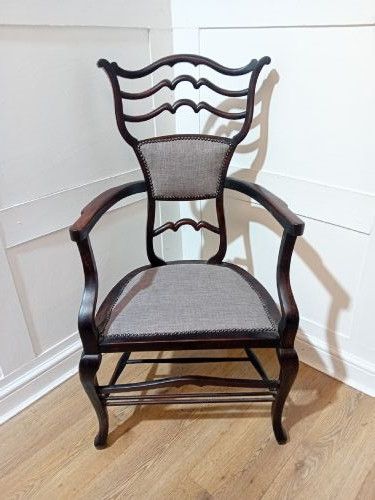
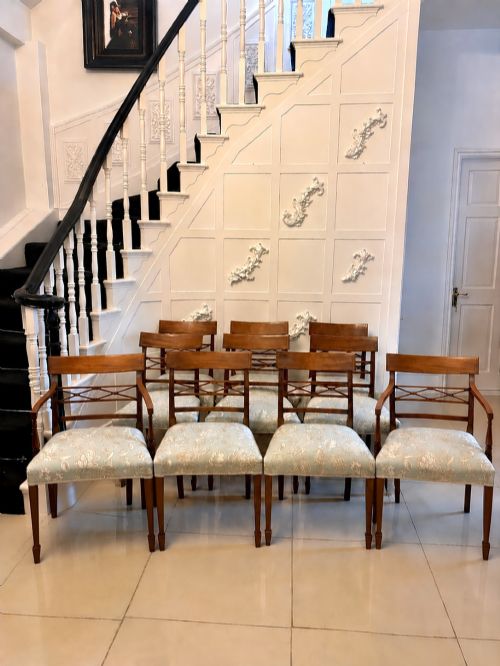
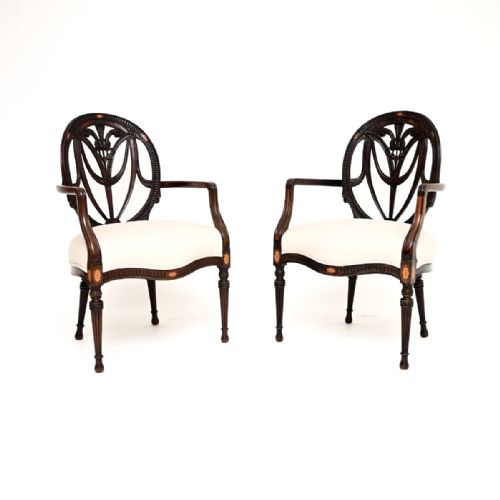
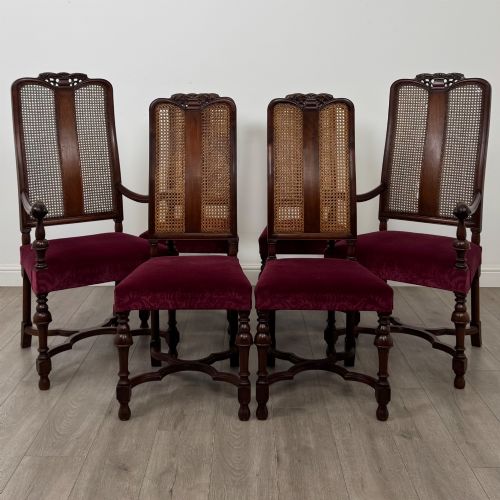
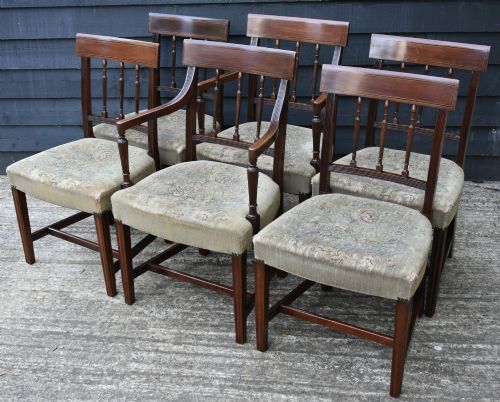
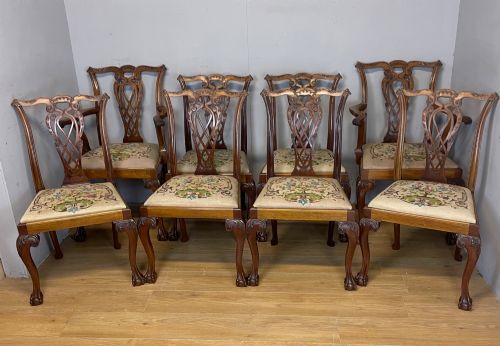
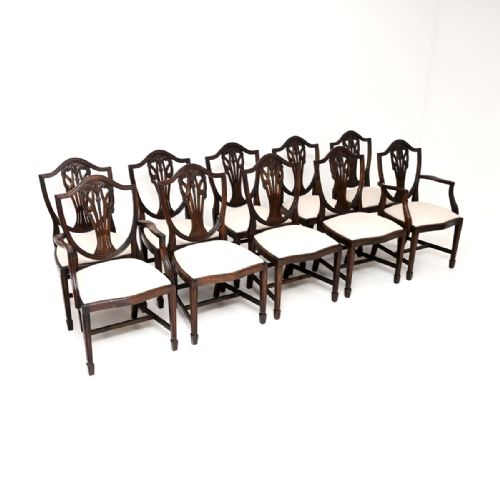
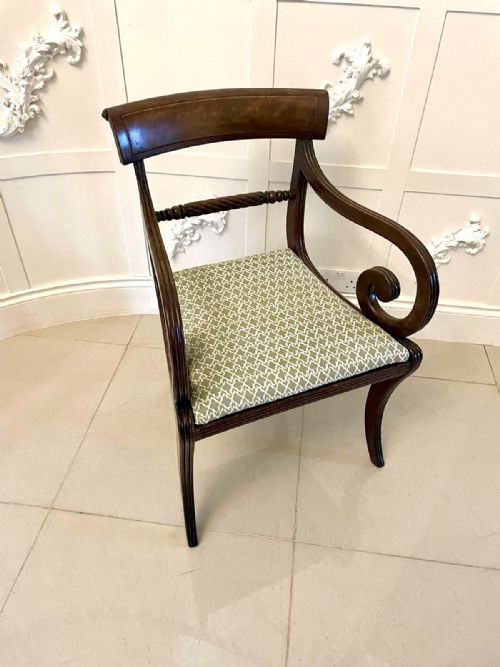
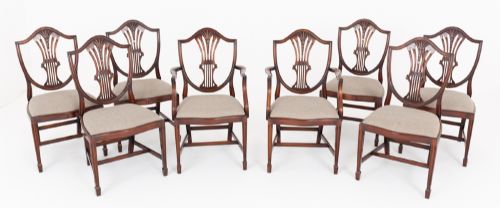
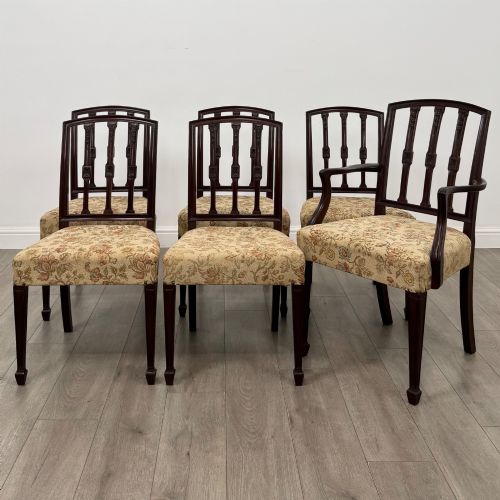
An edwardian mahogany carver chair is an armchair intended for dining, library, or salon use, distinguished by its open arms and sturdy timber frame. These pieces date principally from the late nineteenth and early twentieth centuries, drawing heavily on eighteenth-century revivals like Chippendale, Hepplewhite, and Sheraton. A buyer typically encounters single chairs, pairs, or larger dining sets comprising both side chairs and matching carvers.
The aesthetic of this seating reflects the taste of the Edwardian era for lightness and elegance combined with historical revivalism. Many examples feature shield backs, pierced splats, or subtle string inlay in satinwood, whilst others incorporate brass details or cane panels. They served primarily as the principal seats at a dining table or as occasional chairs in a parlour.
Materials and construction
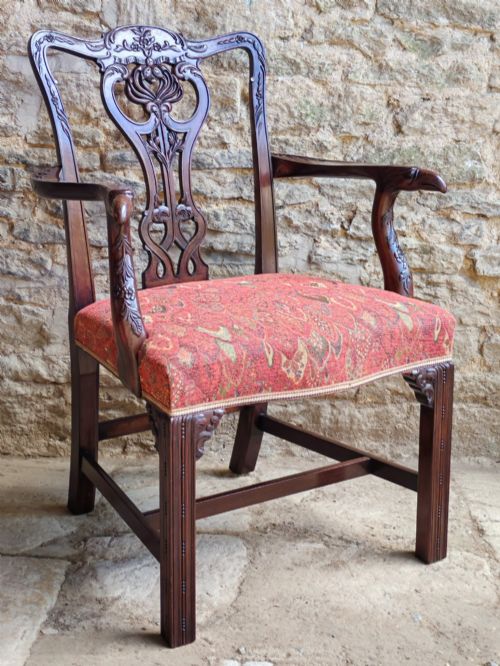
Cabinet makers of the period relied heavily on dense, durable mahogany, often selected for its rich grain and deep colour. This timber was frequently paired with secondary woods and enhanced through meticulous joinery, steam-bending for curved armrests, and hand-carved decorative motifs such as ribbons, husks, or ball-and-claw feet.
Upholstery forms a vital part of the construction, with seats traditionally webbed, sprung, and padded before being covered in fabric, leather, velvet, or horsehair. Inlaid versions utilise contrasting lighter woods, such as satinwood or maple, set flush into the mahogany ground to create delicate geometric or floral patterns.
Listings feature mahogany, satinwood, leather, fabric, and velvet across styles spanning Edwardian, Chippendale Revival, Hepplewhite Revival, and Art Nouveau.
Judging quality in construction and design
The standard of carving and timber selection separates everyday dining seating from exceptional examples. Finer pieces display crisp, deep hand-carving along the splats and knuckles, whereas lesser examples rely on shallow machine cutting or simpler profiles. The weight and figuring of the mahogany timber itself also signal the original maker's investment in materials.
Structural integrity and the retention of original finish dictate the standing of a piece. Chairs that retain their original upholstery stuffing, intact cane work, or undisturbed surface patination hold greater appeal for collectors than those requiring extensive reconstruction or refinishing.
Howard and Sons·Warings·Maple and Co·Alfred Allen·Waring and Gillow
The Edwardian Mahogany Carver Chair Glossary
- Carver chair
- An armchair, typically designed to match a set of dining chairs, featuring integrated armrests to accommodate the more formally dressed host or head of the household.
- Shield back
- A chair back shaped in the outline of a heraldic shield, popularised by Hepplewhite and widely revived during the Edwardian period.
- String inlay
- A narrow line of contrasting timber, such as satinwood or boxwood, set into a channel cut into the primary mahogany surface for decorative contrast.
- Splat
- The vertical wooden strip down the centre of a chair back, often pierced, carved, or interlaced in revival designs.
- Marquetry
- The art of creating decorative patterns on furniture by fitting together small pieces of various coloured veneers.
Edwardian Mahogany Carver Chair: Frequently Asked Questions
How do I tell an Edwardian revival chair from an original 18th-century piece?
Edwardian revival furniture often displays machine-assisted uniformity in its construction, lighter overall timber weights, and specific secondary woods characteristic of 20th-century workshops. The patination and internal joinery methods also point to the later manufacturing date.
Makers of this era openly produced revivals to satisfy demand for classic aesthetics combined with modern standards of domestic comfort.
Can these chairs be used around a modern dining table?
Mahogany carver chairs blend easily into contemporary interiors, offering durable construction and classic styling that anchors a modern dining space. Their sturdy timber frames are built for daily dining use.
Buyers should check the height of the arms against the underside of their table to ensure the chair can push in properly.
How should I care for mahogany and upholstery?
Protect mahogany frames from direct sunlight and extreme temperature shifts to prevent the timber from drying out or splitting. Occasional application of suitable wax maintains the surface sheen.
Upholstery benefits from regular gentle vacuuming using a soft brush attachment to lift dust from the fabric, leather, or velvet surfaces.