



Edwardian Loveseat
These intimate two-seater seats bridge Victorian heaviness and the lighter grace of the Edwardian loveseat.
Edwardian Loveseat
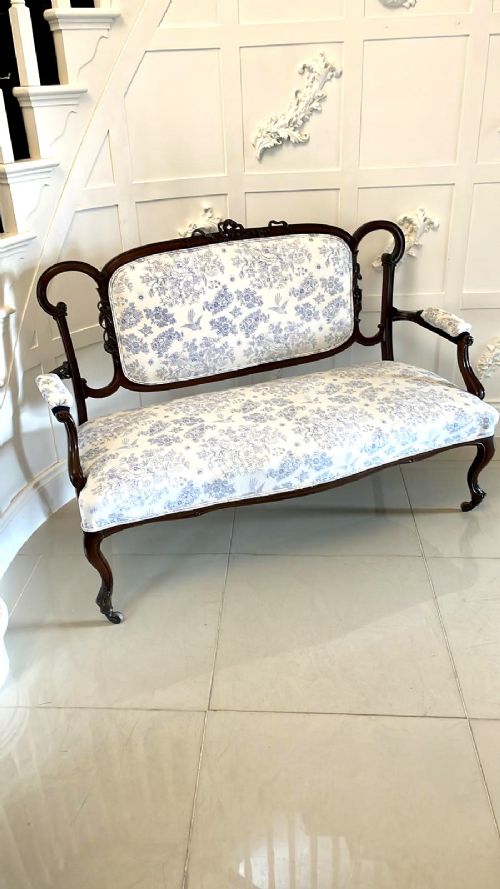
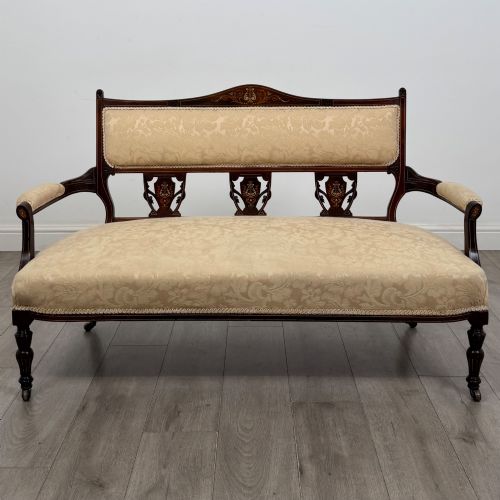
An edwardian loveseat is a compact two-seater sofa designed for companionable sitting, most often appearing as a salon settee or an end-of-bed couch.
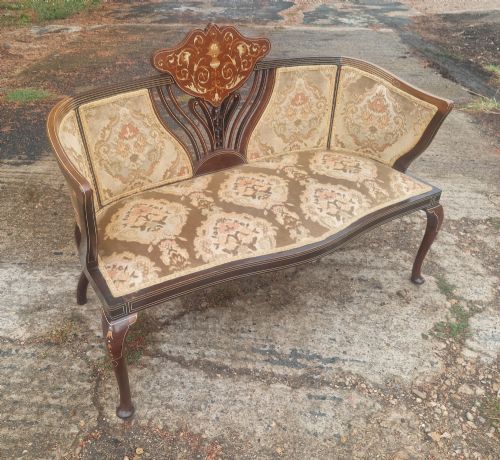
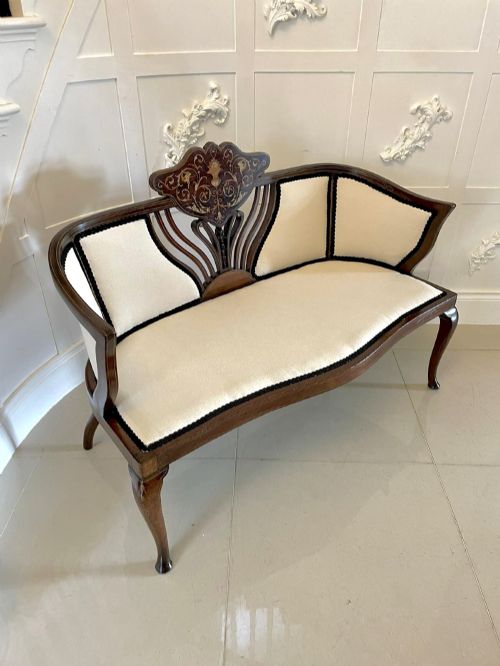
The pieces on this page span the late nineteenth century into the early twentieth century, taking forms such as inlaid mahogany salon settees, bentwood benches, and country house leather sofas.
Makers of the period drew upon Victorian frameworks, Queen Anne revival lines, and flowing Art Nouveau curves to shape timber frames for domestic interiors.
How they were made
Frames rely upon solid timbers such as mahogany, walnut, beech, and rosewood, frequently enhanced by contrasting satinwood marquetry inlay.
Upholstery techniques range from traditional horsehair stuffing beneath damask and fabric covers to simpler woven canework panels.
Structural embellishments include carved woodwork, turned supports, and applied brass details.
Edwardian Loveseat Retail Price Guide 2026
Typical asking prices for edwardian loveseat among the pieces listed under this phrase on Sellingantiques today, from the lower quarter to the upper quarter. They describe what is for sale here now, not the wider market.
Periods represented span the late Victorian era through the Edwardian years and into the nineteen-twenties.
What varies in quality
The refinement of the timber carving and the precision of the satinwood inlay separate standard workshop production from finer cabinet work.
The integrity of the underlying frame construction and the choice of upholstery materials, whether damask or leather, determine how well a piece survives decades of use.
Thonet
The Edwardian Loveseat Glossary
- Marquetry Inlay
- Decorative patterns formed by fitting contrasting veneers into a solid wood ground. This technique often appears on the crest rails and splats of settees.
- Bentwood
- Wood softened by steam and bent into curved shapes under pressure. This process defines the lighter seating forms produced by makers like Thonet.
- Canework
- Woven cane panels utilised for seats and backs. This method provides a lightweight alternative to fully upholstered cushions.
- Salon Settee
- A smaller decorative sofa intended for formal reception rooms. These pieces prioritize elegant proportions over deep lounging comfort.
- Queen Anne Style
- A furniture design tradition characterised by cabriole legs and pad feet. This aesthetic informed walnut and mahogany frames from the early twentieth century.
Edwardian Loveseat: Frequently Asked Questions
What is an edwardian loveseat?
An edwardian loveseat is a compact two-seater sofa made around the turn of the twentieth century. These pieces were built for drawing rooms, bedrooms, and parlours where space was at a premium.
They combine timber frames with upholstered seats or canework panels. Many examples feature delicate inlay work reflecting the design tastes of the period.
How do I tell victorian from edwardian pieces?
Victorian furniture tends to be heavier, darker, and more densely carved. Mahogany and rosewood dominate these earlier pieces.
Edwardian pieces generally exhibit lighter proportions, brighter satinwood highlights, and simpler silhouettes. Arts and Crafts and Art Nouveau influences also appear more frequently in the later items.
Where should I place a two-seater sofa?
These compact settees suit smaller sitting rooms, hallways, and studies. Salon pieces work well as accent seating against a wall.
Settees described as end-of-bed sofas fit neatly at the foot of a master bed. Their modest footprint allows them to sit comfortably in alcoves and window bays.
Can I use these settees every day?
Most antique seating functions well for daily domestic use provided the internal frame remains solid. Pieces requiring re-upholstery will need new webbing and padding before regular service.
Bentwood and solid mahogany frames offer robust durability. Lighter salon settees demand more careful handling due to their delicate proportions.