
Edwardian Library Stand
An edwardian library stand brings order to reading rooms through practical revolving bookcases, open shelves and reading tables.
Edwardian Library Stand
When you search for an edwardian library stand, you encounter a selection of bookcases, revolving bookcases, open bookshelves, library steps and reading tables originating from the late nineteenth century and the early twentieth century.
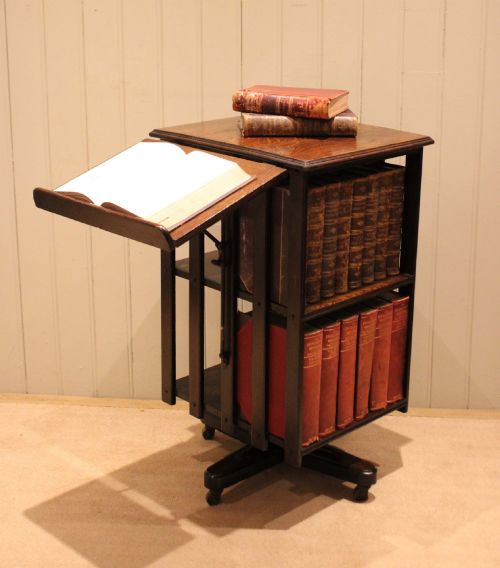
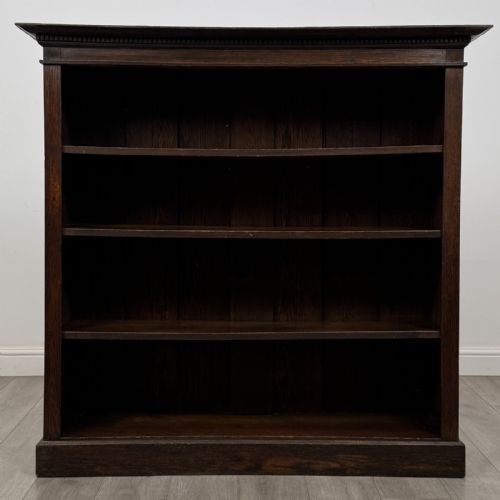
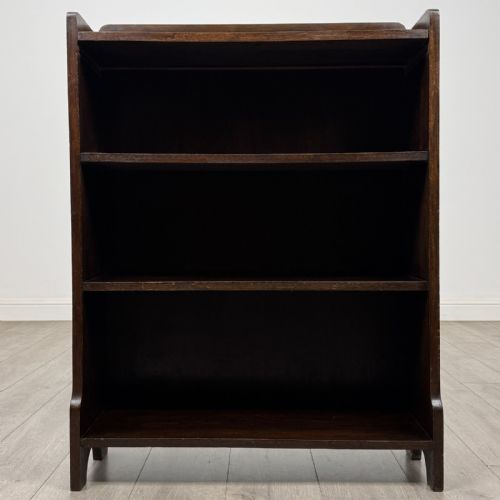
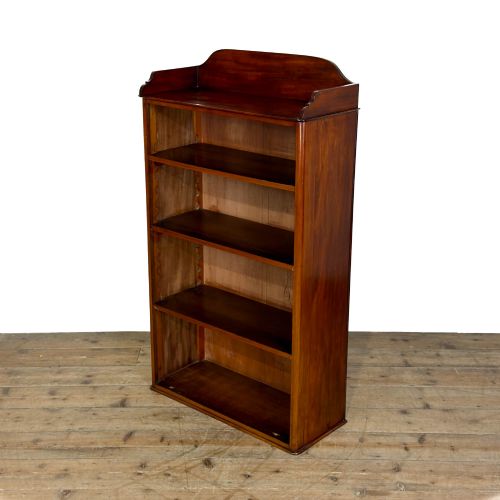
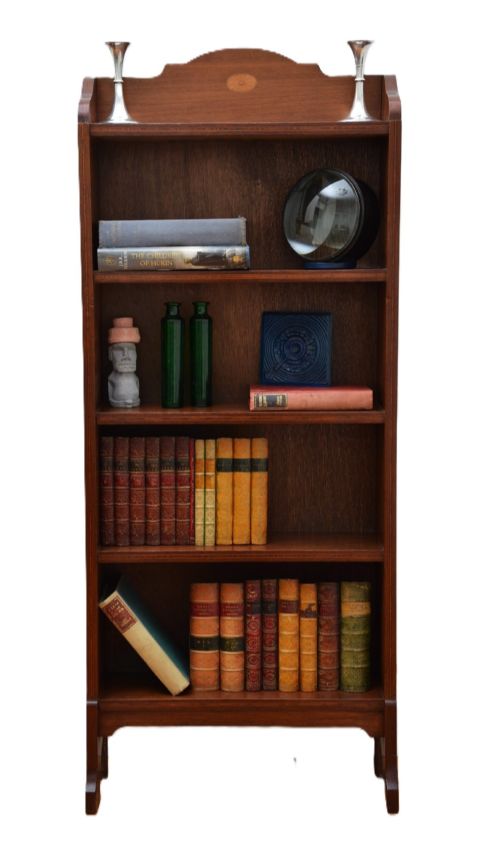
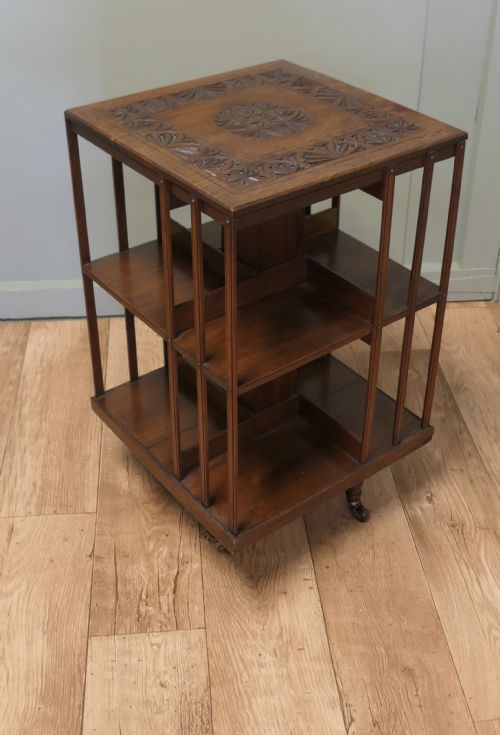
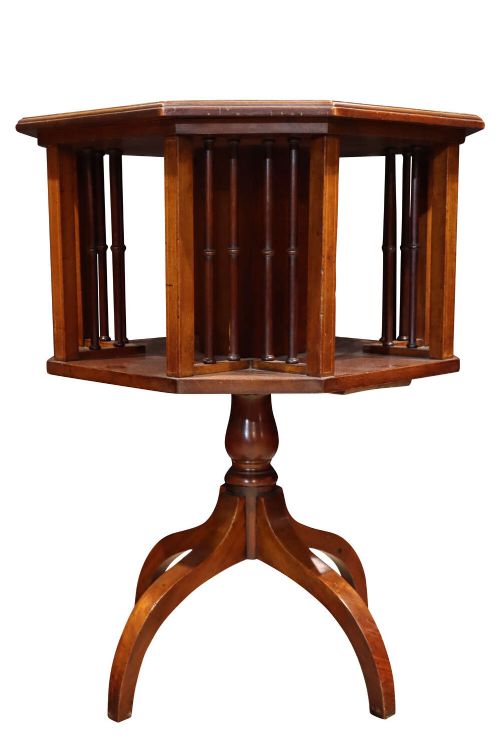
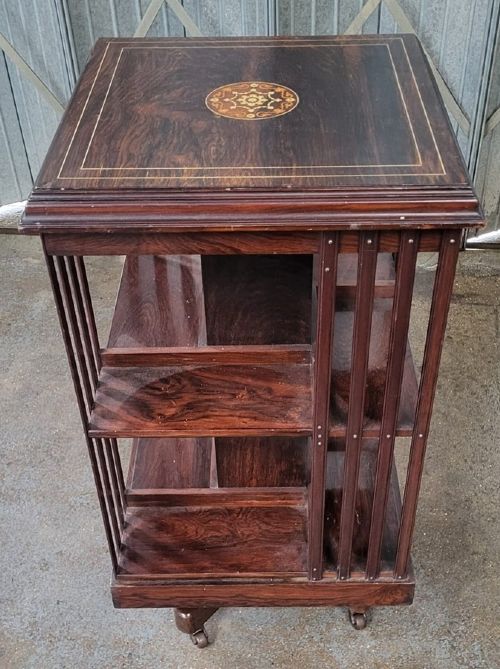
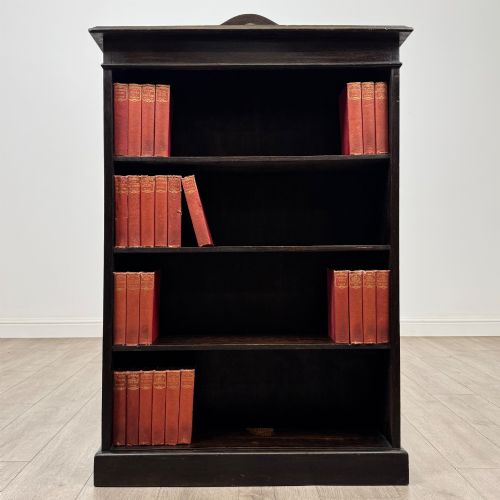
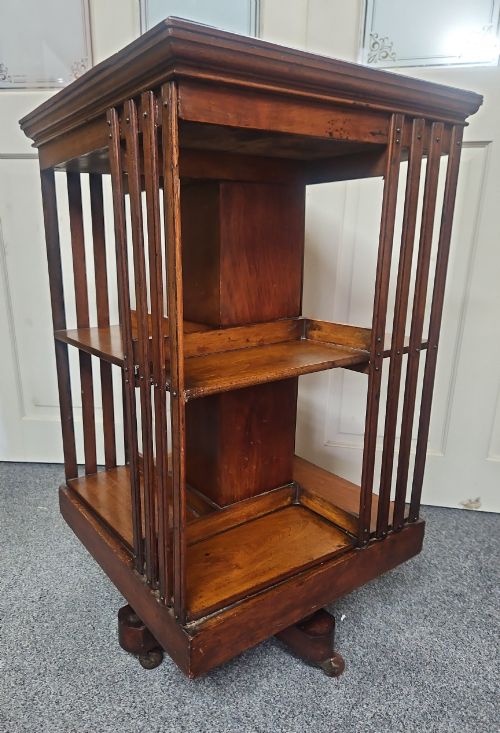
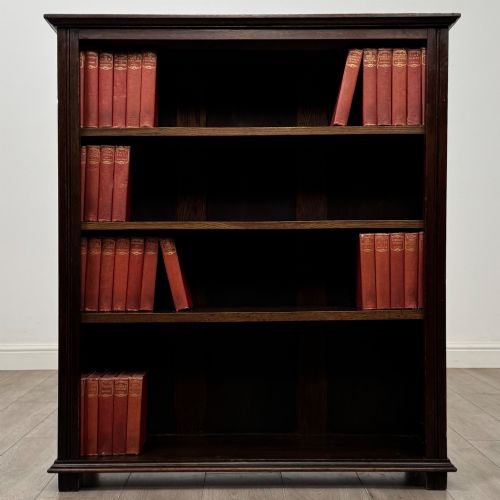
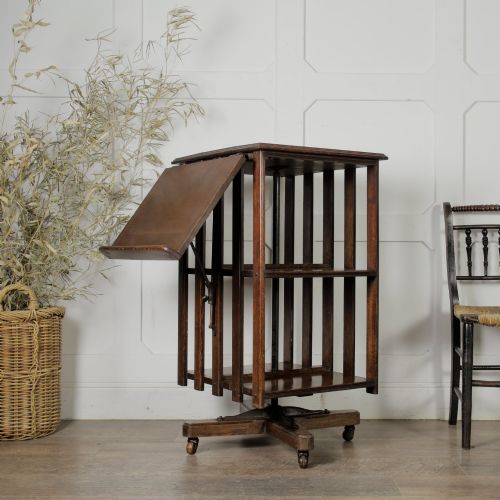
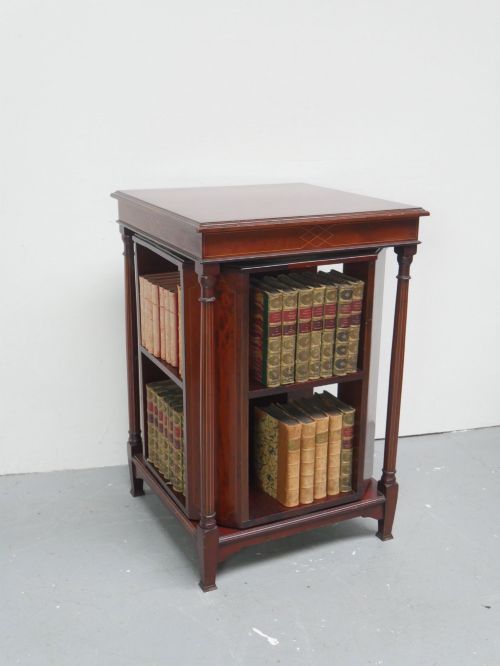
The most common form on this page is the revolving bookcase, frequently rendered in mahogany or oak, alongside open bookcases featuring adjustable shelves.
Pieces span Victorian, Edwardian, Arts and Crafts and Regency styles, reflecting the domestic library furnishing needs of the period.
Materials and Construction
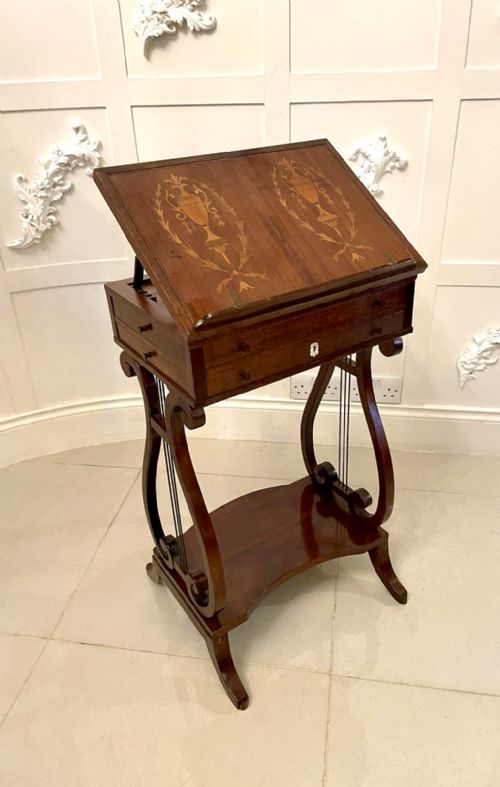
Cabinet makers utilised solid and veneered timbers including mahogany, oak, satinwood, walnut and rosewood, often enhanced with contrasting inlay work.
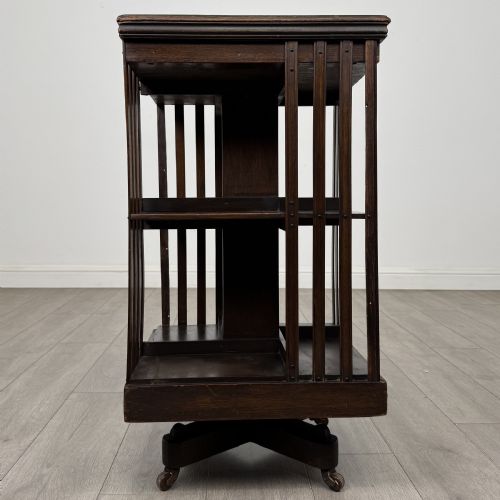
Revolving mechanisms integrate timber and cast iron components to permit smooth rotation, while cabinet pieces frequently rest upon brass castors.
Detailing includes flame mahogany veneers, glazed doors, adjustable shelf fittings and occasional brass and copper hardware.
A solitary brass telescope stands ready to survey distant horizons from the comfort of the study floor.
Construction and Finish
Distinction across the range rests upon timber selection, such as figured flame mahogany or golden oak, paired with crispness in inlaid stringing and marquetry.
Mechanical integrity defines revolving examples, where underlying timber frames and rotation mechanisms operate smoothly without excessive play or binding.
The refinement of edge moulding, the soundness of joinery on open shelves and the retention of original brass castors separate standard utility pieces from finer examples.
Broadhurst Clarkson and Co·Maple and Co
The Edwardian Library Stand Glossary
- Revolving bookcase
- A freestanding tabletop or floor-standing bookcase mounted on a hidden internal pivot and four-way base, allowing access to volumes from all sides.
- Flame mahogany
- A decorative veneer cut from timber where the branch meets the trunk, producing a distinctive rippled, flame-like pattern.
- Inlay
- A technique where pieces of contrasting wood or shell are inserted into recessed cavities in the timber surface to form decorative motifs.
- Waterfall bookcase
- A tiered set of open bookshelves where each successive shelf steps back from the one below, creating a cascading profile.
- Adjustable shelves
- Shelves supported on movable pins or rack-and-pinion tracks, permitting variable vertical spacing between tiers.
Edwardian Library Stand: Frequently Asked Questions
How do I spot a revolving bookcase?
Look for a square or circular tabletop tier sitting upon a cruciform base underneath. A central concealed pivot allows the upper shelving unit to spin freely.
These pieces were designed to sit beside armchairs or desks for immediate access to reference volumes without standing.
Are shelves adjustable on these bookcases?
Many open bookcases and shelving units feature adjustable tiers supported by side tracks or pin supports. This allowed owners to accommodate books of varying heights.
Check the interior sides for rows of holes or wooden ratchets indicating this adaptability.
What woods were used most often?
Mahogany and oak dominate the selection, appearing in both solid construction and veneered surfaces. Satinwood, walnut and rosewood appear on more decorative examples.
Inlays in contrasting timbers frequently accent the primary wood choice.
Where did these stands originate?
The pieces originate from domestic studies, libraries and country houses of the late nineteenth and early twentieth centuries. They served practical daily functions for reading and organising.
Design styles draw upon traditional cabinet-making alongside Edwardian Sheraton Revival and Arts and Crafts aesthetics.