


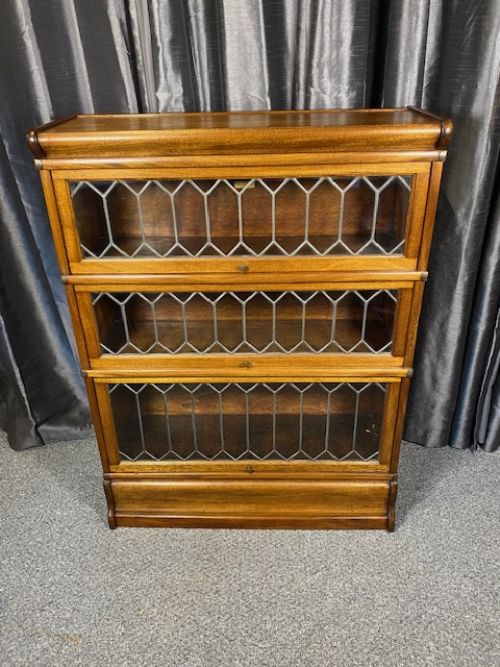


Edwardian Lawyer Cabinet
An edwardian lawyer cabinet offers modular elegance for the study, bringing together practical stacking sections and glazed protection for your library.
Edwardian Lawyer Cabinet
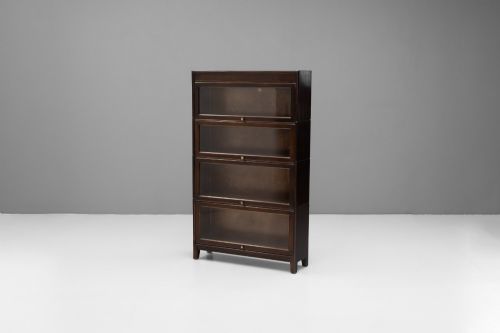
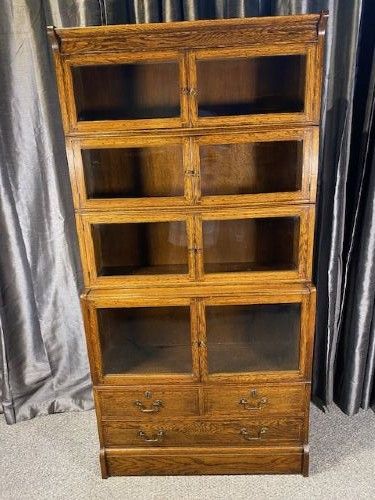
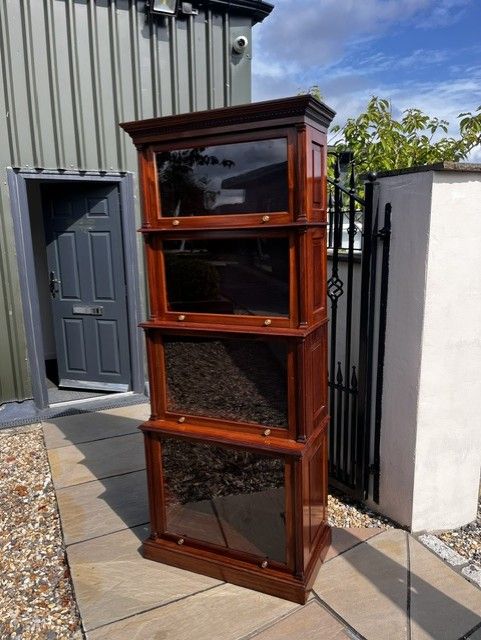
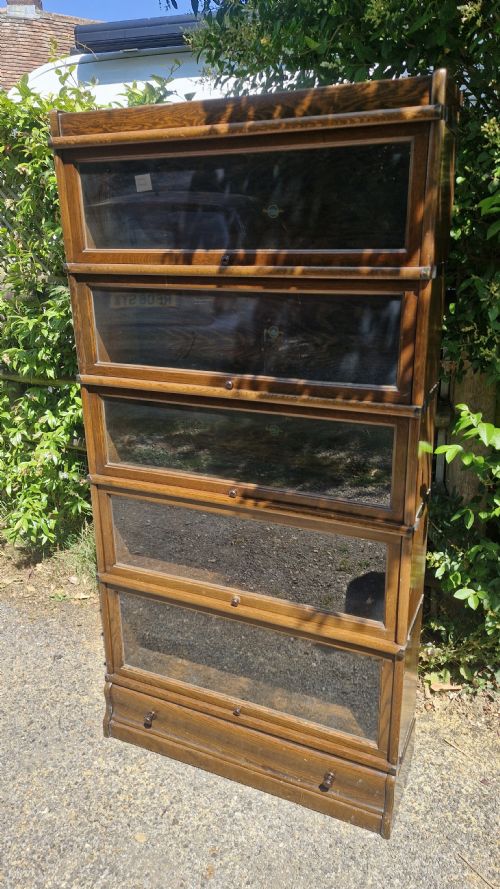
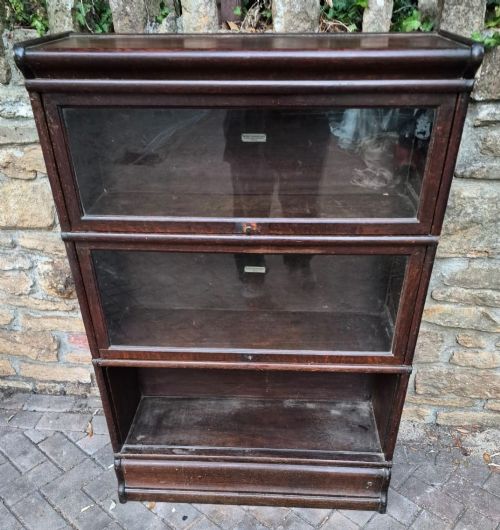
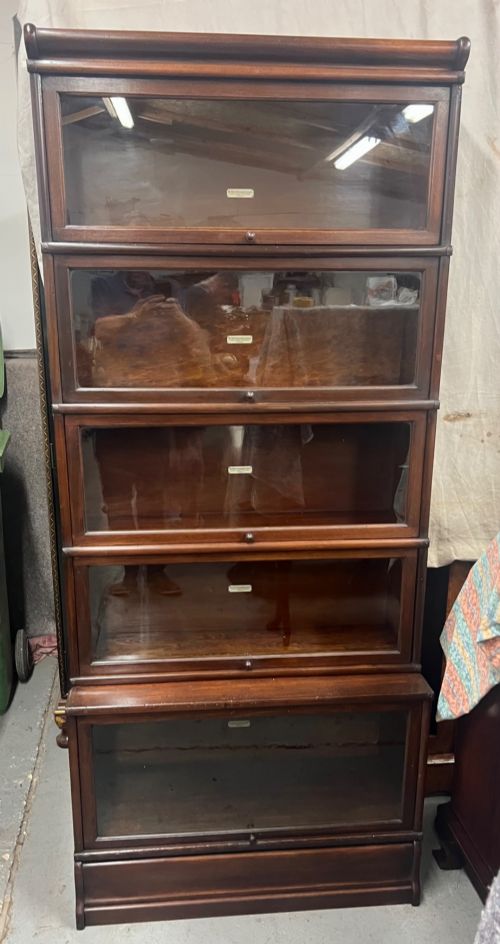
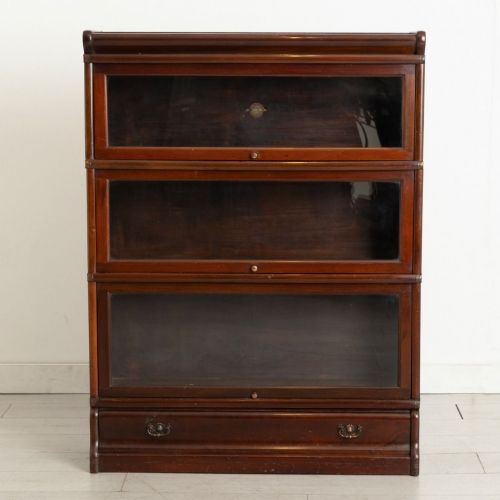
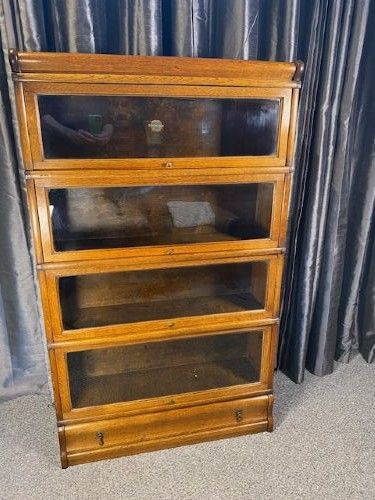
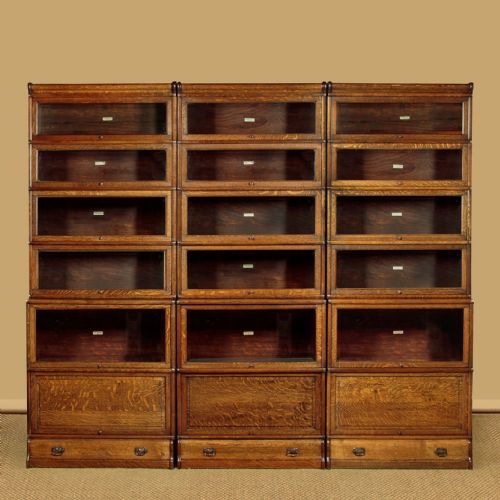
An edwardian lawyer cabinet takes the form of a sectional stacking bookcase, designed with individual tiers that lift and slide to house a growing library. You will frequently encounter oak and mahogany examples originating from the early decades of the twentieth century, often bearing the distinctive mark of makers like Globe Wernicke.
These bookcases serve as functional office furniture adapted for domestic studies, allowing owners to add tiers as their book collections expand. The pieces span periods from nineteen hundred through to nineteen thirty, reflecting the enduring utility of modular office storage in British homes.
How they were made
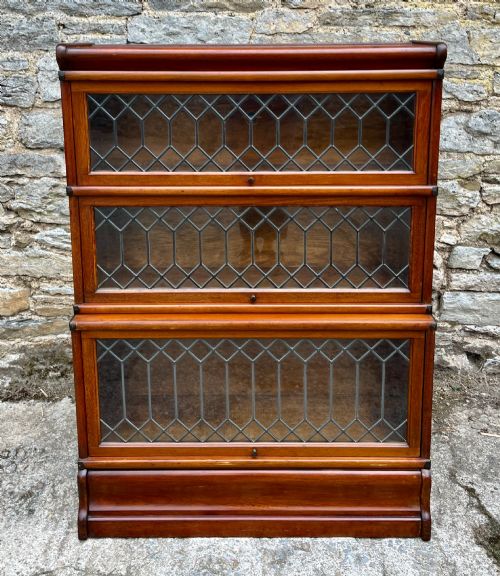
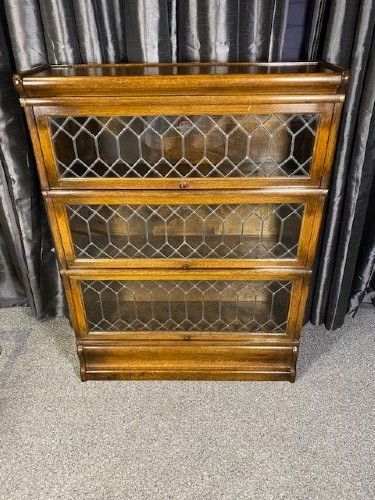
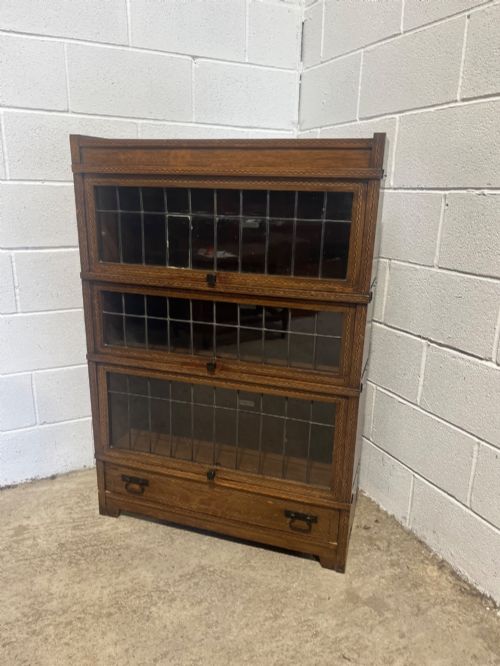
The construction relies heavily on solid oak and mahogany timbers, joined to form sturdy modular carcases that support individual glazed doors. These doors utilise brass hardware and leaded glass detailing to protect volumes while maintaining clear visibility across the shelves.
Makers built each tier to operate independently, employing clever mechanical lifts that allow the glass-fronted panels to slide smoothly into the cabinet above the books. This sectional engineering meant workshops could ship and assemble tall bookcases with remarkable structural stability.
Edwardian Lawyer Cabinet Retail Price Guide 2026
Typical asking prices for edwardian lawyer cabinet among the pieces listed under this phrase on Sellingantiques today, from the lower quarter to the upper quarter. They describe what is for sale here now, not the wider market.
Listings span periods from nineteen hundred to nineteen thirty, with nineteen twenty representing the most common production year across available inventory.
What varies in quality
Quality rests upon the selection of timber figures, particularly in the figuring of solid mahogany and golden oak surfaces, alongside the precision of the stacking mechanism. Finer examples display harmonious grain matching across separate tiers and robust brass fittings that endure daily use.
The sophistication of the maker's mark and the clarity of the glazed or leaded glass panes elevate certain pieces above standard utility office furniture. Superior construction ensures that individual sections align seamlessly without sagging or binding during operation.
Gunn Furniture·Globe Wernicke·Warwick
The Edwardian Lawyer Cabinet Glossary
- Sectional bookcase
- A piece of furniture built from separate modular tiers that stack vertically to form a single tall cabinet. This design allows the entire unit to be easily disassembled for transport.
- Barrister bookcase
- An alternative term for a lawyer cabinet featuring glazed lifting doors designed to protect legal texts. The upward-sliding mechanism keeps contents dust-free while remaining accessible.
- Globe Wernicke
- A prominent manufacturing firm known for popularising elastic stacking bookcases globally. Their patent mechanisms set the standard for early twentieth-century modular office furniture.
- Leaded glass
- Glass panes held together by narrow strips of lead to form decorative geometric patterns. This technique strengthens larger window areas on cabinet doors.
- Solid mahogany
- Dense tropical hardwood valued for its deep reddish-brown colour and durability. Cabinet makers utilised it for formal office and library pieces.
Edwardian Lawyer Cabinet: Frequently Asked Questions
How do sectional bookcases work?
Each tier operates as an independent box with a glass door that lifts on a pivoting metal arm and slides back into the cabinet above the books. This mechanism allows you to open individual shelves without disturbing the units stacked above or below.
The entire bookcase disassembles into separate components consisting of a base, top cornice, and multiple matching shelves. This modular construction made moving heavy libraries much simpler for professionals in the early twentieth century.
Are these cabinets purely for offices?
While originally designed as functional storage for legal documents and reference books in professional chambers, they quickly transitioned into domestic settings. Their compact vertical footprint makes them well-suited for displaying literature in residential living rooms and studies.
Today, collectors utilise them to house prized book collections while keeping dust away from delicate bindings. The glazed fronts offer a clear view of the spines while protecting volumes from environmental wear.
What timber types should I expect?
The listings show a strong predominance of oak and mahogany, often described in golden or polished finishes. Oak varieties frequently exhibit prominent grain patterns typical of early twentieth-century office furnishings.
Mahogany versions range from standard finishes to solid timber constructions with deeper reddish tones. Brass hardware and occasional inlaid details complete the primary material palette.
How do I date an edwardian lawyer cabinet?
Dating relies on stylistic clues and manufacturing patents stamped into the internal hardware of the stacking sections. Pieces generally originate from the Edwardian era through the nineteen twenties and early nineteen thirties.
Maker stamps from firms like Globe Wernicke often provide specific patent dates that establish a reliable timeframe for the construction of the tiers. Examining the brass mechanisms and timber construction offers further confirmation of the period.