



Edwardian Hearth Stand
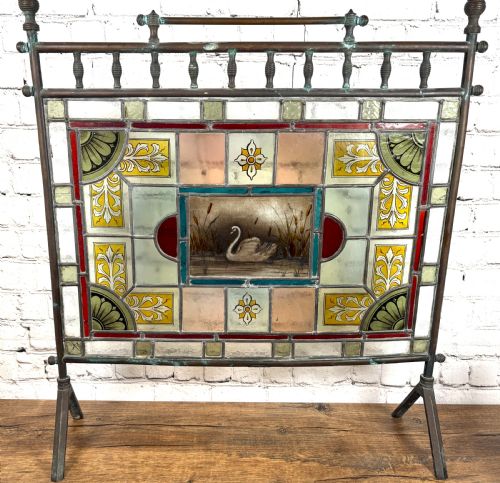
These pieces give an Edwardian hearth stand a practical frame, combining metal and glass to protect a room from open fire heat.
Edwardian Hearth Stand
When you search for an Edwardian hearth stand, you find a variety of metalwork and wooden accessories designed for the fireplace, ranging from fire screens to companion sets and coal buckets. The selection spans several periods including Victorian and Edwardian eras, alongside pieces dated around nineteen-ten and nineteen-thirty.
The forms on this page include fire screens, trivets, log bins, and companion sets. You are most likely to meet brass and copper accessories styled in the Arts and Crafts tradition.
Makers utilised iron, brass, copper, and walnut to build these functional items. The designs reflect traditional English tastes alongside Gothic Revival and Art Nouveau influences.
Materials and construction
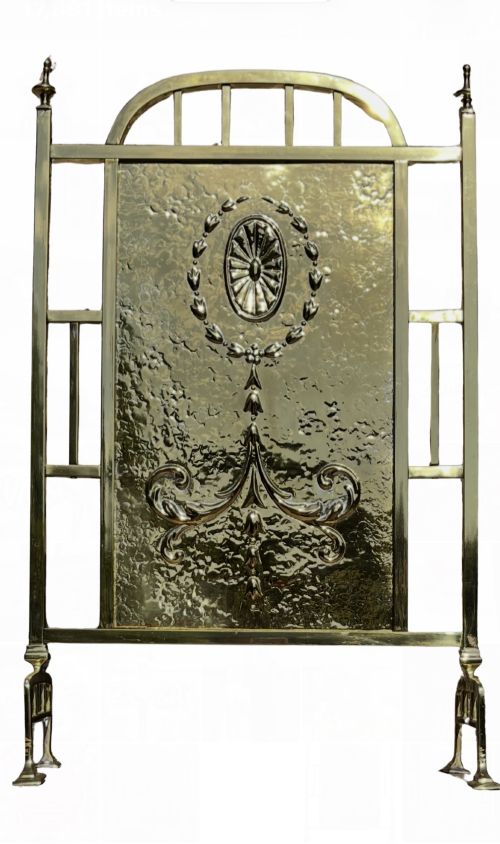
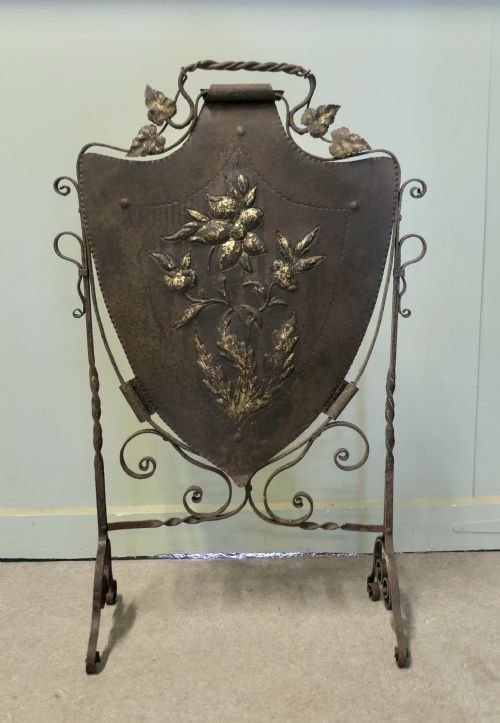
Makers shaped sheet copper and cast brass to form coal buckets, trivets, and companion sets. Wrought iron provided sturdy frames for log bins and fire screens, while glass and tapestry were integrated into screen panels.
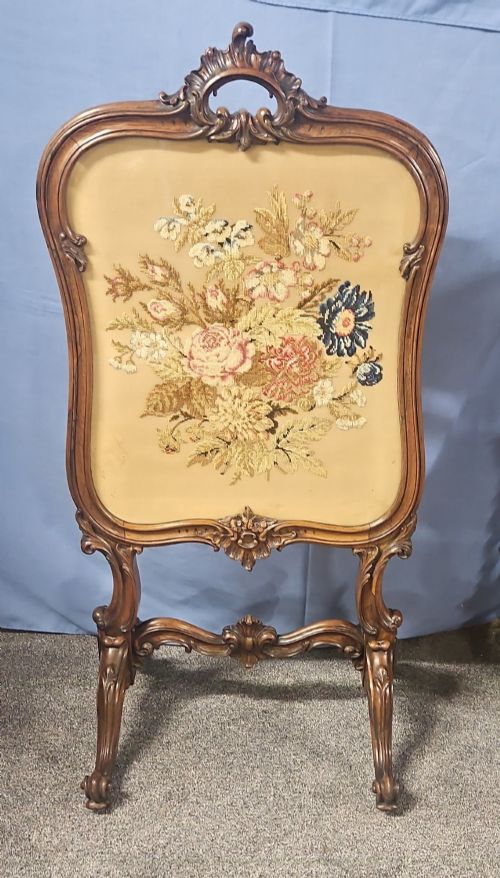
Metalworking techniques included hammering, riveting, and polishing to create both utilitarian and decorative surfaces. Walnut frames were carved or turned to hold glass inserts.
Edwardian Hearth Stand Retail Price Guide 2026
Typical asking prices for edwardian hearth stand among the pieces listed under this phrase on Sellingantiques today, from the lower quarter to the upper quarter. They describe what is for sale here now, not the wider market.
Listings feature items spanning the Victorian era, the Edwardian period, and into the nineteen-thirties, utilising brass, copper, wrought iron, and walnut.
Assessing quality
Quality rests in the weight of the metal and the integrity of the joinery, whether in the riveting of a copper bowl or the stability of an iron frame. Thicker gauge brass and copper endure repeated heat exposure better than thin alternatives.
Decoration distinguishes standard items from finer examples, particularly where hand-beaten copper motifs or stained glass panels show careful craftsmanship. The transition between different styles, from Gothic Revival to Art Nouveau, reveals the maker's skill in handling line and form.
The Edwardian Hearth Stand Glossary
- Companion set
- A group of fireplace tools, typically including a poker, tongs, and shovel, suspended from a matching stand. These sets sit beside the hearth for daily fire management.
- Fire screen
- A decorative barrier placed in front of an unlit fireplace to conceal the grate or block drafts. They often feature stained glass, tapestry, or metal panels.
- Trivet
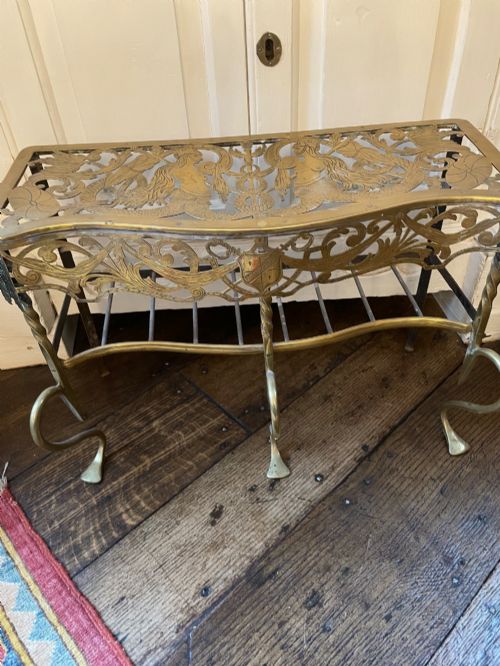
- A small metal stand raised on feet, used to support kettles or pots near the fire. They frequently incorporate pierced brass tops.
- Log bin
- A deep metal container designed to hold firewood by the hearth. Wrought iron frames often support copper bodies.
- Arts and Crafts
- A design movement valuing handcraftsmanship and simple forms over mass production. It heavily influences the copper and brass work found in these listings.
Edwardian Hearth Stand: Frequently Asked Questions
What is an Edwardian hearth stand?
An Edwardian hearth stand encompasses various functional metal and wood items used around the fireplace during the early twentieth century. These include companion sets, trivets, and log bins.
They combine utility with decorative metalwork, serving both practical fire management and room decoration.
How were fire screens used?
Fire screens served to block radiant heat from the fire when the room became too warm, or to hide an empty grate during summer months. They were positioned directly in front of the fireplace opening.
Stained glass and metal panels also caught the flickering light of the flames.
What materials are common?
Brass and copper appear frequently, often shaped into coal buckets, kettles, and companion sets. Wrought iron provides structural support for screens and log bins.
Wood such as walnut and decorative elements like stained glass also feature in screen construction.
How do styles differ?
Styles range from Victorian Gothic Revival and Rococo Revival to Arts and Crafts and Art Nouveau. Arts and Crafts pieces typically display hammered copper surfaces and simple lines.
Victorian items often lean towards heavier ornamentation and stained glass.