

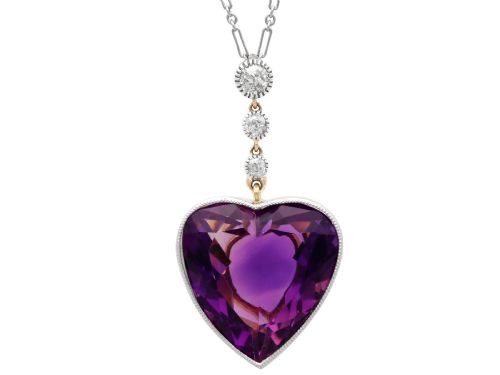
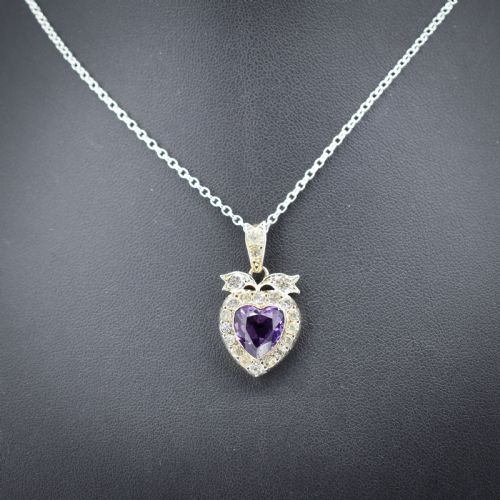
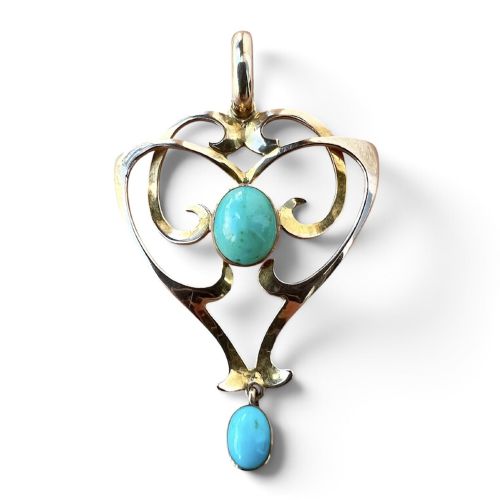
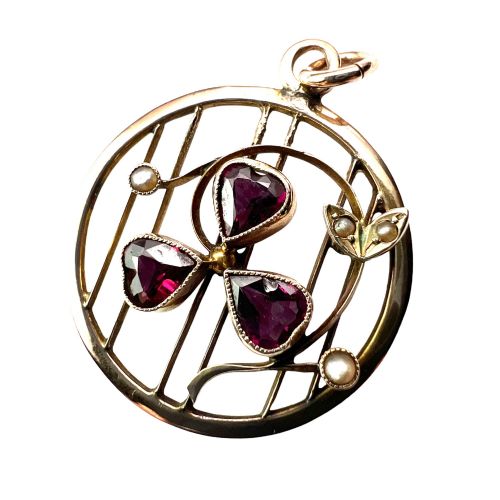


Edwardian Heart Necklace
An edwardian heart necklace holds sentiment in gold, silver, and precious stones, offering a tangible piece of early twentieth-century romance.
Edwardian Heart Necklace
An edwardian heart necklace brings together delicate metalwork and romantic motifs, most frequently seen in pendant forms suspended from fine chains. These pieces draw on Edwardian, Victorian, Art Nouveau, Art Deco, and Arts & Crafts design traditions.
The materials used across these listings range from seed pearl, diamond, silver, and paste glass to 9ct gold, 9ct yellow gold, 15ct gold, and amethyst. Buyers will regularly encounter pendant brooches and necklaces incorporating turquoise, garnet, tortoiseshell, opal, sapphire, chrysoprase, tourmaline, and ruby.
The form often centres on symbolic motifs, including witches' hearts, clovers, and double hearts. Pieces date primarily from the Edwardian period, 1900, 1910, and 1920, alongside Victorian examples.
How they were made
Goldsmiths and silversmiths utilised yellow gold in 9ct, 12ct, 15ct, and 18ct, alongside solid sterling silver, platinum, and white gold. Stones were set by hand, integrating old cut diamonds, rose cut diamonds, and paste glass.
Techniques involved delicate piercing, granulation, and wirework, particularly evident in Art Nouveau and Arts & Crafts designs. Seed pearls were meticulously drilled and pinned or strung onto gold settings to form floral and cluster details.
Edwardian Heart Necklace Retail Price Guide 2026
Typical asking prices for edwardian heart necklace among the pieces listed under this phrase on Sellingantiques today, from the lower quarter to the upper quarter. They describe what is for sale here now, not the wider market.
Listings feature yellow gold ranging from 9ct to 18ct, alongside sterling silver, platinum, seed pearls, diamonds, amethysts, turquoises, opals, sapphires, garnets, tourmalines, rubies, chrysoprase, tortoiseshell, and paste glass.
What varies in quality
The standard of an edwardian heart necklace depends on the refinement of the metalwork and the selection of gemstones. Finer examples display meticulous stone matching, secure setting techniques, and intricate piercing rather than cast assembly.
The reputation of the maker and the purity of the gold, moving from 9ct up to 15ct and 18ct, influence the distinction between standard production and exceptional workshop output.
Deakin & Francis·Arthur & Georgie Gaskin·Charles Horner
The Edwardian Heart Necklace Glossary
- Witches heart
- A heart shape with a twisted tail pointing to one side, traditionally given as a token of being bewitched by love. This whimsical design appears frequently in Edwardian pendant jewellery.
- Seed pearl
- Very small, natural marine or freshwater pearls threaded and secured into clusters or borders. They provide a delicate, luminous border around central gemstones.
- Old cut diamond
- A hand-faceted diamond shape common in antique jewellery, featuring a smaller table and larger culet. These stones catch candlelight differently than modern brilliant cuts.
- Pendant brooch
- A versatile mounting fitted with both a suspension loop and a pin finding. This allows the piece to be worn interchangeably as a necklace or pinned to a garment.
Edwardian Heart Necklace: Frequently Asked Questions
How do I wear an antique pendant necklace safely?
Pair the pendant with a secure, period-appropriate chain and check the jump rings periodically for wear. Store the piece flat in a lined box away from other hard jewellery to protect delicate seed pearls and soft stones.
Avoid wearing antique gold and silver jewellery while swimming, bathing, or applying cosmetics. Chemical exposure can tarnish silver and weaken pearls over time.
What is the difference between Victorian and Edwardian heart jewellery?
Victorian pieces often lean towards heavier gold weights, deeper amethyst stones, and sentimental hair or mourning motifs. They tend to have a more robust and substantial presence.
Edwardian designs favour lighter platinum and yellow gold settings, pierced silver work, and airy arrangements of diamonds and seed pearls. The aesthetic shifts toward delicate lace-like patterns inspired by garlands and ribbons.
How can I tell if a pearl is natural or cultured?
Examination under magnification reveals the surface texture and drill holes characteristic of antique pearls. Natural seed pearls used in this period often show slight irregularities in shape and lustre.
Consulting a specialist or checking accompanying documentation helps confirm the organic origin of pearls set in antique gold frames.
Can these pendant brooches be worn as a necklace?
Many pieces designed with a pendant brooch fitting include a hinged pin and a hidden or visible loop at the top. This allows the wearer to thread a chain through the loop for use as a necklace.
When wearing the piece as a brooch, ensure the safety catch is fully engaged to prevent loss during daily wear.