



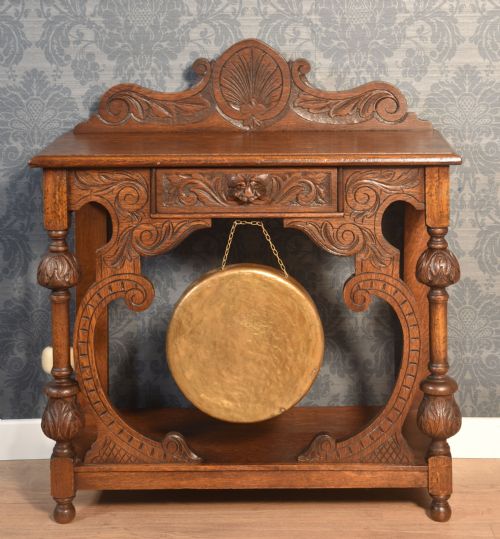

Edwardian Gong Stand
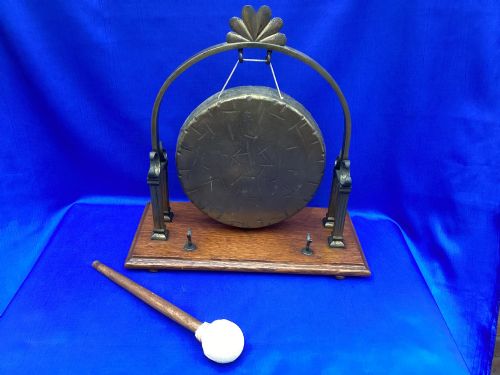
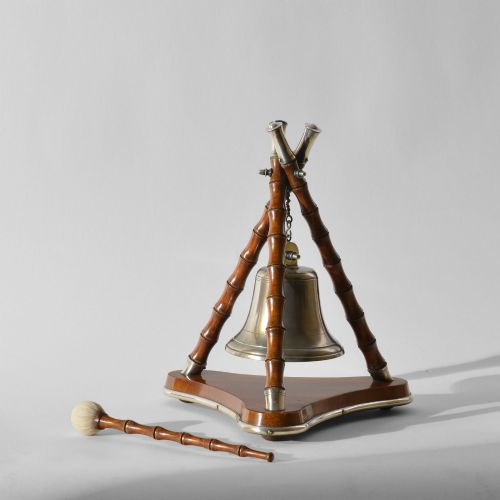
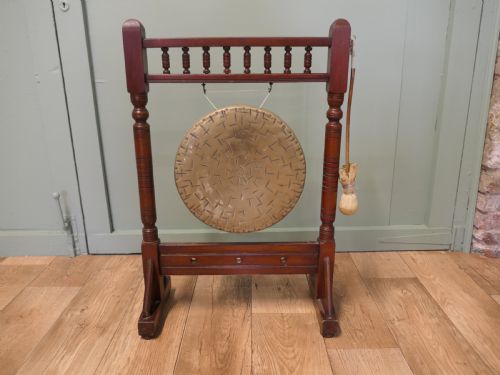
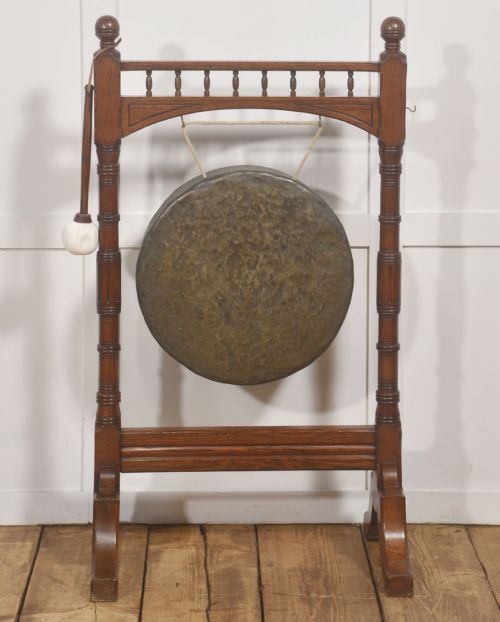
These edwardian gong stand pieces bring period gravity to a hall or dining room with their resonant brass or bronze bells hung in sturdy timber frames.
Edwardian Gong Stand
An edwardian gong stand serves primarily as a striking timekeeper or summons for meals in large houses, combining a resonant metal bell with a supportive frame. The form draws upon a mix of historical revivals and contemporary aesthetics, reflecting the domestic habits of the early twentieth century.
Most examples encountered here consist of an oak, mahogany, or wrought iron structure holding a suspended brass dinner gong or bell. They appear in both floor-standing and table-top formats, sometimes incorporating carved woodwork or simpler Arts and Crafts lines.
The materials and styles span the late nineteenth century into the Edwardian era, incorporating Gothic Revival, Art Nouveau, and Chinoiserie influences. Buyers often find pieces utilising solid hardwoods paired with heavy metal strikers and cord suspension.
Materials and Construction
The gongs and bells themselves are cast in brass, bronze, or iron, often engraved or polished to a bright finish that contrasts with the dark grain of the timber frame. Suspension relies on durable cord, leather, or metal hooks designed to allow the metal to vibrate freely when struck.
Edwardian Gong Stand Retail Price Guide 2026
Typical asking prices for edwardian gong stand among the pieces listed under this phrase on Sellingantiques today, from the lower quarter to the upper quarter. They describe what is for sale here now, not the wider market.
Several examples include an integrated striker resting neatly in a carved wooden loop, ensuring nobody has to hunt for the mallet before dinner.
Judging Quality and Execution
Quality in an edwardian gong stand rests upon the proportion and substance of the frame, alongside the acoustic resonance of the suspended bell. Heavier timber construction and precise joinery distinguish substantial country house pieces from lighter decorative iterations.
The refinement of metalwork and carving dictates the upper tier of these objects. Clean casting on brass bells, crisp hand-carving on oak or mahogany mounts, and intact original suspension cords demonstrate superior workshop execution.
The Edwardian Gong Stand Glossary
- Dinner Gong
- A large metal disc or bowl suspended in a frame, struck with a mallet to announce meals. They were staples of large country houses.
- Arts and Crafts
- A design movement emphasising handcraftsmanship, simple forms, and traditional materials. Pieces from this tradition avoid excessive ornamentation in favour of structural honesty.
- Gothic Revival
- An architectural and decorative style drawing on medieval ecclesiastical forms. This aesthetic brings pointed arches and heavy, dark woodwork to gong stands.
- Chinoiserie
- European interpretation of Chinese and East Asian artistic traditions. In this context, it appears through carved stands and specific decorative motifs applied to the bell or frame.
- Art Nouveau
- A style characterised by flowing, organic lines and stylized plant motifs. It manifests here in the sinuous curves of metal frames and bell brackets.
Edwardian Gong Stand: Frequently Asked Questions
How were dinner gongs used?
These gongs served to summon household members and guests to meals from various rooms in large residences.
The deep tone carried through heavy doors, acting as an audible signal before central heating and modern alarms muffled domestic sounds.
Where should a gong stand go?
Hallways, landings, and entrance spaces suit these pieces best, offering sufficient clearance for the hanging bell and striker.
Their substantial timber frames require floor space or a sturdy table surface to support the weight of the metal.
How do I date an edwardian gong stand?
Dating relies on identifying stylistic markers such as Art Nouveau curves or heavy Gothic Revival carving alongside timber choice.
Oak and mahogany frames paired with cast brass bells most frequently point to the late nineteenth and early twentieth centuries.
What maintenance do these stands need?
Routine care involves dusting the timber frame and occasionally polishing the brass bell if a bright finish is desired.
Suspension cords should be checked periodically to ensure the heavy metal bell remains securely hung.