


Edwardian Gold Dog Clip
An Edwardian gold dog clip secures a pocket watch chain or charm, offering robust spring-loaded utility with period elegance.
Edwardian Gold Dog Clip
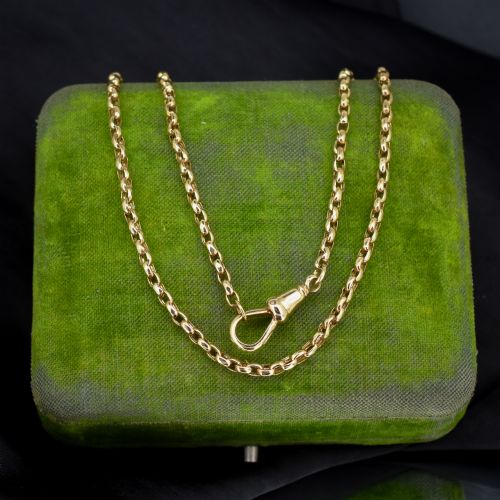
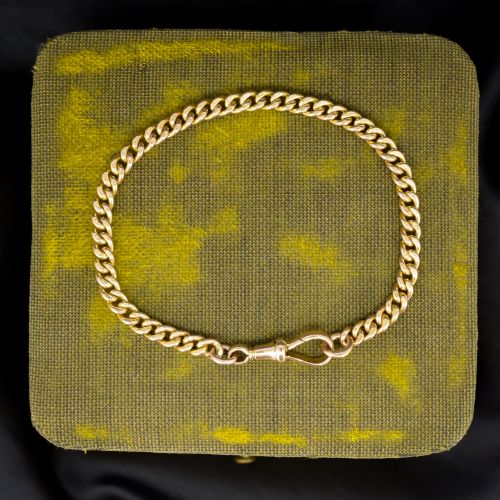
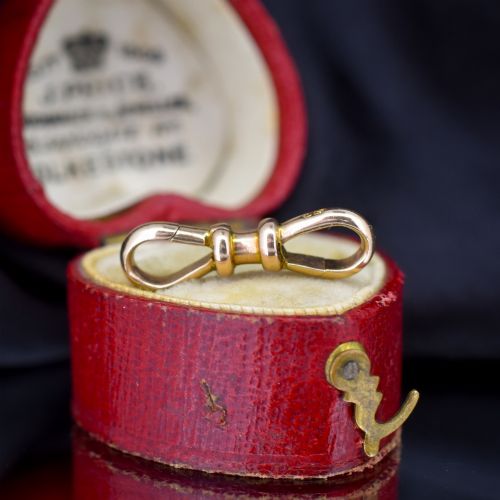
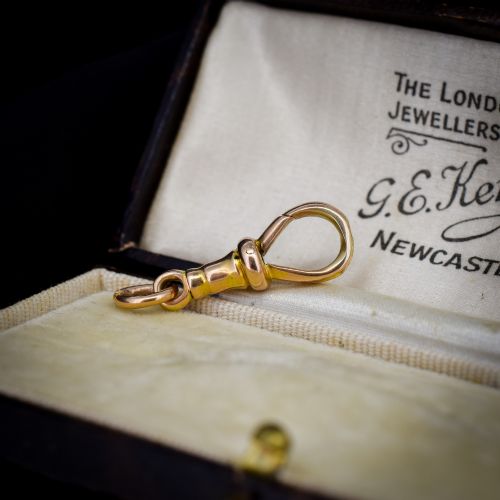
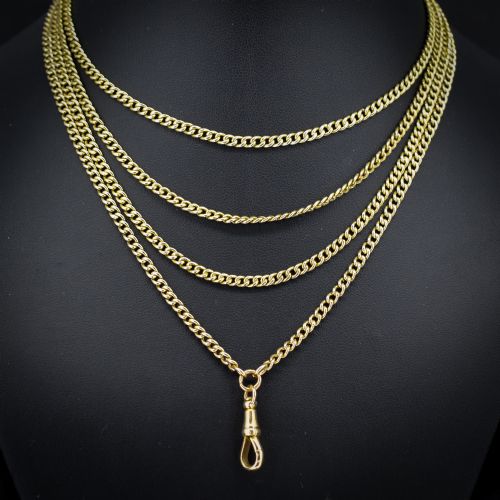
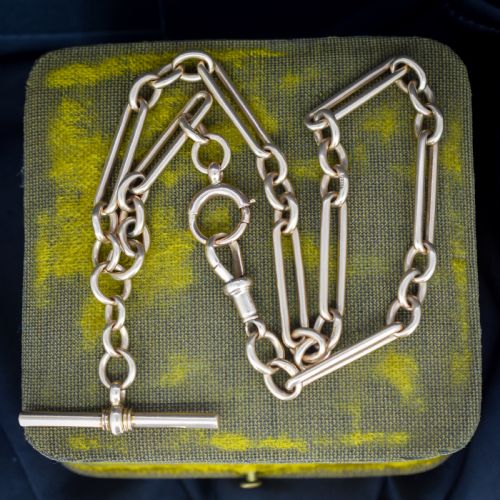
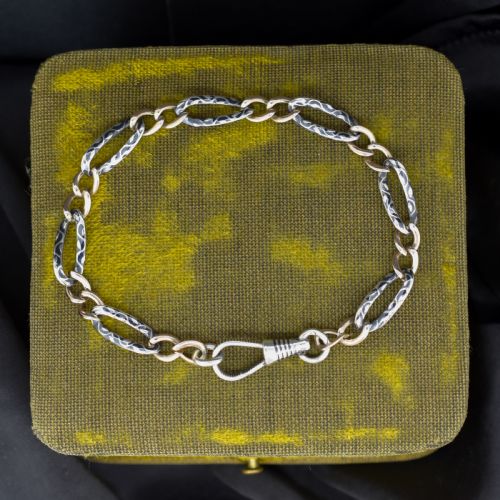
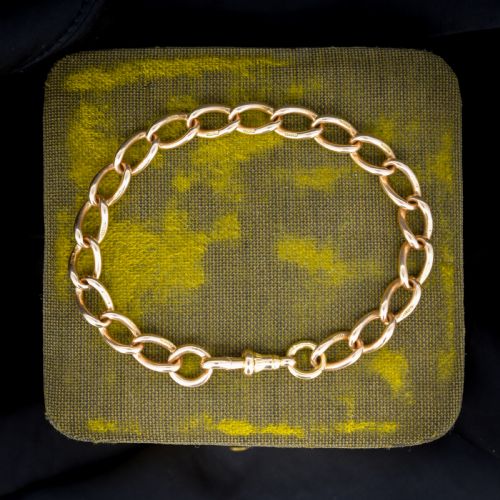
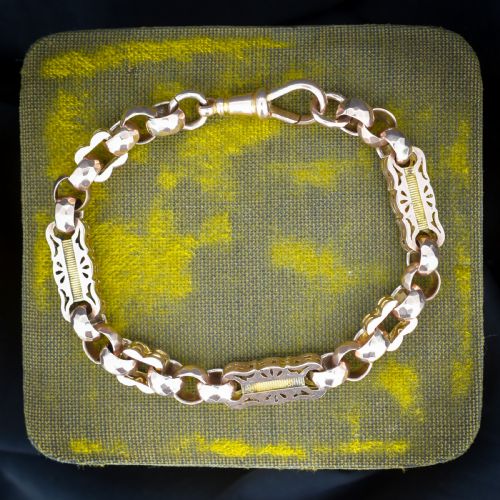
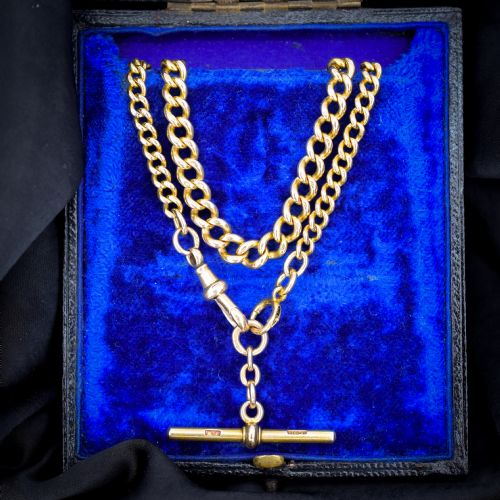
An edwardian gold dog clip is a functional swivel clasp originally designed to attach pocket watches to albert chains or longuards. These small spring-lever mechanisms appear on necklaces, bracelets, and watch chains spanning the victorian, edwardian, and art deco periods.
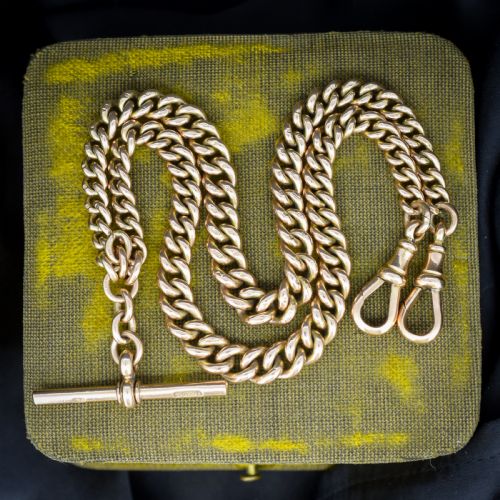
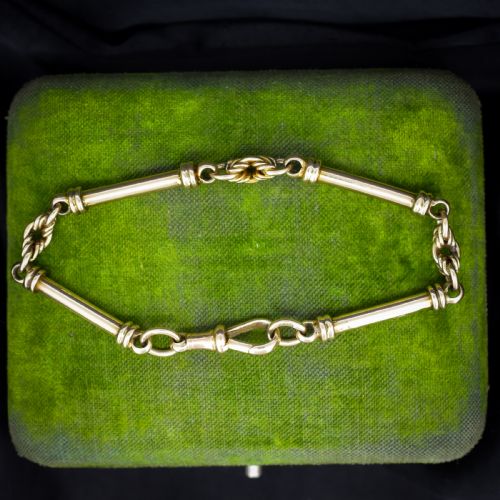
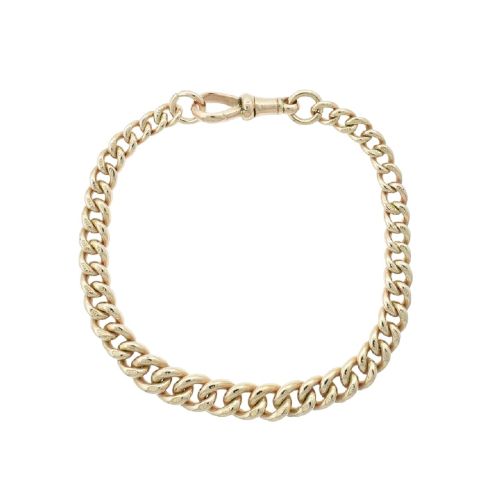
Most examples found here date from the edwardian era and the early twentieth century, formed as integral components of curb, trombone, or belcher link chains. They frequently accompany t-bars, charm pendants, and safety chains.
Collectors prize these clips both as historic fastenings for antique chains and as secure contemporary pendant holders. Their versatile design allows a single chain to transform between a necklace, bracelet, and pocket watch fob.
Materials and construction
Goldsmiths fabricated these clips in various purities including nine carat, fifteen carat, and eighteen carat yellow and rose gold, alongside silver and niello combinations. Solid gold construction ensures the spring tension within the internal tongue remains functional after a century of use.
Mechanisms rely on a spring-loaded plunger or hinged tongue that retracts into the oval or teardrop frame when depressed by a small thumb tab. A swivel loop at the base prevents the attached chain from twisting and kinking during daily wear.
Current pieces feature diverse link formations including curb, trombone, belcher, and fancy star patterns paired with dog clips.
Grading quality and craftsmanship
Quality rests primarily in the strength of the internal spring and the precise alignment of the closure tongue against the body. Superior examples snap shut with a crisp action and show minimal lateral play in the swivel joint.
Substantial gold weight, crisp hallmarks stamped on the loop, and clean geometric or figural shaping distinguish high-grade pieces from standard utilitarian hardware. Maker marks and Chester town assay stamps add notable documentary value.
The Edwardian Gold Dog Clip Glossary
- Dog clip
- A spring-loaded swivel clasp shaped like a small snap hook, used traditionally to secure pocket watches to albert chains. The spring tongue retracts inward to attach to jump rings or watch loops.
- Albert chain
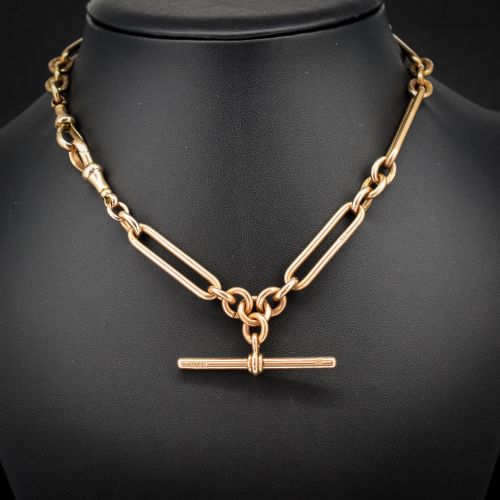
- A heavy watch chain designed to be worn across a waistcoat or attached to a buttonhole, named after prince albert. These chains often feature one or two dog clips and a t-bar.
- T-bar
- A short transverse bar attached to the centre of an albert chain, slipped through a waistcoat buttonhole to anchor a pocket watch. It hangs as a decorative element when the chain is worn as a necklace or bracelet.
- Longuard
- An exceptionally long antique chain, often fifty inches or more, worn doubled around the neck. They frequently incorporate sliders, decorative links, and a dog clip for suspending watches or lorgnettes.
- Trombone link
- An elongated rectangular metal link interspersed with smaller circular or oval links, creating an architectural chain pattern popular in the nineteenth and early twentieth centuries.
Edwardian Gold Dog Clip: Frequently Asked Questions
What is a dog clip used for?
A dog clip functions as a secure fastening device for antique watch chains, pocket watches, and charms. The spring-loaded mechanism allows the wearer to attach and detach items quickly.
In modern styling, these clips frequently serve as connectors for heavy charms or pendants worn on shorter necklaces and bracelets.
How do I date an edwardian gold dog clip?
Dating relies on hallmark stamps, style characteristics, and the accompanying chain if present. Edwardian pieces typically date between nineteen hundred and nineteen ten.
Assay office marks and date letters stamped onto the loop provide exact verification of the year of manufacture and gold purity.
Can I wear an albert chain as a necklace?
Many people wear shorter albert chains and watch chains directly around the neck as necklaces. The dog clip and t-bar create distinctive focal points at the front.
Longer guard chains wrap multiple times to form layered necklaces or shorter multi-strand bracelets depending on the total length.
What is the difference between rose gold and yellow gold?
Yellow gold achieves its warm hue through a traditional alloy mix containing silver and copper alongside pure gold. Rose gold contains a higher proportion of copper in the alloy, creating a distinct reddish-pink tint.
Both colour variations appear frequently across edwardian and victorian jewellery pieces.