
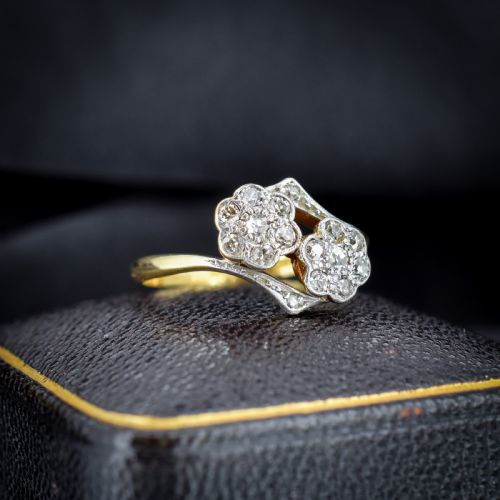
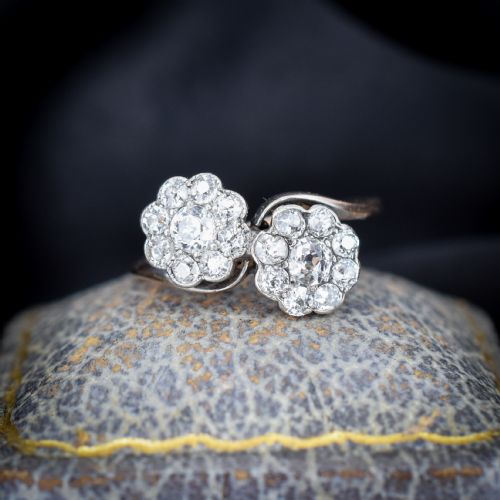


Edwardian Gold Crossover Ring
An edwardian gold crossover ring unites two or more stones in a graceful twist that sits low on the finger, symbolising union and romance.
Edwardian Gold Crossover Ring
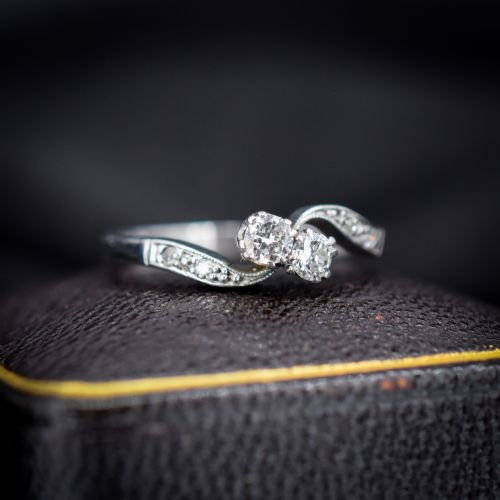
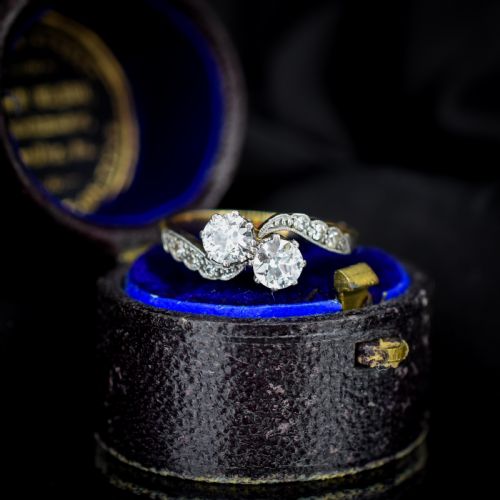
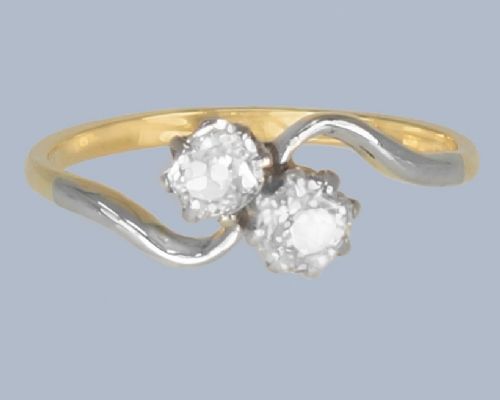
An edwardian gold crossover ring typically takes the form of a twist or toi et moi design, bringing together diamonds, pearls, rubies or sapphires in a curving band. Most examples date from the Edwardian era, spanning the late nineteenth and early twentieth centuries, though related styles extend into the art deco period.
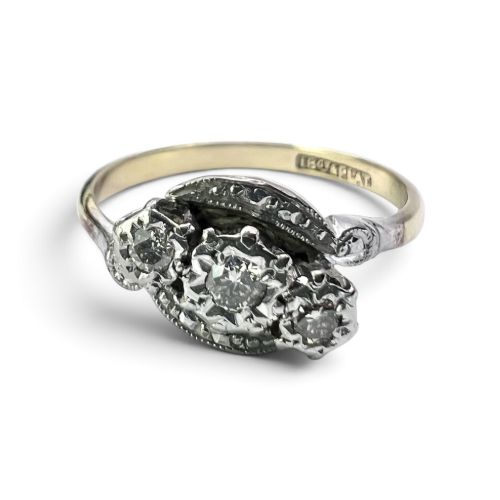
The layout often pairs two principal gems, such as old-cut diamonds or a diamond with a natural pearl or sapphire, curving towards one another on the hoop. Alongside these two-stone twists, buyers encounter cluster variations and three-stone arrangements set in yellow gold, white gold or platinum.
How they were made
Goldsmiths of the period frequently combined 18ct yellow or white gold with platinum, using the harder metal for the settings to keep claws delicate and secure around old-cut diamonds. This platinum-topping technique allowed makers to achieve finer lines without sacrificing structural strength.
Stones were typically hand-set with millegrain detailing along the metal edges, framing diamonds and pearls to catch the light. Shanks were forged in gold, often tapering smoothly towards the shoulders to accentuate the central twist.
Listings feature periods from the nineteenth century through the Edwardian era and into the nineteen thirties, encompassing gold, platinum, diamonds, pearls, sapphires and rubies.
What varies in quality
The harmony of the twist and the proportion of the stones define the upper tier of these rings, ensuring the design flows naturally across the hand. Skill in mounting is evident where platinum claws remain crisp and the underlying goldwork shows even wear.
The selection of paired gems also dictates distinction, particularly in matching old-cut diamonds for fire and brilliance, or pairing pearls and sapphires with balanced colour and lustre.
The Edwardian Gold Crossover Ring Glossary
- Crossover ring
- A ring design where the band or the stones cross over one another on the finger. This form creates a dynamic twist that often represents two lives joining together.
- Toi et moi
- French for you and me, denoting a ring featuring two main gemstones set side by side in a twist. It remains a classic configuration for romantic jewellery.
- Old-cut diamond
- A hand-faceted diamond cut before modern machinery standardise proportions, typically featuring a smaller table and larger culet. These stones possess a distinct, softer glow under candlelight.
- Millegrain
- A decorative technique involving a fine, beaded edge pressed into the metal around gemstone settings. It adds a delicate texture characteristic of Edwardian craftsmanship.
- Platinum topping
- A method where a thin layer of platinum is fused to the top of a gold mount to display white diamonds against a bright white background. This innovation combined the durability of platinum with the warmth of gold.
Edwardian Gold Crossover Ring: Frequently Asked Questions
How do I wear an Edwardian crossover ring daily?
These rings pair well with plain wedding bands or sit comfortably on their own as a statement piece on the hand. Their low profile helps them fit closely against other bands.
Because they often feature old-cut diamonds and natural pearls, removing them during heavy manual work protects the delicate settings and softer gems from undue impact.
What is the difference between a twist and a toi et moi?
A twist ring generally refers to the curved movement of the band or the way the shoulders sweep towards the centre. The term applies to both single-stone swirls and multi-stone arrangements.
Toi et moi specifically describes a two-stone configuration where two principal gems meet in a embrace, symbolising two individuals.
How can I tell an Edwardian ring from a Victorian one?
Edwardian pieces often utilise platinum-topped gold settings combined with millegrain decoration, creating a lighter, airier aesthetic than heavier Victorian designs. They frequently feature bright white diamonds paired with pearls or sapphires.
Victorian predecessors tended to use heavier yellow or rose gold mounts with star settings or cluster arrangements, though crossover styles span both eras.
Are the pearls in these rings natural?
Many period pieces incorporate natural pearls formed without human intervention, prized for their soft lustre and organic origin. Some listings also feature cultured pearls depending on the exact date.
Natural pearls require gentle care, avoiding harsh chemicals, perfumes and ultrasonic cleaners to preserve their surface skin.