




Edwardian Gemstone Chain
An edwardian gemstone chain brings together bright stones and gold links from the opening decades of the twentieth century.
Edwardian Gemstone Chain
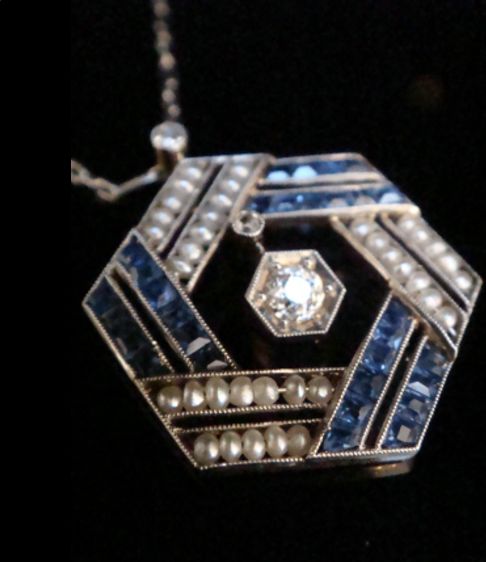
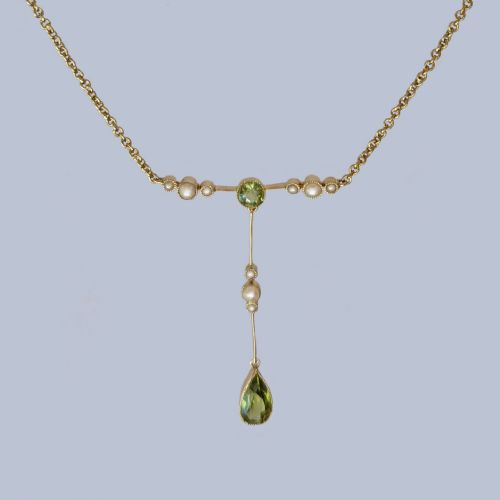
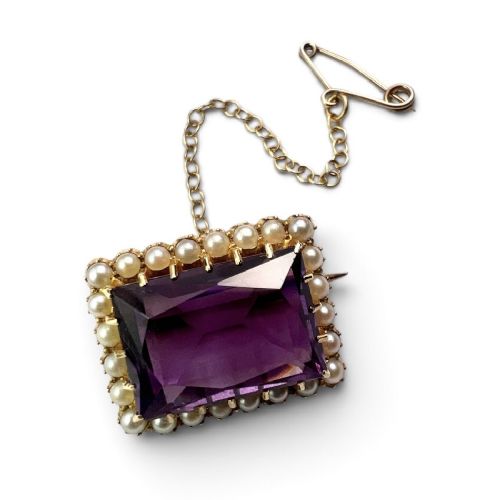
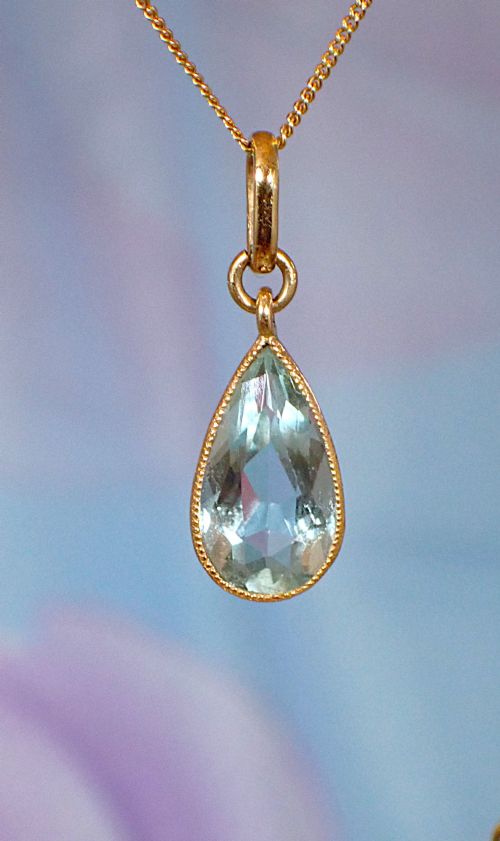
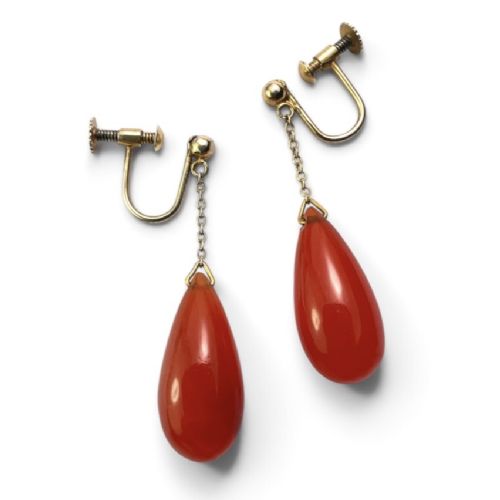
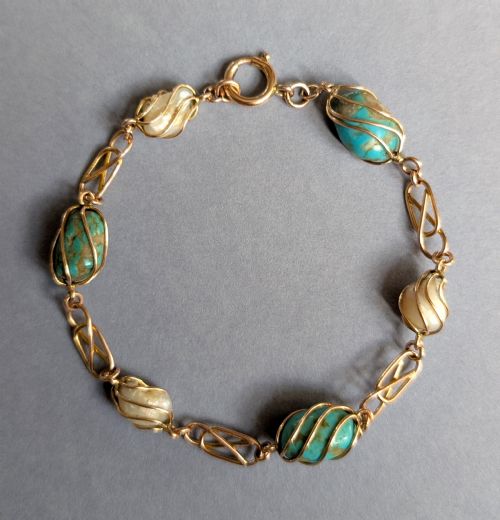
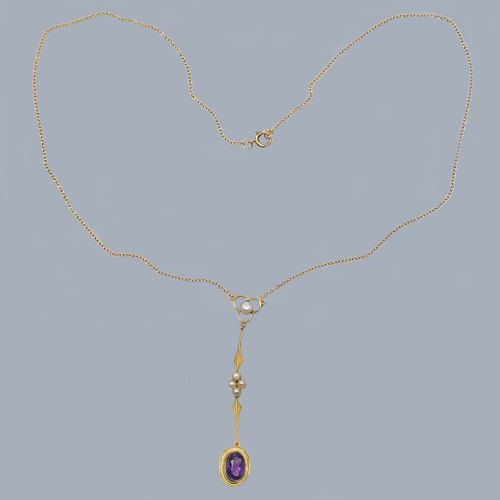
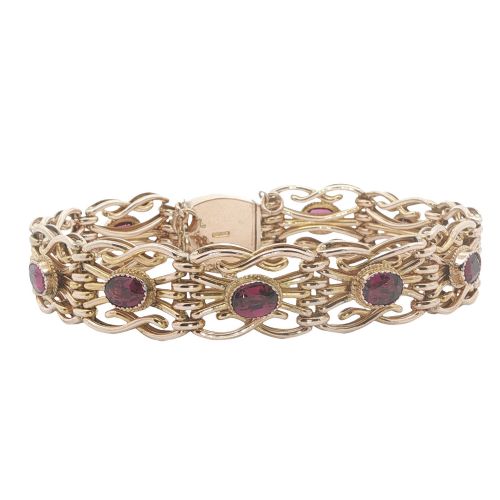
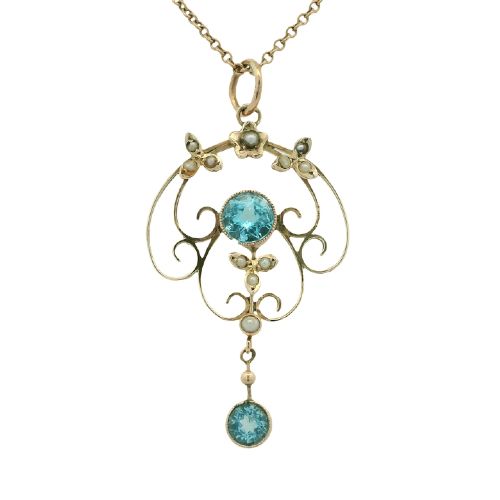
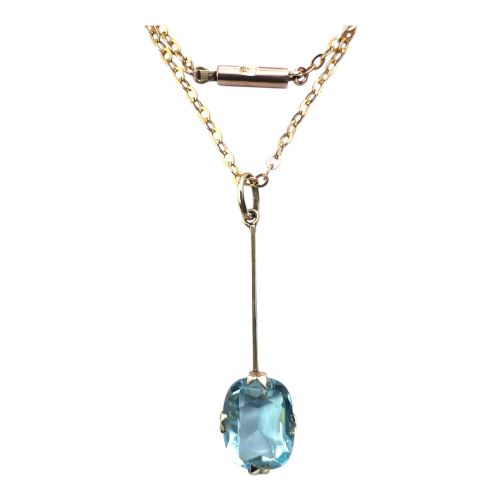
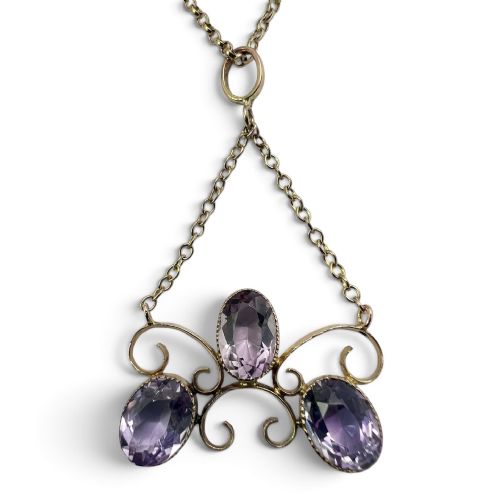
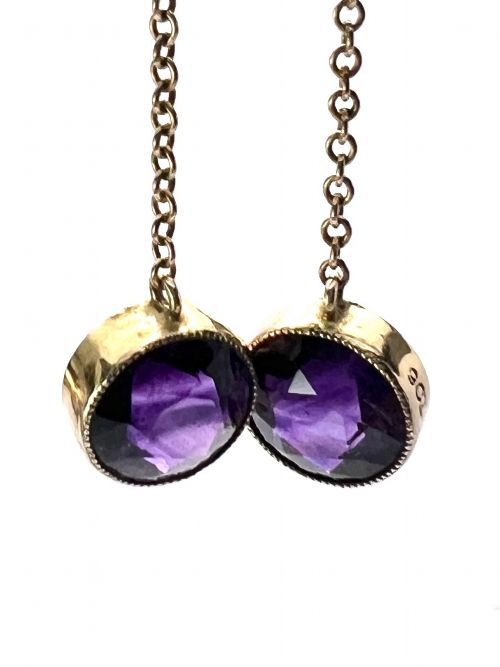
An edwardian gemstone chain typically appears as a slender gold necklace set with stones such as amethyst, aquamarine, peridot, or pearl. These pieces originate from the Edwardian period alongside late Victorian, Art Deco, and 1920s eras.
Makers fashioned these jewels into drop necklaces, lavaliers, and link chains designed to sit gracefully upon the collarbone. The forms reflect prevailing styles like Art Nouveau and Arts & Crafts, pairing colourful gems with delicate metalwork.
How they were made
Goldsmiths utilised nine carat and fifteen carat gold, alongside silver, to construct the delicate links, bezels, and settings for each stone. Seed pearls and larger gems were secured by hand, integrating natural materials into balanced compositions.
The construction relies on fine wirework, collet settings, and articulated joints that allow the chains and pendants to drape smoothly. Stones such as garnets, opals, and moonstones were cut into cushion shapes, cabochons, or teardrops to catch the light.
Edwardian Gemstone Chain Retail Price Guide 2026
Typical asking prices for edwardian gemstone chain among the pieces listed under this phrase on Sellingantiques today, from the lower quarter to the upper quarter. They describe what is for sale here now, not the wider market.
Materials recur across multiple forms, pairing amethysts and aquamarines with seed pearls and gold in various combinations.
What varies in quality
The standard of an edwardian gemstone chain rests on the depth of colour in the stones and the finesse of the metal framing. Finer examples display matched gems with clean facets and secure, hand-wrought settings that show minimal solder.
Weight and gauge distinguish the sturdier pieces from lighter iterations, as higher carat gold and solid link construction provide greater resilience. The integrity of the original clasp and the uniformity of the seed pearls dictate the overall standing of the jewel.
Dorrie Nossiter·George Hunt
The Edwardian Gemstone Chain Glossary
- Seed pearl
- A very small, naturally formed saltwater pearl, often drilled and strung in clusters or used to accent gemstone centrepieces.
- Lavalier
- A pendant necklace featuring a central gemstone or drop suspended from a finer chain, popular during the Edwardian period.
- Collet
- A band of metal that holds a gemstone in place by folding or pressing the upper edge over the girdle of the stone.
- Cabochon
- A gemstone shaped and polished with a smooth, rounded convex surface rather than faceted edges.
- Sautoir
- A long necklace, often featuring beads or gemstones, designed to be worn hanging loose or doubled over.
Edwardian Gemstone Chain: Frequently Asked Questions
What is an Edwardian gemstone chain?
An edwardian gemstone chain is a necklace featuring precious or semi-precious stones set in gold or silver, dating from the early twentieth century.
These jewels highlight stones like amethyst, aquamarine, and peridot linked in delicate arrangements characteristic of the period.
How do I wear these chains?
These pieces sit neatly at the neckline, pairing well with period attire or simple modern garments to showcase the stones.
The slender proportions of the chains mean they function best as standalone focal points rather than layered accessories.
How are periods identified?
Periods are recognised through the characteristic metal hallmarks, stone cuts, and stylistic motifs such as garland wreaths or geometric lines.
Craftsmanship markers from the Edwardian and late Victorian eras provide clear indicators of the date of manufacture.
What metals were used?
Goldsmiths predominantly worked in nine carat and fifteen carat yellow and rose gold, alongside silver and occasional platinum.
The choice of metal often aligns with the specific decade and stylistic movement of the jewel.