


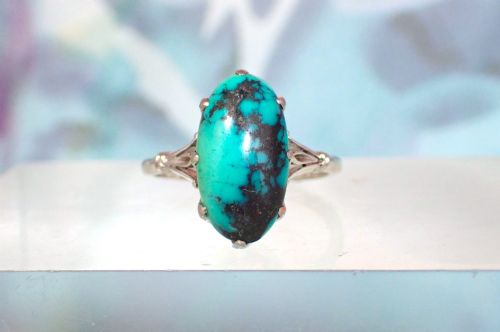
Edwardian Gemstone Band Ring
An edwardian gemstone band ring brings together rich coloured stones and fine gold work from the early twentieth century.
Edwardian Gemstone Band Ring
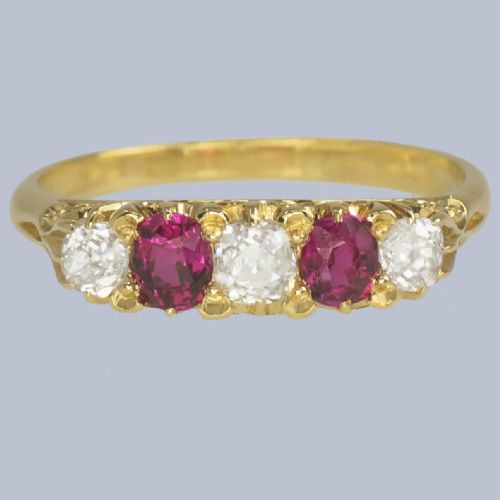
An edwardian gemstone band ring forms a distinct category of finger ornament defined by its low profile and flush or semi-flush setting along the hoop. Buyers searching this phrase look for authentic examples from the early twentieth century, though the category naturally extends into pieces carrying similar stylistic traits from the Victorian and later decades.
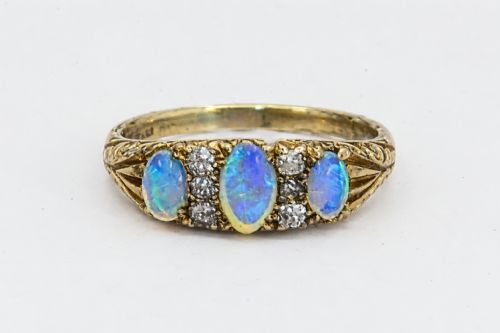
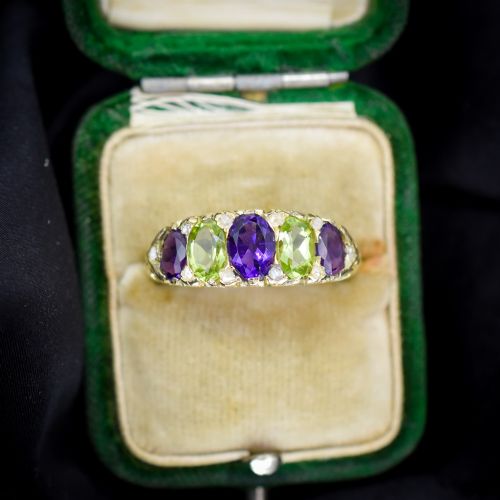
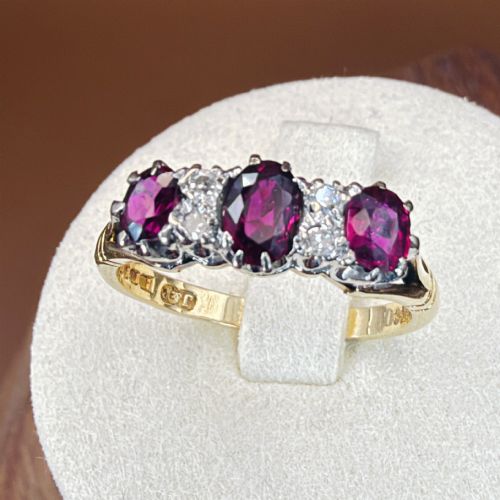
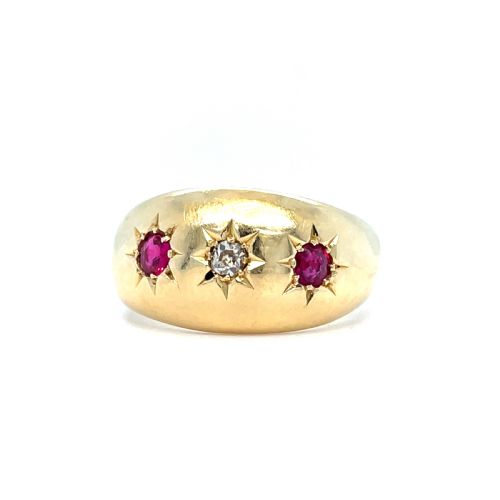
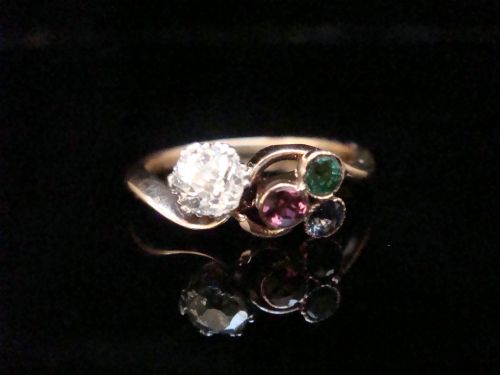
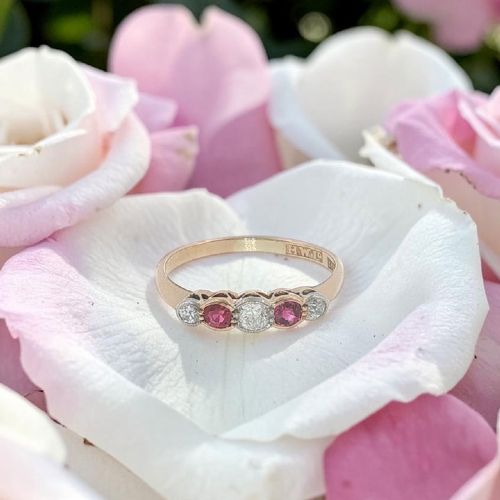
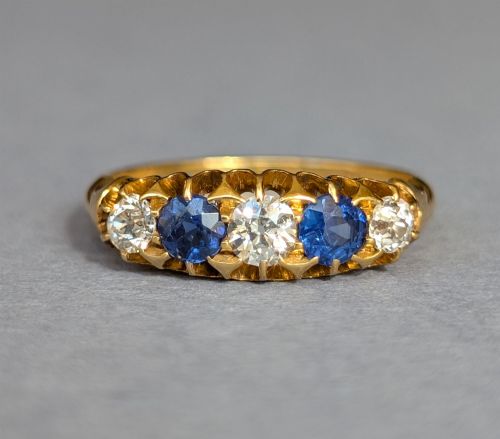
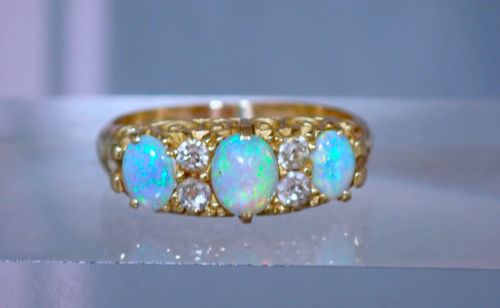
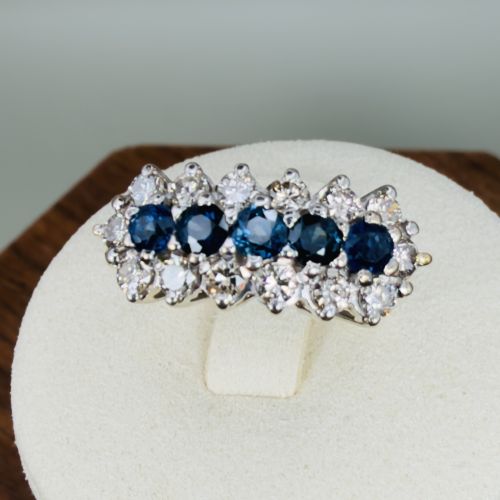
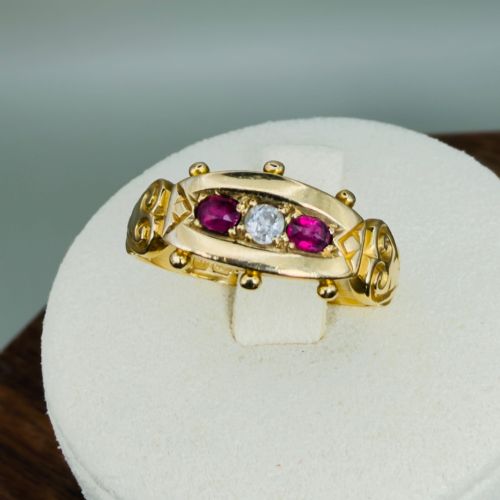
The most common versions encountered here pair diamonds with vibrant rubies, sapphires, or opals set into polished yellow gold bands. These range from simple three-stone and five-stone layouts to starburst clusters and boat-shaped mountings.
Origins trace primarily to British workshops, often bearing hallmarks from assay offices such as Birmingham and Chester. Pieces span the period from the late nineteenth century through to the Edwardian era and slightly beyond into the interwar years.
Materials and construction
The primary metal foundation is 18ct yellow gold, complemented occasionally by 15ct gold, sterling silver, or white gold in later variations. Stones are secured using traditional claw settings, boat mountings, or flush starburst engravings that hold old-cut diamonds alongside rubies, sapphires, garnets, and opals.
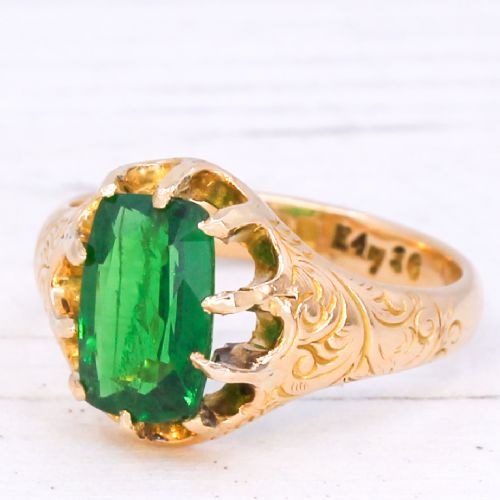
Goldsmiths utilised hand-cut stones, including rose-cut and old mine-cut diamonds, which display softer facets than modern brilliant cuts. Band widths and profiles were shaped to sit comfortably on the finger, often incorporating detailed shoulders or engraved shank designs.
Some rings manage to squeeze a starburst, a boat shape, and a multi-stone cluster into a single tiny hoop.
Evaluating quality and execution
Quality rests upon the proportion and matching of the central gemstones, where even colour saturation and lively stone cutting elevate an example above standard production. The crispness of the surrounding gold work and the preservation of original starburst or boat settings indicate superior workshop execution.
The integrity of the band structure and the clarity of any accompanying hallmarks contribute significantly to desirability. Finer items retain their original claw heights and stone security without evidence of heavy resizing or metal fatigue.
The Edwardian Gemstone Band Ring Glossary
- Band ring
- A finger ring of approximately uniform width around the hoop rather than tapering sharply toward the back. These often feature flush or low-profile stone settings.
- Boat ring
- A ring featuring a navette or boat-shaped setting that curves along the contour of the finger, typically housing a cluster of graduated stones.
- Old-cut diamond
- A diamond cut by hand before the advent of modern machinery, characterised by a smaller table, higher crown, and open culet.
- Starburst setting
- A star-shaped engraving around a gemstone that reflects light and creates the visual impression of a larger stone.
- Trilogy ring
- A ring set with three stones, traditionally symbolising the past, present, and future.
Edwardian Gemstone Band Ring: Frequently Asked Questions
How do I care for an antique gemstone ring?
Clean these pieces gently with a soft brush and warm soapy water, avoiding harsh ultrasonic cleaners that can damage softer stones like opal.
Store them separately in a lined box to prevent scratching between harder diamonds and more delicate coloured gems.
Can these rings be resized easily?
Most gold bands can be adjusted by a skilled jeweller, though care must be taken around settings containing delicate stones like opals or pearls.
Consult a specialist who understands antique shank construction to preserve any historical hallmarks on the inner band.
What defines the Edwardian style?
Edwardian jewellery leans toward lightness and grace, frequently pairing diamonds with sapphires or rubies in refined yellow gold and platinum mounts.
This aesthetic follows heavier Victorian designs, introducing openwork and delicate floral or geometric motifs.
Are these rings suitable for daily wear?
Harder stones such as diamond, ruby, and sapphire handle regular wear well when mounted securely in gold.
More delicate materials like opal require mindful handling to avoid knocks against hard surfaces during daily tasks.