


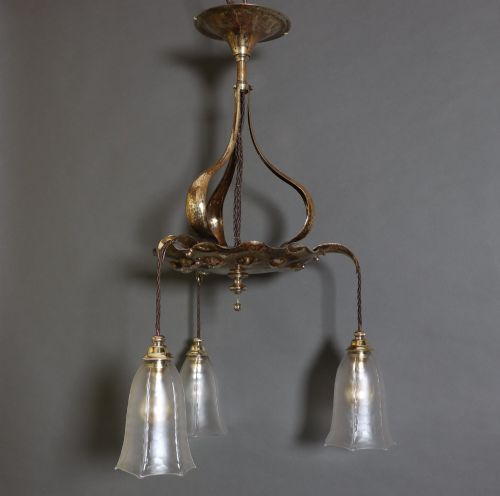
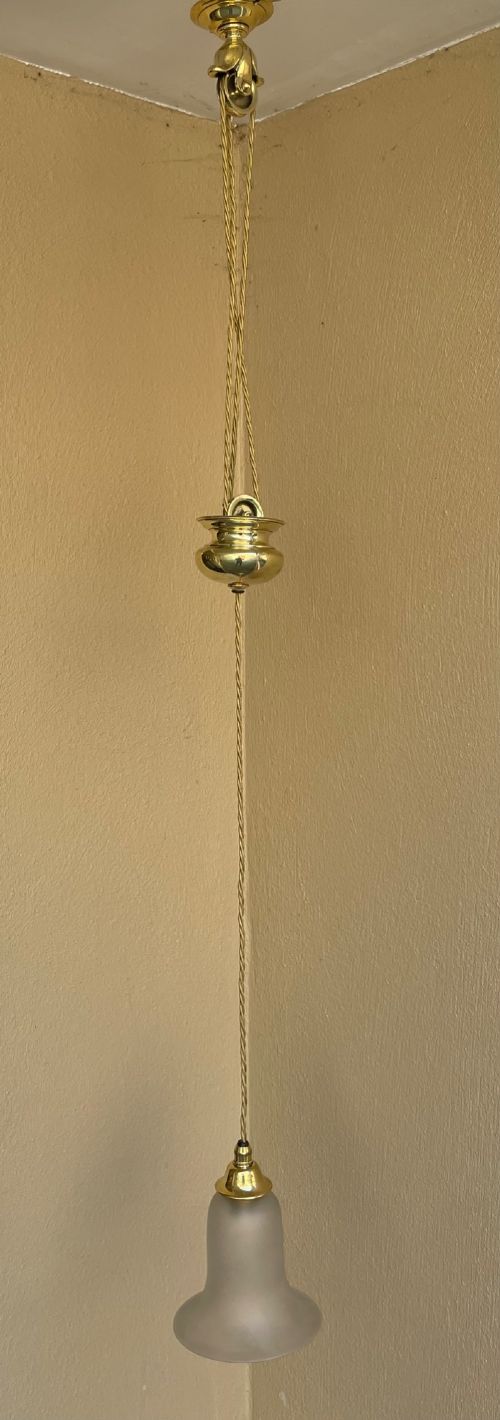
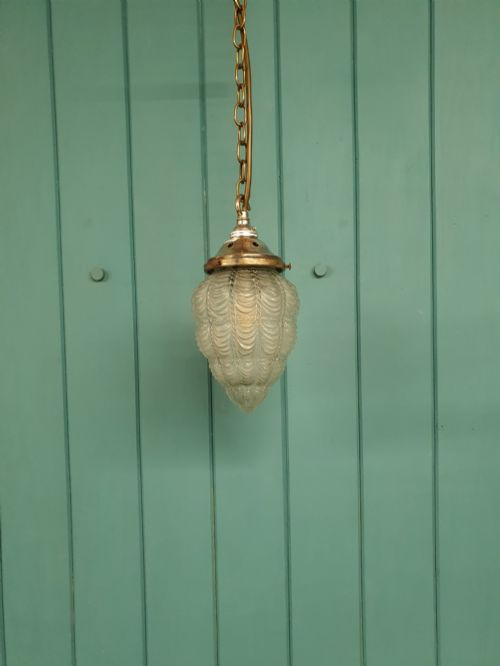


Edwardian Frosted Pendant
These Edwardian frosted pendant lights diffuse light softly through textured glass and suspend from sturdy brass or bronze frames to warm any room.
Edwardian Frosted Pendant
An edwardian frosted pendant brings a gentle, diffused glow to hallway ceilings and compact rooms alike through its combination of textured glass and metal suspension. The selections span from straightforward brass and glass combinations to more elaborate lanterns and bowl chandeliers dating predominantly from the early twentieth century.
Most examples rely on simple geometric forms or classic lantern shapes designed to hang closely from overhead fittings. Alongside Edwardian pieces, the listings capture overlapping styles including Arts and Crafts designs, Victorian influences, and later early twentieth-century interpretations.
How They Were Made
Makers constructed the structural frames of these pendants using durable metals such as brass, bronze, and cast metal, often shaping them into rigid lanterns or multi-armed chandeliers. Surface finishes range from polished brass to beaten copper and gilded accents.
The glass components were produced through techniques like frosting, etching, and cutting to alter transparency and soften the harsh glare of early electric bulbs. Artisans then joined the glass panels and shades securely into the metal frameworks.
Edwardian Frosted Pendant Retail Price Guide 2026
Typical asking prices for edwardian frosted pendant among the pieces listed under this phrase on Sellingantiques today, from the lower quarter to the upper quarter. They describe what is for sale here now, not the wider market.
Design influences stretch from Victorian and Edwardian periods into Art Deco and Gothic Revival styles.
What Varies in Quality
The distinction between ordinary and superior pieces rests on the weight of the metalwork and the crispness of the glass decoration. Heavier cast brass frames and deeply etched or finely frosted glass indicate higher standards of original manufacture.
Attribution to known makers or workshops elevates certain examples, particularly where metal detailing and glass quality show exceptional care. Simpler utilitarian pendants remain common, while substantial chandeliers and matched pairs demonstrate greater ambition.
Osler·F and C Osler·Verrerie Des Vosge
The Edwardian Frosted Pendant Glossary
- Frosted glass
- Glass treated by acid-etching or sandblasting to create a textured, opaque surface that diffuses light. This treatment reduces glare while casting a soft illumination across the room.
- Hall lantern
- A compact hanging light fixture enclosed in glass panels, traditionally suspended in entrance halls and corridors. These fixtures protect the light source while directing illumination downward.
- Arts and Crafts
- A design movement prioritising traditional craftsmanship and visible hand-working of materials. Pieces from this style often feature beaten copper or sturdy brass frames.
- Rise and fall pendant
- A hanging light fitted with a mechanical pulley system that allows the height of the shade to be adjusted. This mechanism provides practical control over the level of illumination.
- Chandelier
- A branched decorative ceiling light designed to hold multiple illumination points. These larger fixtures distribute light more broadly than single pendant drops.
Edwardian Frosted Pendant: Frequently Asked Questions
How do I hang an edwardian frosted pendant?
These ceiling lights suspend from an overhead mounting plate using a matching chain, rod, or cord fixed to the ceiling rose.
Ensure the hanging height suits the clearance of the room, particularly in narrow hallways where head height matters.
Can these lights be rewired for modern use?
Most antique metal and glass pendants accommodate contemporary electrical wiring and standard bulb holders.
A qualified electrician can easily update the internal flex to meet current safety standards while preserving the original metal components.
What rooms suit a frosted glass pendant?
The soft diffusion of frosted and etched glass works well in spaces requiring ambient rather than harsh direct light.
Entrances, stairwells, and smaller reception rooms benefit particularly from the gentle spread of illumination.
How do I clean frosted and etched glass?
Wash the glass gently using warm water and a mild detergent with a soft cloth to avoid scratching the textured surface.
Dry thoroughly before reassembling the glass panels into their brass or bronze frames.