
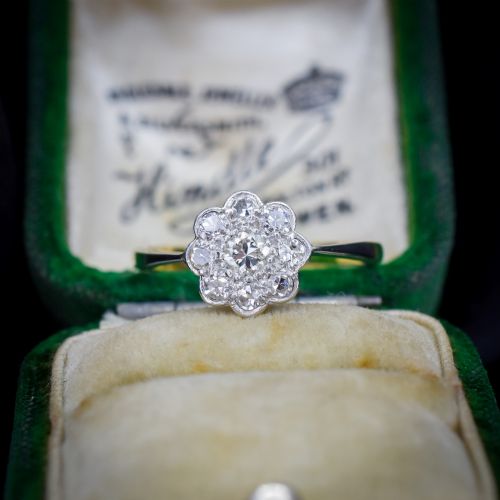
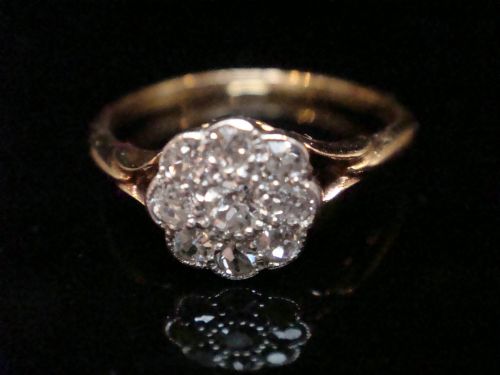
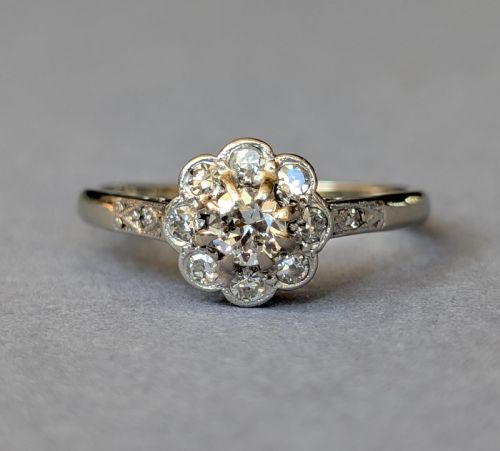
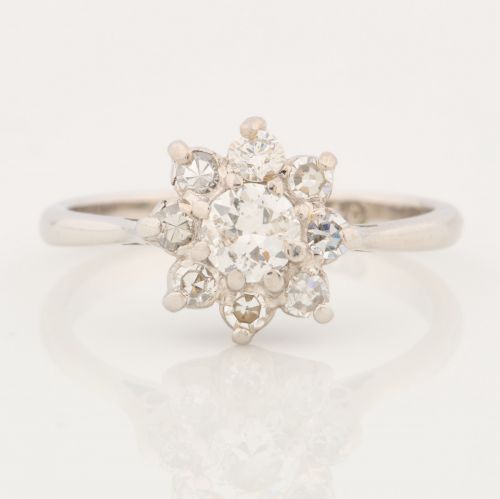


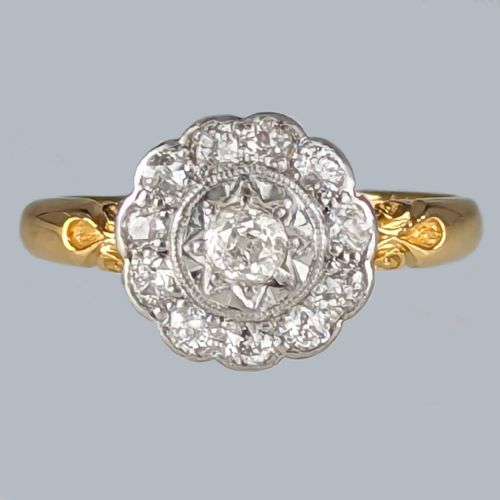

Edwardian Floral Diamond Ring
An edwardian floral diamond ring brings together delicate petal motifs and old cut stones that capture the romantic charm of early twentieth-century jewellery.
Edwardian Floral Diamond Ring
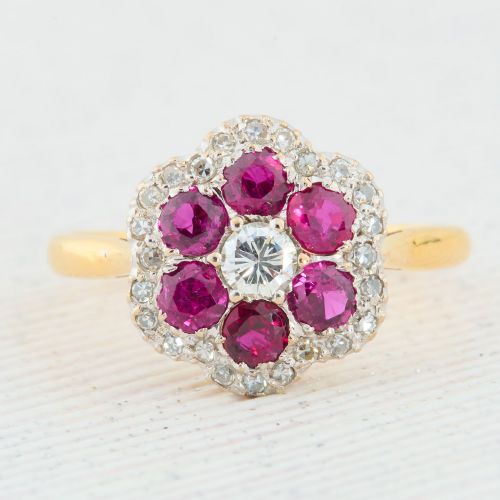
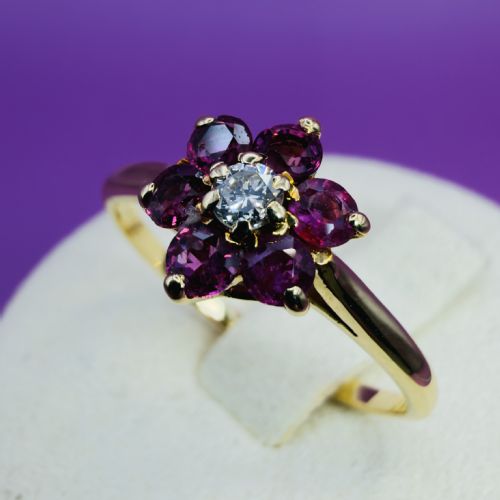
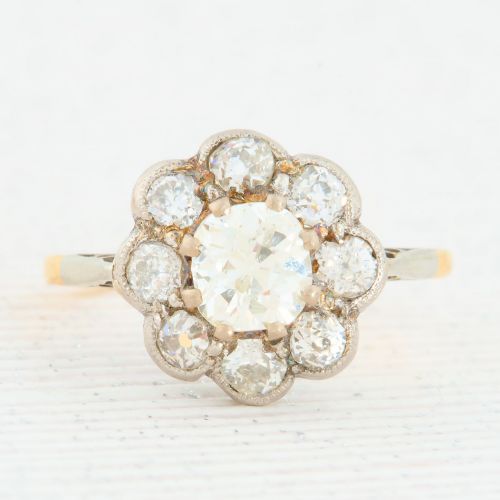
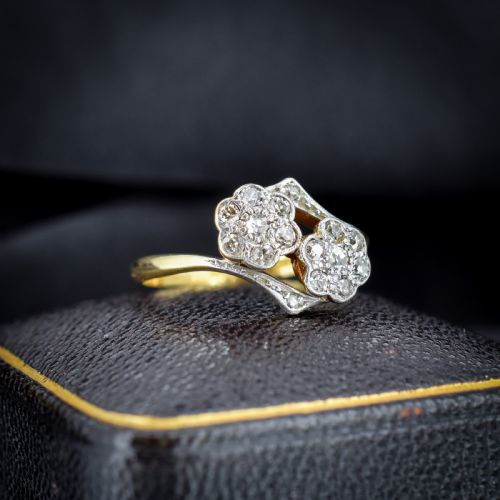
When searching for an edwardian floral diamond ring, buyers encounter pieces defined by cluster daisy and flower motifs that sit low to the hand. These rings frequently pair central stones with surrounding diamonds to form botanical patterns reminiscent of garden blooms.
The inventory on this page spans the Edwardian era alongside Victorian and later periods like Art Deco, with many examples utilising traditional cluster settings. While true Edwardian pieces dominate, related styles from surrounding decades appear regularly in similar floral forms.
Materials and construction
Goldsmiths constructed these rings primarily using eighteen carat yellow gold and white gold, frequently pairing them with platinum settings to highlight the stones. Platinum prongs and top plates allowed makers to use minimal metal around the diamonds, maximising the light entering each cut.
Makers set old cut diamonds and sometimes rubies, pearls, or turquoise into these gold and platinum frameworks. The combination of yellow gold bands with platinum-topped cluster heads remains a hallmark of the period's manufacturing techniques.
Materials appearing across the inventory include eighteen carat yellow gold, white gold, platinum, and diamonds alongside rubies.
Quality variations
The distinction between standard examples and the finest pieces rests on the cut and match of the diamonds forming the cluster. Uniformity in stone size and superior proportions elevate a ring above simpler mass-produced variations.
Ornate gallery work and delicate piercing beneath the main cluster also distinguish superior craftsmanship. Better examples show careful attention to detail in the twisted bands or floral shoulders that support the central flower motif.
The Edwardian Floral Diamond Ring Glossary
- Cluster ring
- A ring featuring a central stone surrounded by a group of smaller stones. This arrangement creates a larger visual presence on the finger without requiring a single massive gemstone.
- Old cut diamond
- A hand-faceted diamond cut before modern machine precision was developed. These stones typically possess smaller tables and higher crowns, producing a softer candlelight sparkle.
- Daisy cluster
- A specific floral arrangement where round stones encircle a central stone to resemble the petals of a flower. It represents the quintessential motif found in these period rings.
- Platinum
- A dense white precious metal utilised in jewellery manufacturing for its strength and durability. Its bright colour makes diamonds appear whiter and allows for ultra-fine settings.
Edwardian Floral Diamond Ring: Frequently Asked Questions
How do I care for my ring?
Clean your ring gently using warm soapy water and a soft brush to remove everyday debris from beneath the cluster setting.
Take the piece to a professional jeweller periodically to check the security of the old cut diamonds in their platinum or gold claws.
Are these rings suitable for daily wear?
These rings tolerate daily wear provided you remove them during heavy physical tasks or manual labour.
Purchasing an antique ring means respecting its age, so mindful wear protects the delicate gold bands and stone settings from unnecessary impacts.
How can I tell an Edwardian ring?
Look for platinum-topped gold settings combined with hand-cut diamonds arranged in floral daisy clusters.
The presence of delicate pierced gallery work under the bezel often points directly to the craftsmanship of the Edwardian era.
What is an old cut diamond?
An old cut diamond refers to stones faceted by hand during the late nineteenth and early twentieth centuries.
These diamonds display smaller tabletops and deep pavilions that catch ambient light with a distinct and charming warmth.