

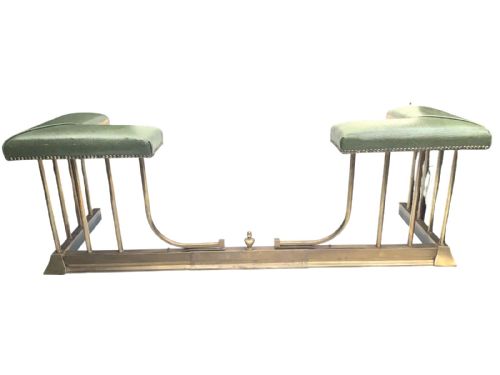


Edwardian Fender Seat
An edwardian fender seat brings warmth and fireside seating to a room, offering the practical comfort of upholstered pads flanking the hearth.
Edwardian Fender Seat
An edwardian fender seat, often known as a club fender, combines a hearth surround with low bench seating designed for fireside warmth. These pieces bridge the gap between architectural metalwork and comfortable parlour furniture.
The versions met on this page span from late nineteenth century Victorian examples through to Arts and Crafts interpretations and nineteen-twenties pieces. Brass, wrought iron, and oak provide the structural framework for cushioned top rails upholstered in leather or velvet.
How they were made
Makers constructed the rigid frames using substantial metals such as brass, copper, steel, and wrought iron, often combining them with solid timber bases like oak. Metal components involved casting, silvering, and forge-work to shape the protective kerb that kept embers at bay.
Upper rails received padding and traditional upholstery finishes using durable materials like leather and velvet. Adjustable mechanisms appeared in certain workshops to allow bespoke fitting around varying hearth dimensions.
Edwardian Fender Seat Retail Price Guide 2026
Typical asking prices for edwardian fender seat among the pieces listed under this phrase on Sellingantiques today, from the lower quarter to the upper quarter. They describe what is for sale here now, not the wider market.
Periods represented span from the nineteenth century through Edwardian design and into nineteen-twenties English styles.
What varies in quality
The distinction between standard production and superior work rests on the weight of the metal and the integrity of the timber framing. Heavy brass tubing and solid oak provide structural stability that lighter tubular alternatives lack.
Upholstery execution and the subtlety of metal finishing separate everyday pieces from finer examples. Hand-carved detailing on wooden elements and the quality of leather hide elevate the piece beyond a simple fireside accessory.
William Birch
The Edwardian Fender Seat Glossary
- Club fender
- A low fireside seat built around an open hearth, featuring upholstered corner pads or a continuous top rail supported by metal balustrades. This configuration allowed people to sit close to the fire while protected from falling embers.
- Balustrade
- The row of vertical metal spindles supporting the upper seat of a fender. These pillars can be simple turned brass columns or more ornate wrought iron bars.
- Arts and Crafts
- A design movement prioritising traditional craftsmanship and honest materials over mass production. Pieces from this tradition often display exposed joinery and hand-carved oak details.
- Upholstery
- The padded and covered seating surface mounted on the top rail of the fender. Materials typically include hard-wearing leather or soft velvet.
Edwardian Fender Seat: Frequently Asked Questions
What is an edwardian fender seat?
An edwardian fender seat is a low fireside bench built around a fireplace kerb, combining metal framing with upholstered seating pads. It provides practical seating directly adjacent to the hearth.
These pieces were designed to maximise warmth in large rooms while keeping hearth areas tidy and secure.
How do I measure for a fender seat?
Measure the width and depth of your fireplace hearth precisely, ensuring the internal dimensions of the fender clear the stone surround. Account for any protruding hearth edges or uneven flooring.
Adjustable models offer some flexibility, but fixed designs require exact measurements to sit flush against the masonry.
Were these seats used daily?
Families used them constantly during winter months to sit as close to the fire as possible for maximum heat. The upholstered pads provided comfort during long evenings in the parlour.
They also served as a physical barrier preventing sparks from reaching carpets and rugs.
How do I care for the metal and leather?
Dust brass and iron components regularly with a soft cloth and apply appropriate metal polish sparingly to maintain the surface. Leather and velvet upholstery benefit from gentle brushing and conditioning suitable for antique textiles.
Avoid placing these pieces directly against extreme heat sources to prevent timber warping and leather drying.