
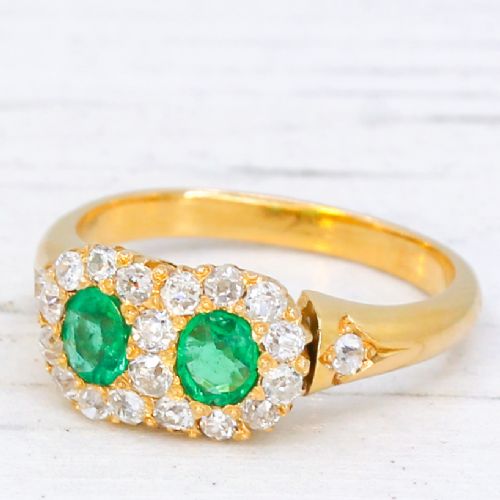


Edwardian Emerald Cluster Ring
An edwardian emerald cluster ring brings together vibrant green stones and sparkling diamonds in characteristic early twentieth-century mountings.
Edwardian Emerald Cluster Ring
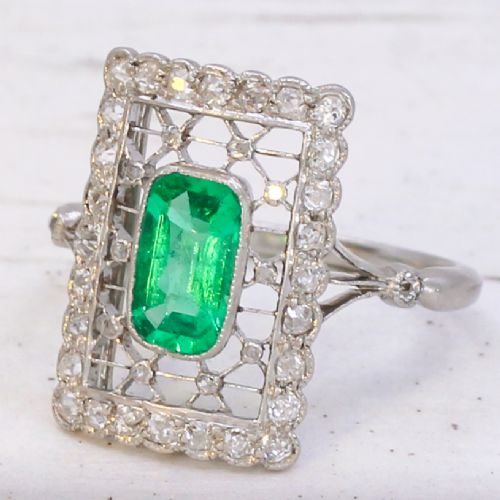
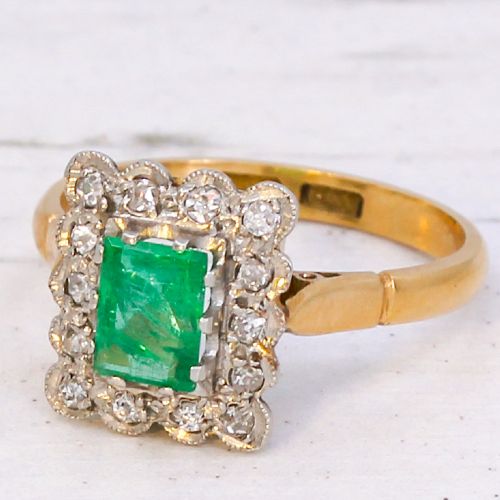
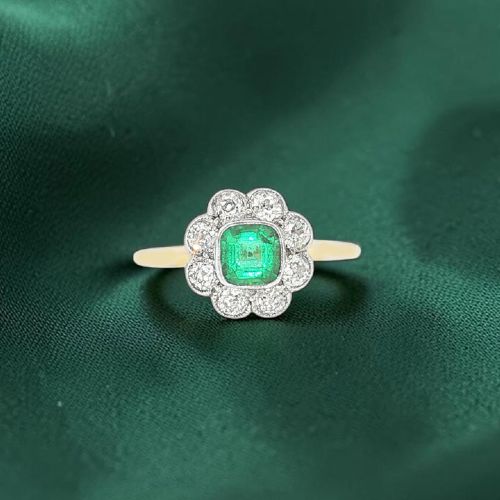
When you search for an edwardian emerald cluster ring, you are looking at fine antique jewellery designed around a central green beryl surrounded by smaller diamonds. The pieces on this page span the Edwardian period into the 1920s and 1930s, alongside occasional later interpretations.
The most common formats in these listings pair a central Colombian emerald with old-cut diamonds in geometric or floral arrangements. Yellow gold, white gold, and platinum feature heavily as the foundational metals for these concentric designs.
Materials and construction
Goldsmiths utilised platinum and 18ct gold to fabricate secure settings that could support intricate cluster arrangements without adding excessive weight to the hand. Platinum settings allowed for delicate millegrain edges that framed individual diamonds.
Central stones typically take emerald cuts or oval shapes, encircled by old-cut or rose-cut diamonds secured in claw or bezel settings.
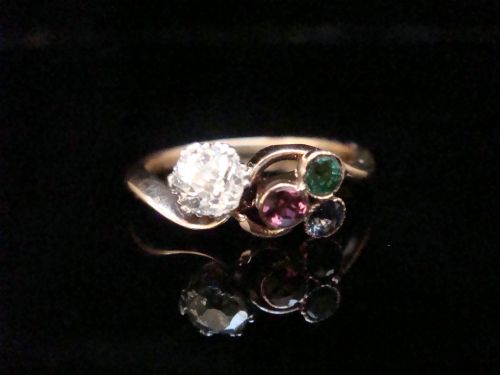
Listings combine Edwardian designs with pieces spanning the Victorian, Art Deco, and mid-century periods, using platinum, yellow gold, and white gold.
Assessing quality and proportion
Quality rests in the depth of colour and clarity of the central emerald, alongside the matching and brightness of the surrounding diamonds. Colombian origin often marks a higher tier of stones within these clusters.
The precision of the metalwork, including hand-carved shoulders and intact millegrain decoration, separates standard production from finer workshop pieces.
The Edwardian Emerald Cluster Ring Glossary
- Cluster ring
- A ring design featuring a central gemstone surrounded by a border of smaller stones, typically diamonds. This arrangement maximises visual impact and light reflection.
- Old cut
- A hand-faceted diamond cut prevalent before modern machinery standardised proportions. These stones exhibit smaller tables and higher crowns.
- Millegrain
- A decorative technique involving tiny raised metal beads along the edges of a setting. It creates a soft, textured border characteristic of Edwardian jewellery.
- Platinum
- A dense, durable white metal favoured for fine jewellery during the Edwardian era because it allowed for delicate yet secure settings.
Edwardian Emerald Cluster Ring: Frequently Asked Questions
How do I care for an antique emerald ring?
Emeralds are softer than diamonds and require gentle cleaning with warm soapy water rather than ultrasonic cleaners. Avoid exposing the ring to harsh chemicals or sudden temperature changes.
Store the piece separately in a lined box to prevent scratching from harder gemstones.
Can these rings be resized easily?
Most gold and platinum bands can be altered by a skilled jeweller experienced in antique pieces. The shank thickness and any shoulder decoration dictate the complexity of the adjustment.
Consult a specialist to ensure the structural integrity of the cluster setting remains undisturbed during the process.
What defines Edwardian jewellery style?
The Edwardian period favoured light, airy designs executed in platinum and gold, often mimicking lace or garlands. This aesthetic moved away from heavier Victorian styles by prioritising delicate wirework and high-gemstone contrast.
Cluster rings from this era make use of millegrain edges and symmetrical diamond halos to catch the light.
Are these emeralds treated with oil?
Many natural emeralds undergo traditional oil or resin treatments to enhance clarity, a practice documented in gemmological reports. The evidence here notes instances of negligible oil in specific Colombian stones.
Checking individual descriptions provides specific details regarding gemstone enhancements for each ring.